
iAtlantic

Integrated Assessment of Atlantic Marine Ecosystems in Space and Time

Logo

iAtlantic

Loading project…

Integrated Assessment of Atlantic Marine Ecosystems in Space and Time

Period: 01 Jun 2019 to 30 Nov 2023

Funding: 1 source(s)

AZORES DEEP-SEA RESEARCH
Time period

01 Jun 2019 to 30 Nov 2023


Funding
European 818123 (iAtlantic)

European Union's Horizon 2020

Budget: 640,300.00 €

Summary

Integrated Assessment of Atlantic Marine Ecosystems in Space and Time

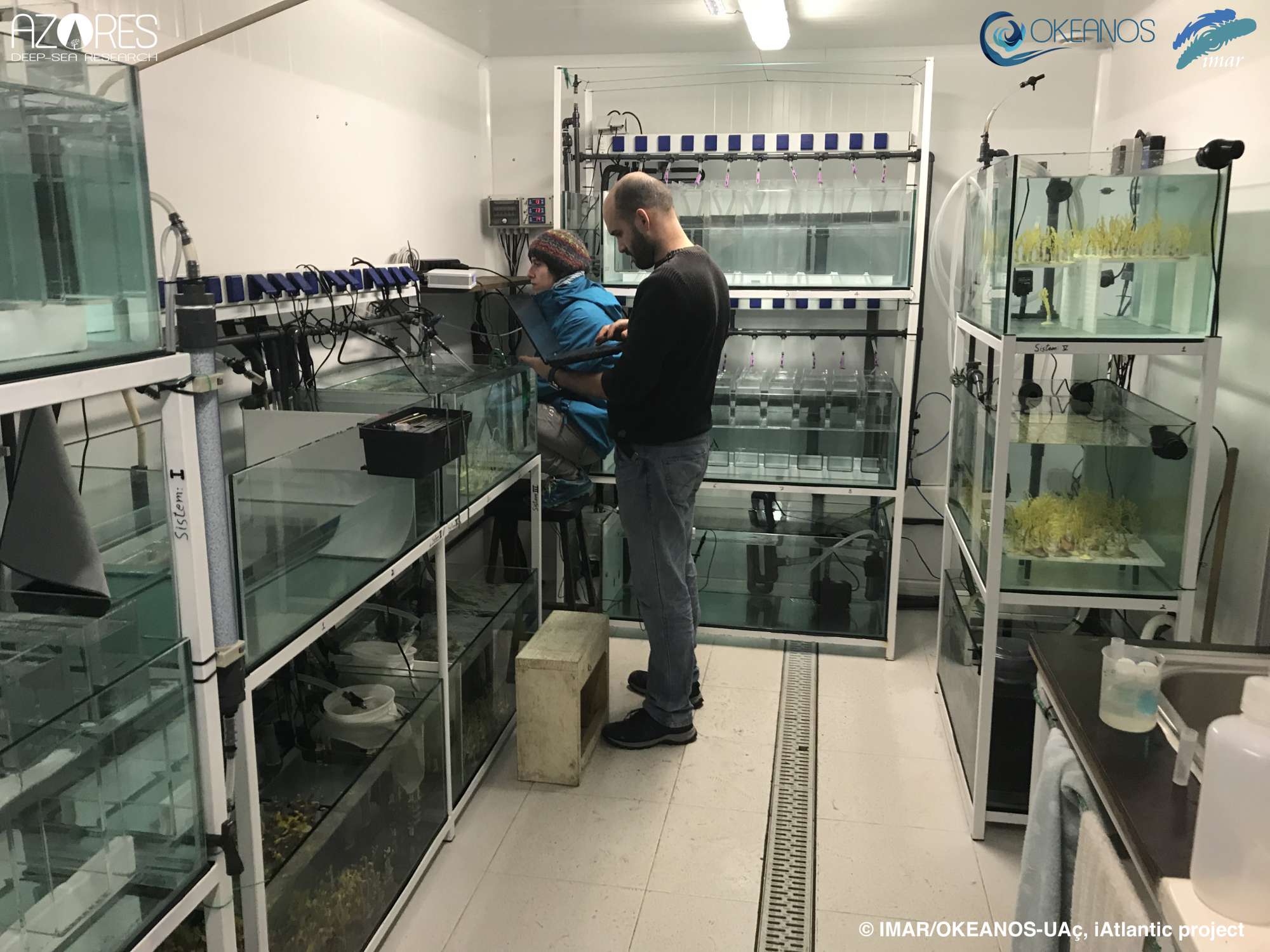
To assess the status of ecosystems, we need to know more about how they are connected and distributed, what functions they perform and how stable they have been over time. All this requires the collection of new data, but also innovative approaches so that observations taken at local and regional levels can be scaled up to address questions at the ocean basin scale. To do this, the ADSR group will contribute to regional habitat characterization and mapping using bathymetry and imagery and will lead the development of species distribution models under present and future climate scenarios. We will be involved in experimentation with vent fauna and cold-water corals in aquaria to evaluate the experience on physiological and ecotoxicological studies of deep-sea fauna under conditions of metal contamination associated with deep-sea mining activities and climate change scenarios. We will use data generated by iAtlantic WPs to develop numerical optimization tools to identify areas in the whole Atlantic that achieve certain sustainable management and conservation objectives over the short and long-term (climate based predictions). Finally, we will contribute to knowledge transfer through participation in workshops and courses on deep-sea ecology and capacity building on infrastructures for experimentation with deep-sea fauna.

iAtlantic aims to deliver knowledge that is critical for responsible and sustainable management of Atlantic Ocean resources in an era of unprecedented global change. Involving marine scientists from countries bordering the north and south Atlantic Ocean, this ambitious project will determine the resilience of deep-sea animals – and their habitats – to threats such as temperature rise, pollution and human activities. iAtlantic is undertaking an ocean-wide approach to understanding the factors that control the distribution, stability and vulnerability of deep-sea ecosystems. Work spans the full scale of the Atlantic basin, from the tip of Argentina in the south to Iceland in the north, and from the east coasts of USA and Brazil to the Azores and the western margins of Europe and Africa. Central to the project’s success is the international collaboration between scientists throughout the Atlantic region, with sharing of expertise, equipment, infrastructure, data and personnel placed at the forefront of iAtlantic’s approach.

Show less ↑
Show more ↓

Videos

Our Team's role

Azores Deep-sea Research

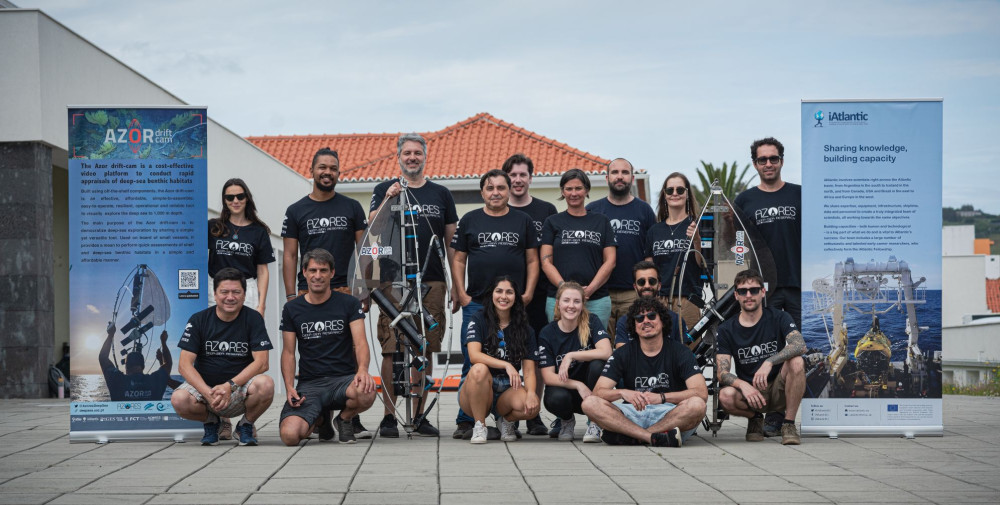
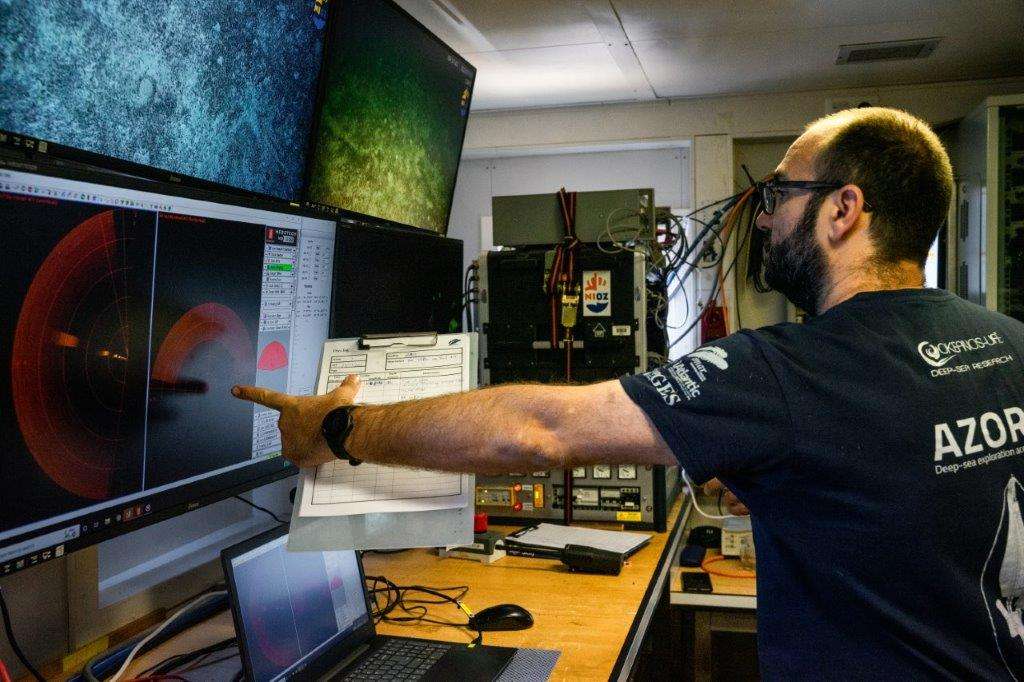
We lead the iAtlantic WP5 Spatial and Temporal Management and Protection and the case study #3 Azores, and will co-lead WP4 Impact of Multiple Stressors through experimentation with vent fauna and cold-water corals in aquaria. We will also contribute to regional habitat characterization and mapping (WP2) and to knowledge transfer (WP6).
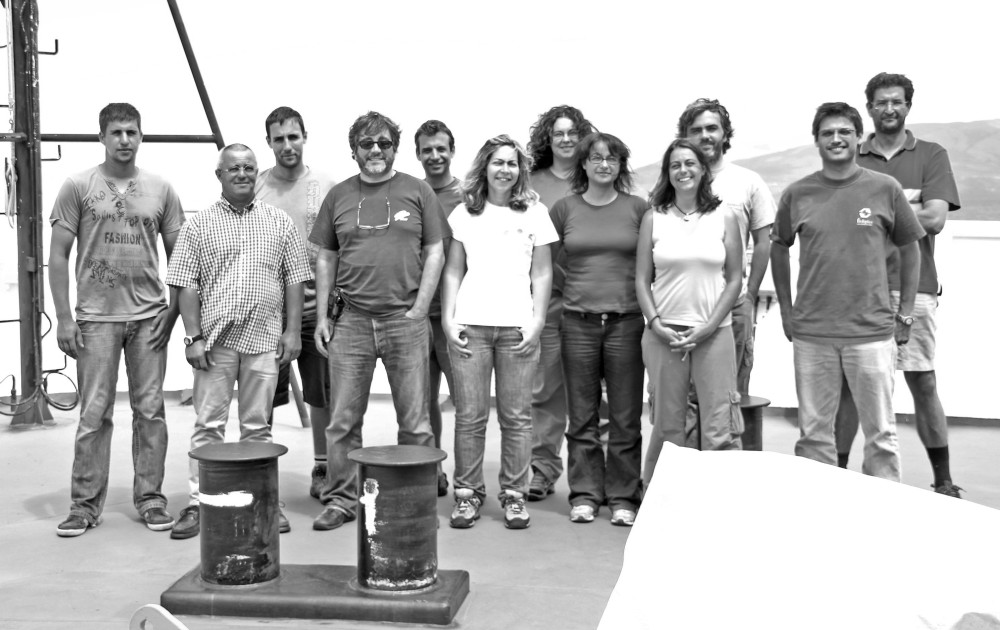
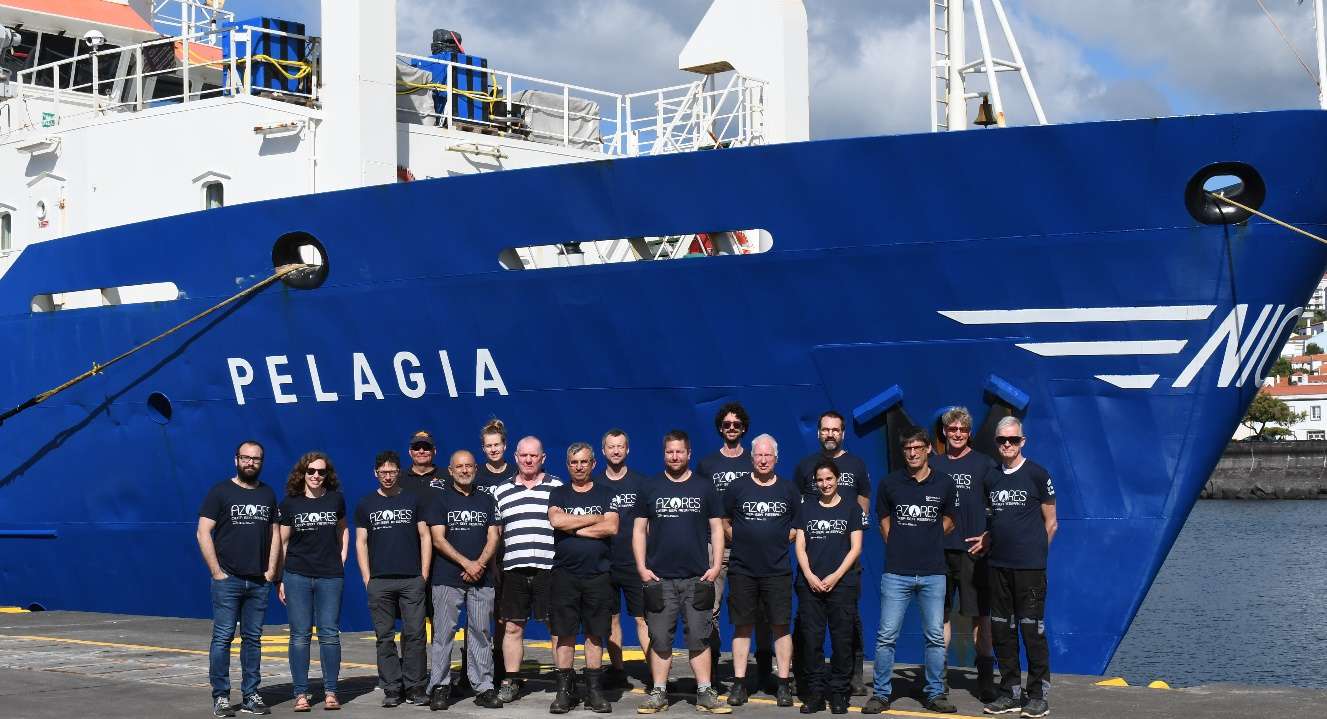
Involved team members

Collaborators

Ana Colaço
Jorge Fontes
Maria Rakka (PhD Student)
Jordi Blasco
Mariana Cruz
Rodrigo Sá da Bandeira

Main results

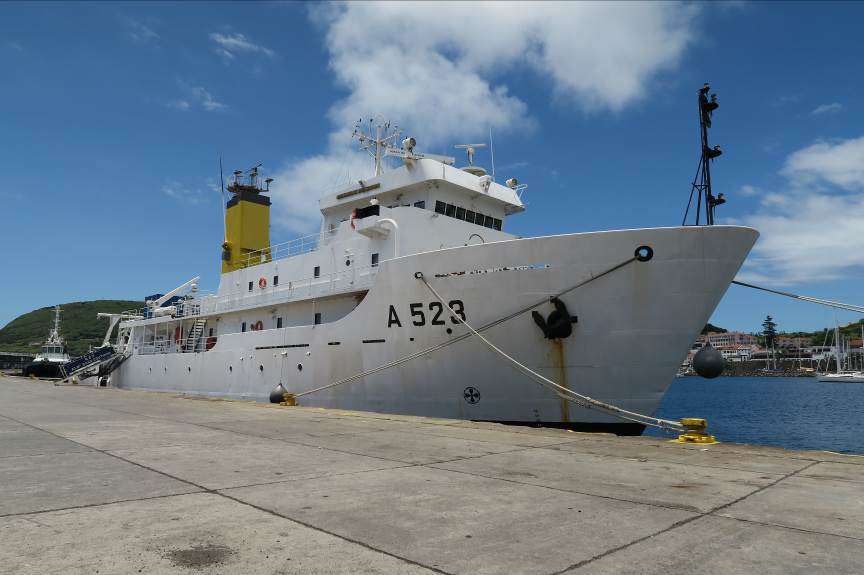
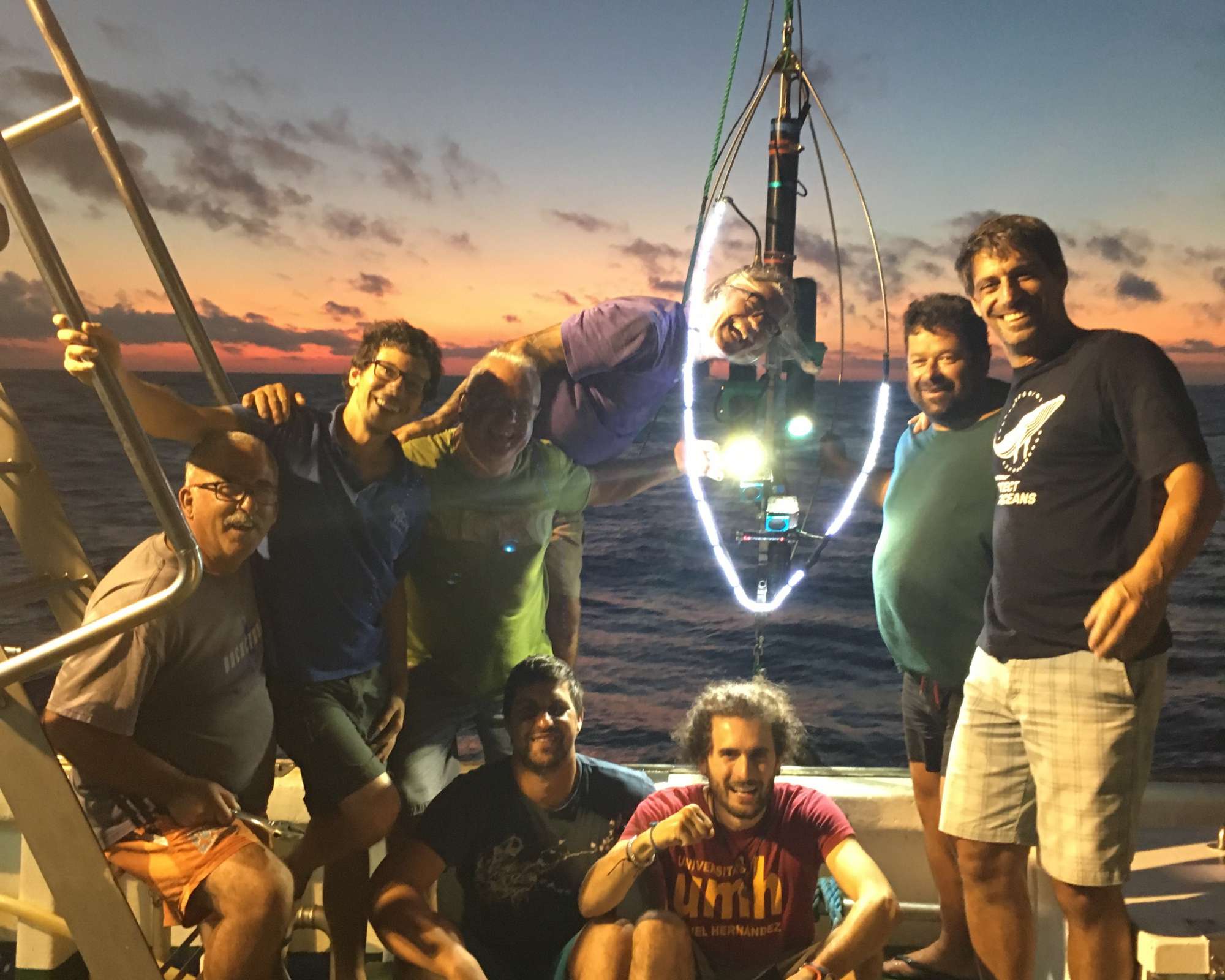
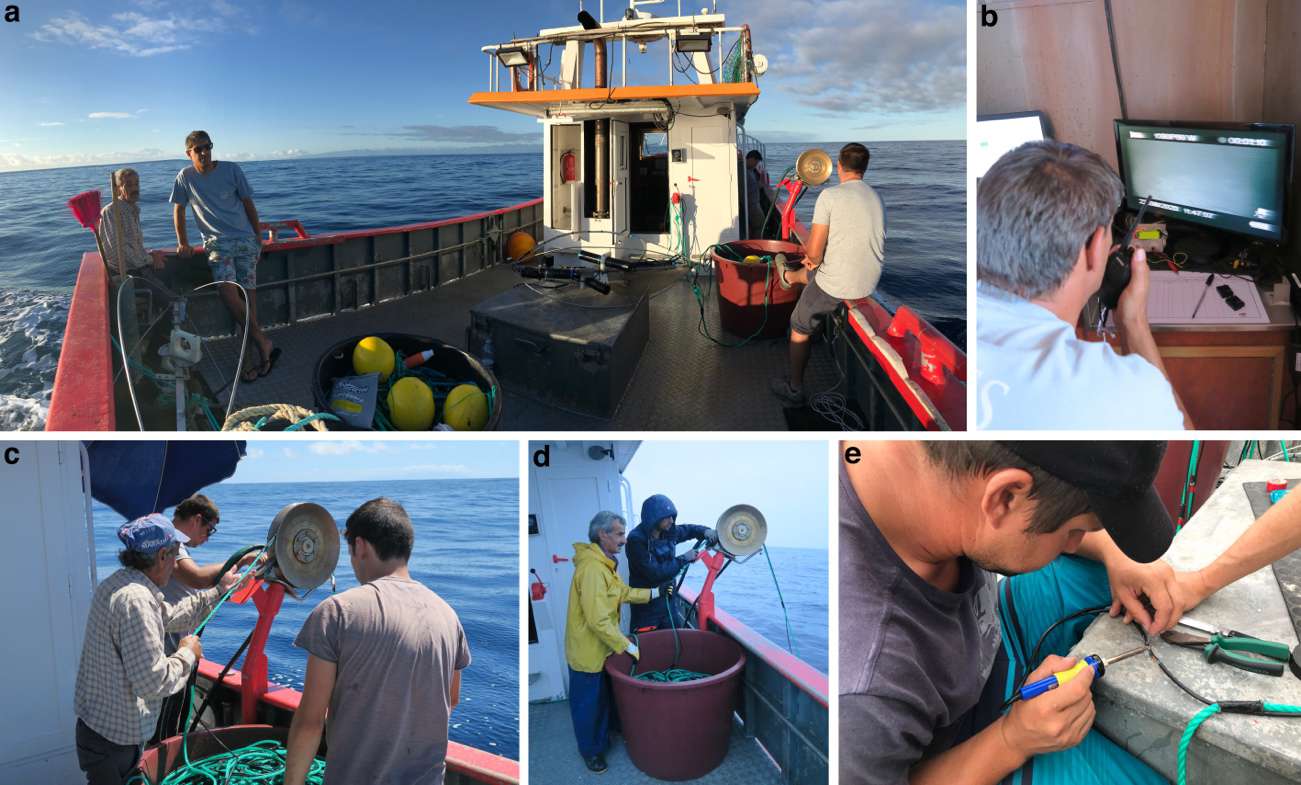
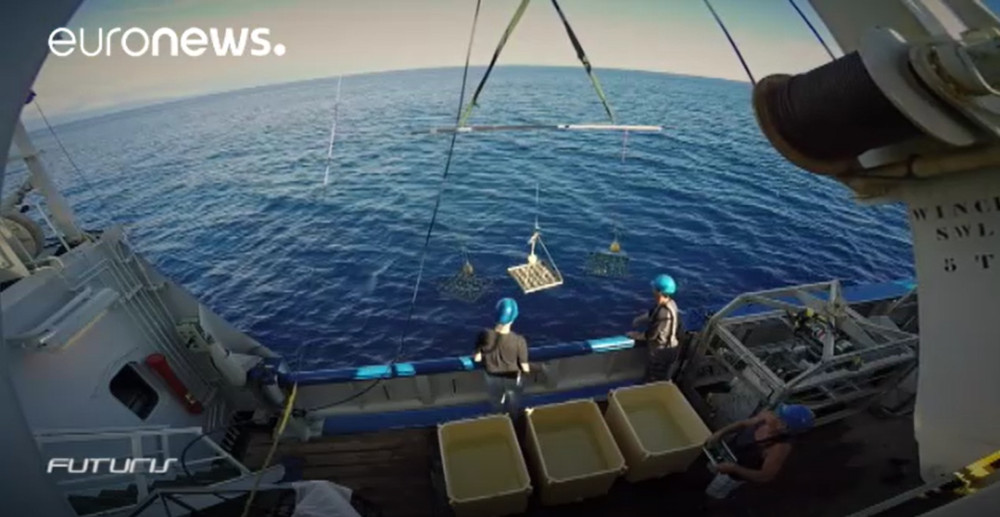
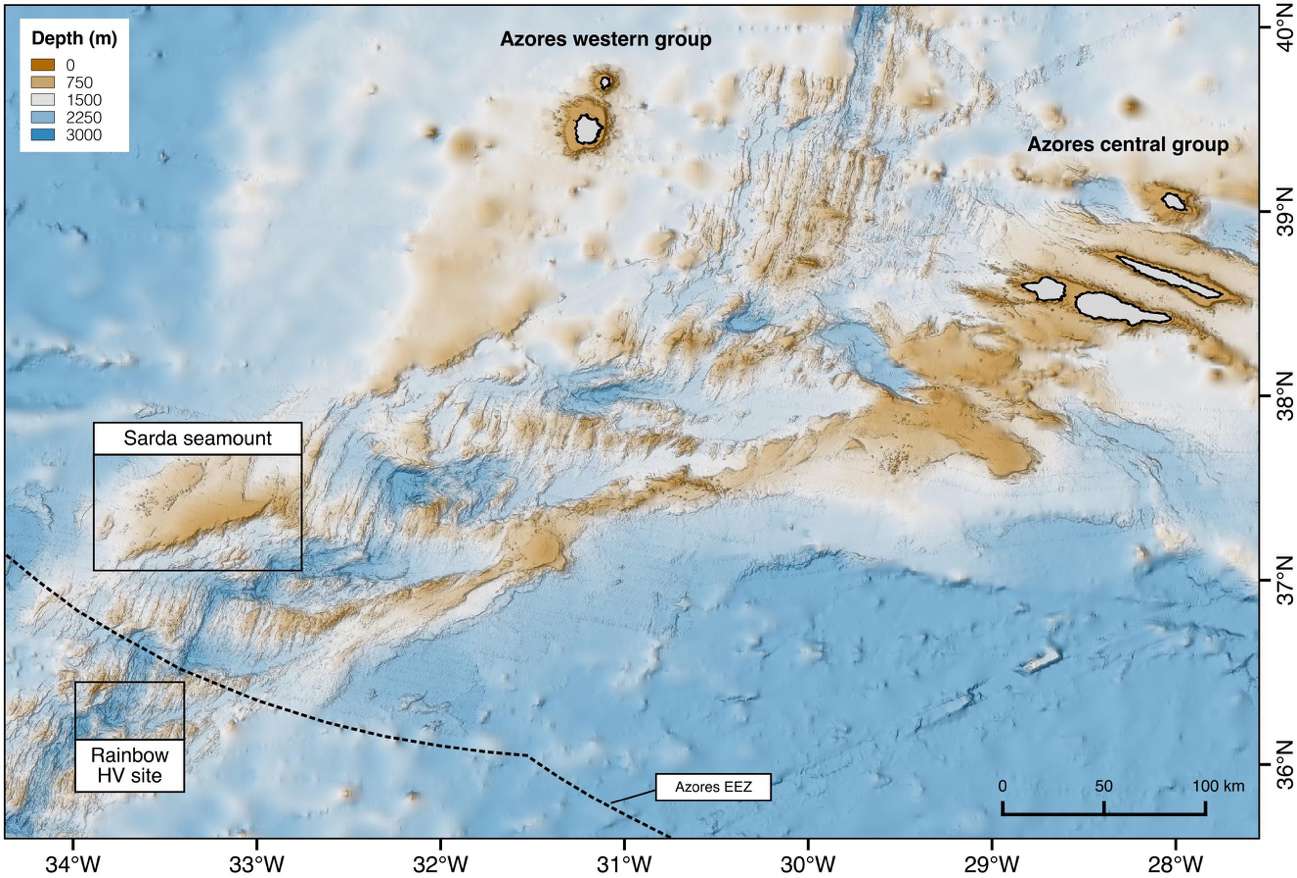
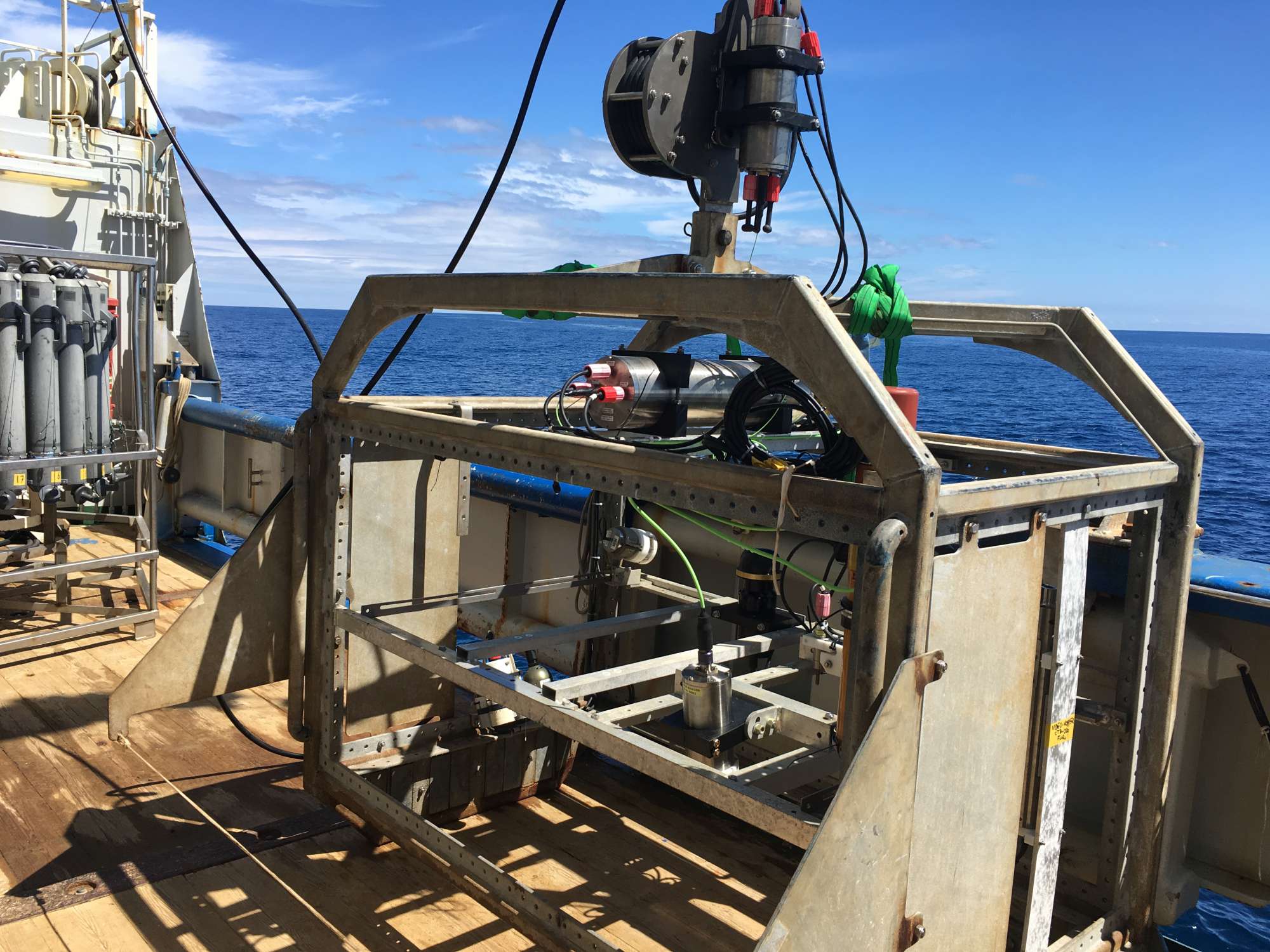
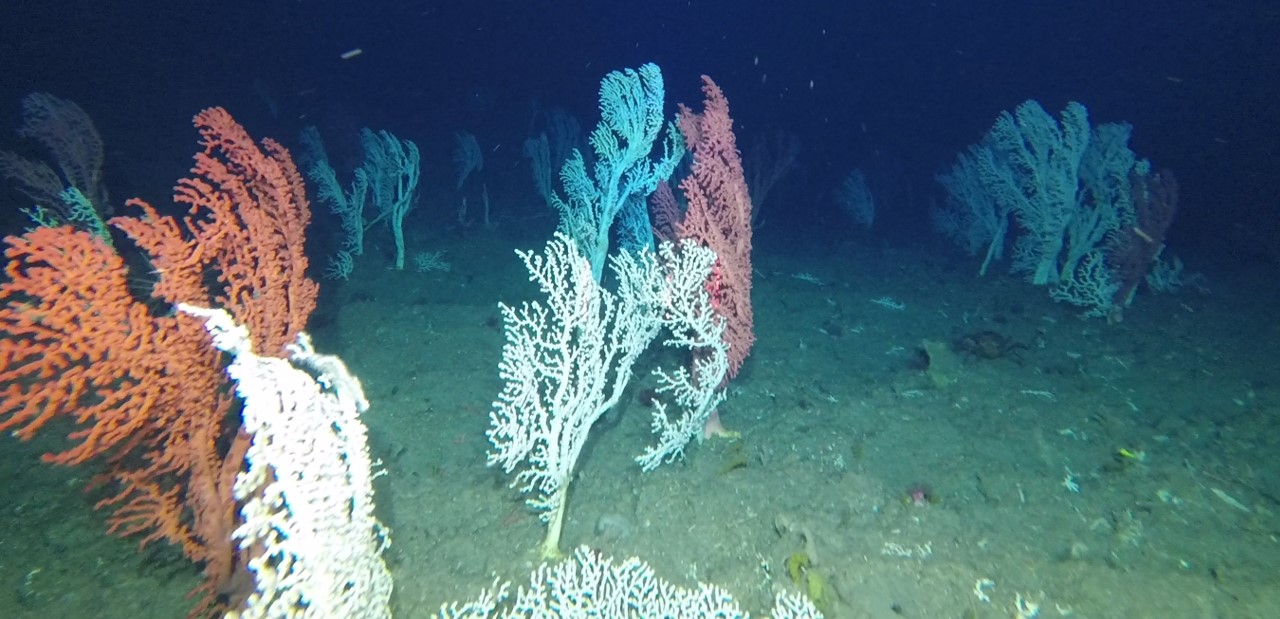
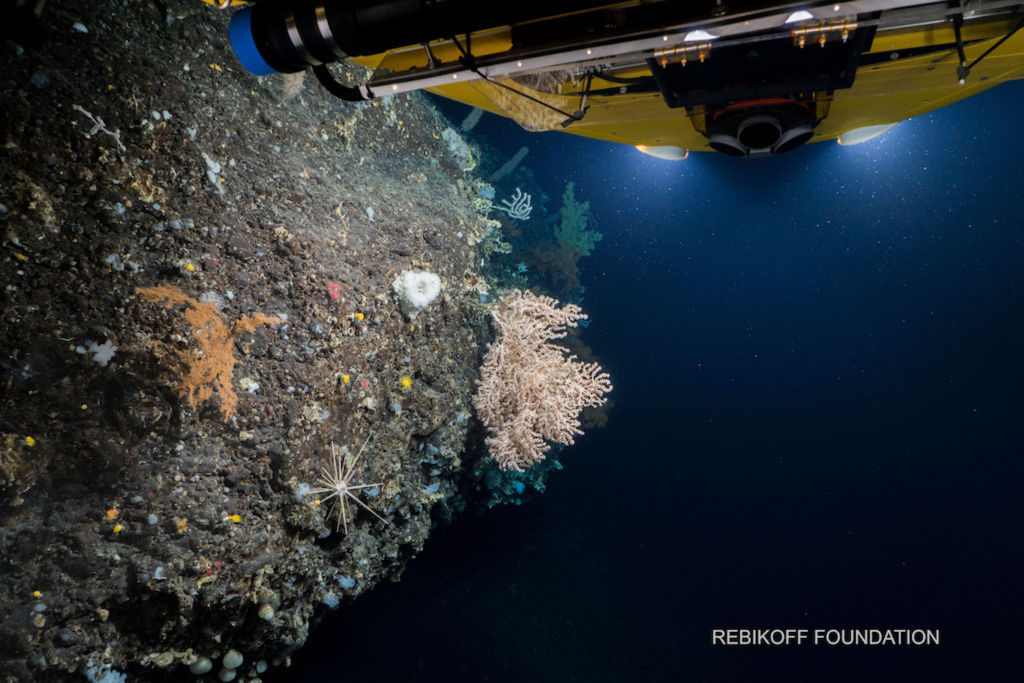
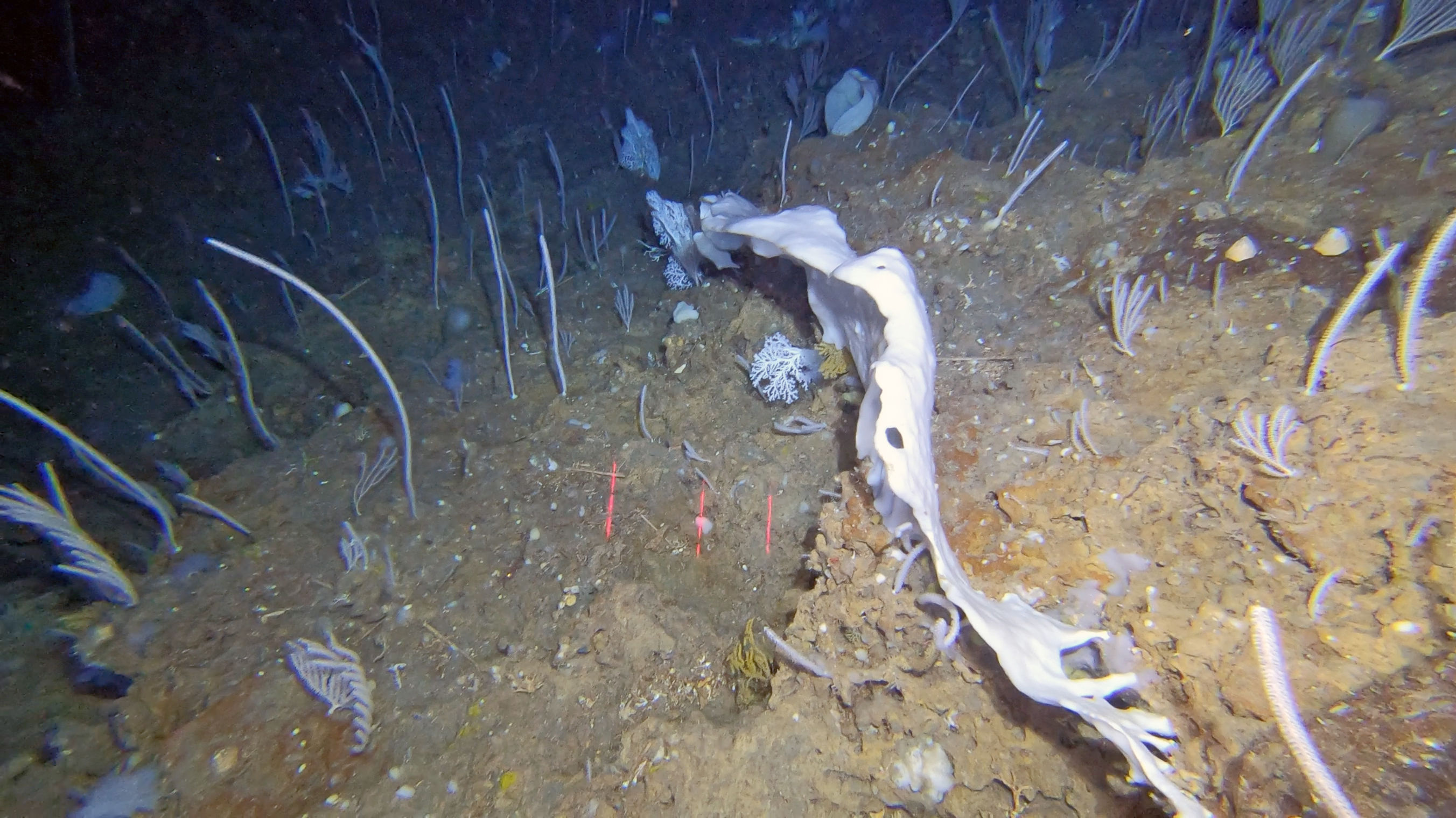
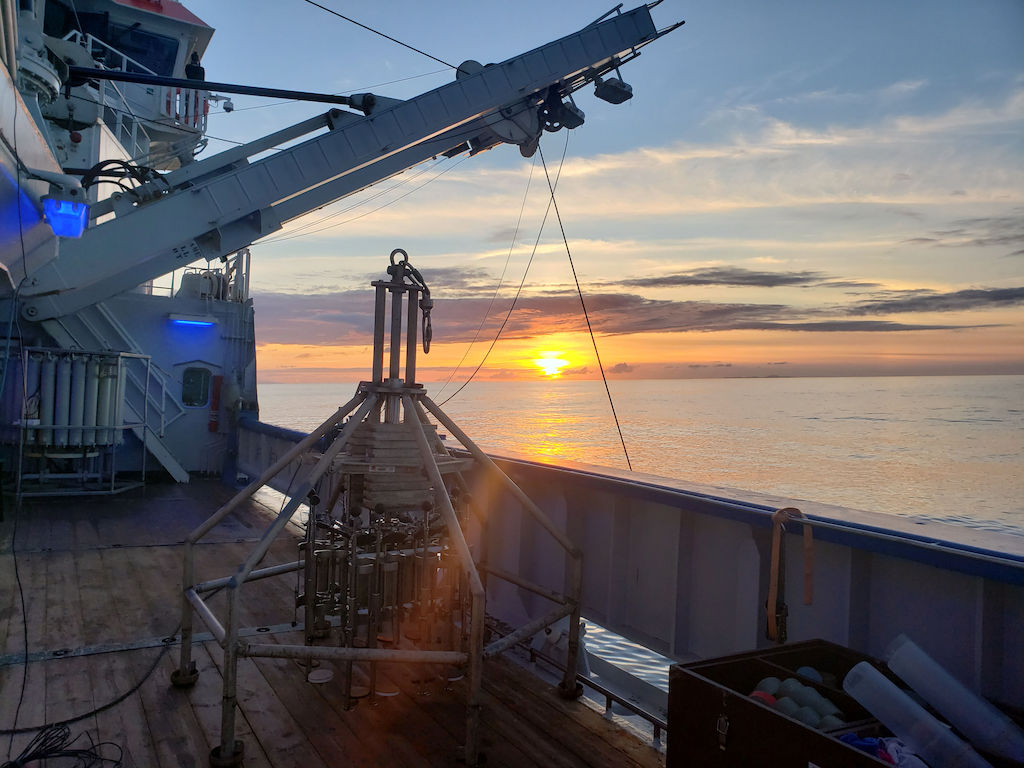
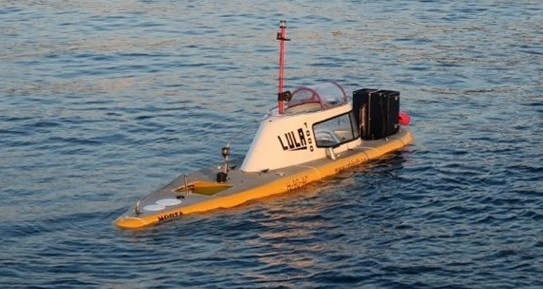
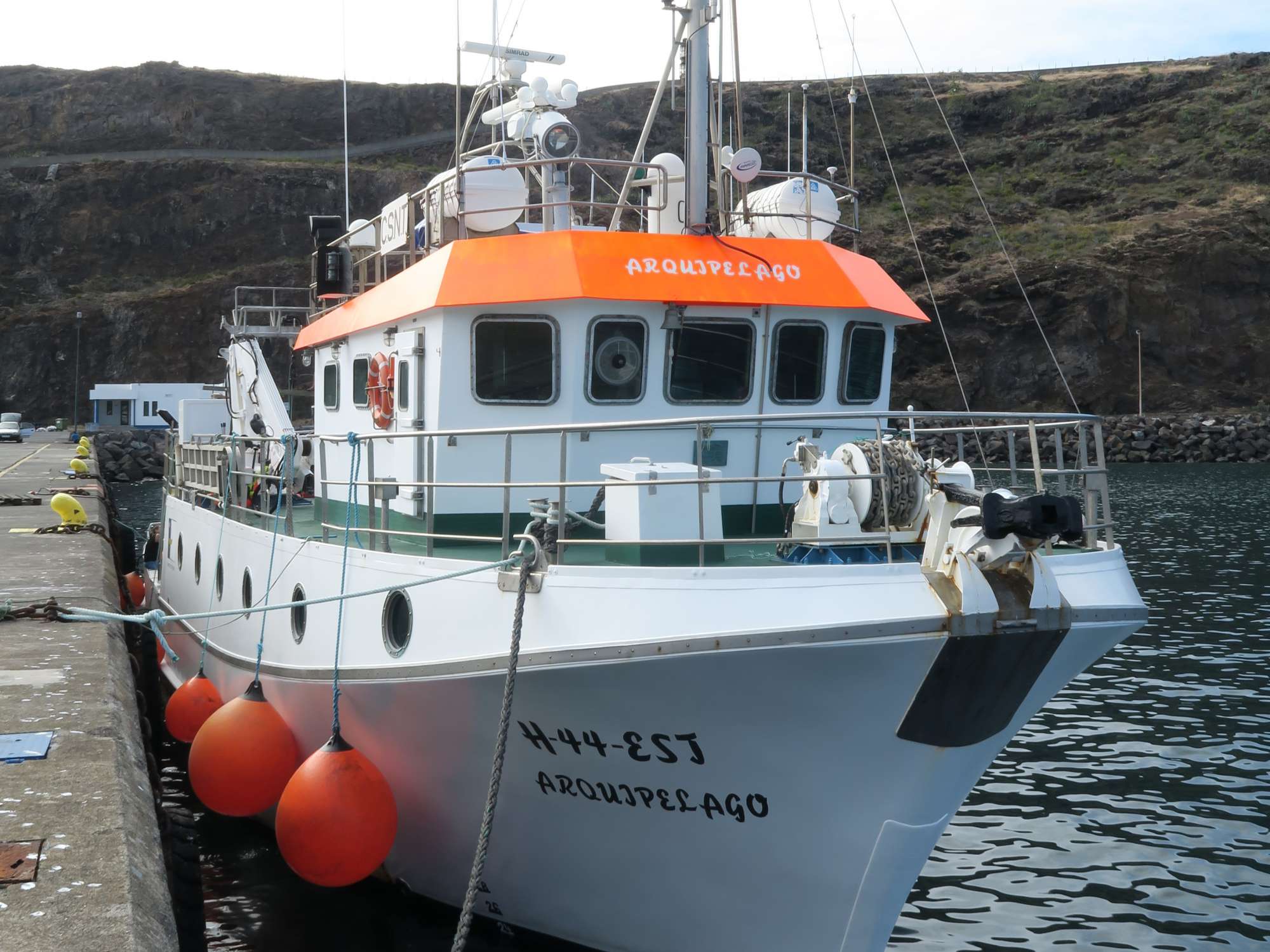
During the iAtlantic project we continued to explore deep-sea areas of the Azores for which there is currently little or no information available on the composition and diversity of its benthic fauna. This was achieved through a series of research cruises on board research vessels and local fishing vessels (e.g.: MapGES 2019, 2020 and 2021, Eurofleets+ iMAR 2021 and 2022, the Blue Azores program, the Deepwalls submersible dives, and collaborations with NIOZ). The development of the Azor drift-cam, a low-cost underwater camera system for the rapid appraisal of deep-sea benthic communities was published in Methods in Ecology and Evolution. The draft with the predicted distribution of 15 deep-sea shark species in the Azores, developed using by-catch data and GAMs/RF/Maxent models, was published in Deep-Sea Research Part I. We also published an article describing the densest, near-natural, and novel octocoral garden composed of large red and white colonies of Paragorgia johnsoni found on the slopes of the Mid-Atlantic Ridge (545–595 m depth), in the Azores region. The experimental work revealed the impacts of future climate and deep-sea mining on the larvae development and behaviour of cold-water black corals and juvenile stages of the vent mussel.
Show less ↑
Show more ↓
Nothing to show yet... Try again later.
FUN Azores: A trait database for the marine species of the ridges, seamounts, and hydrothermal vents of the Azores, NE Atlantic
Jan, 2023
2 team members are authors
OA Citations 1 DOI 10.1594/PANGAEA.955357
Authors 10.1594/PANGAEA.955357
Campanyà-Llovet, Neus Bates, Amanda E Cuvelier, Daphne Giacomello, Eva Catarino, Diana Gooday, Andrew J Berning, Björn Figuerola, Blanca Malaquias, Manuel Moura, Carlos J Xavier, Joana R Sutton, Tracey T
Fauconnet, Laurence
Ramalho, Sofia Neves, Bárbara M Menezes, Gui M Horton, Tammy Gebruk, Andrey V Minin, K V Bried, Joël Molodtsova, Tina Silva, Mónica A Dilman, Anna Kremenetskaia, Antonina Costa, Eudriano Clarke, Jameson Martins, Helen R Pham, Christopher Kim
Carreiro-Silva, Marina
Colaço, Ana
Abstract
Trait-based approaches that complement taxonomic-based studies have increased in popularity among the scientific community over the last decades. The collection of biological and ecological characteristics of species (i.e., traits) provides insight into species and ecosystem vulnerability to environmental and anthropogenic changes, as well as ecosystem functioning. While most of the available trait databases to date contain essential information to understand the functional diversity of a taxonomic group or functional group based on size, the FUN Azores trait database has an ecosystem-based approach that provides a comprehensive assessment of diverse fauna (meio-, macro-, and megafauna) from benthic and pelagic environments in the Azores Marine Park; including ridges, seamounts, and hydrothermal vents. We used a collaborative approach involving 30 researchers with different expertise to develop the trait database; which contains compiled data on 14 traits representing morphological, behavioral, and life history characteristics for 1210 species, across 10 phyla.
Scale bar errors of cold-water coral 3D reconstructions from three different setups
Jan, 2025
2 team members are authors
OA Citations 1 DOI 10.1594/PANGAEA.975091
Authors 10.1594/PANGAEA.975091
Romo, Alvaro Gutiérrez-Zárate, Cristina Bilan, Meri Gori, Andrea Veiga, Alfredo Pérez, Rodrigo Rakka, Maria
Godinho, António
Schoening, Timm Carey, Andrew G Jr
Carreiro-Silva, Marina
Orejas, Covadonga
Abstract
For accurate 3D photogrammetric measurements of corals under laboratory conditions, two prototypes (Azores 3D system and Barcelona 3D system) and a final setup (Coruña 3D system) were presented. These setups were designed to obtain a complete set of images of a coral in an aquarium and create accurate 3D reconstructions. A total of 24 (Azores), 177 (Barcelona) and 120 (Coruña) 3D reconstructions of cold-water corals were used to evaluate the systems. The effectiveness of the three systems was assessed by taking into account the total scale error of the 3D reconstructions. The total scale error is the difference between the input scale bar lengths and the measured distance between two-point markers. Here, we provide the total scale error from every reconstruction of each system.
Aquarium monitoring during an ex-situ experiment with the cold-water coral Desmophyllum dianthus in the Azores
Jan, 2024
5 team members are authors
OA DOI 10.1594/PANGAEA.966827
Authors 10.1594/PANGAEA.966827
Abstract
We conducted a medium-term (4 months) multiple stressor experiment with the cold-water coral Desmophyllum dianthus under future environmental conditions (IPCC RCP 8.5 scenarios for 2100), and sediment plumes generated during the potential extraction of seafloor massive sulphides. The experiment followed a two-step approach, where during the first 3 months, corals were exposed to four different treatments combining predicted scenarios of ocean acidification (pCO2/pH) and food availability. Two levels of pCO2 conditions were considered: natural habitat present day conditions (~500 µatm, 720 m depth) and IPCC RCP8.5 scenario (1000 µatm; IPCC, 2019), corresponding to pHT values of 7.93 and 7.66, respectively. In addition, two food availability regimes were recreated: high frequency of feeding (food delivered twice a day / 7 days a week) and low frequency of feeding (food delivered every other day). There were six replicate 13 L aquaria per treatment (4 D. dianthus per aquaria) at a temperature of 10.5 ± 0.1 ºC. During the fourth month of the experiment, suspended polymetallic sulphide particles generated during potential mining activities were added to half of the aquaria under the climate change scenarios at a concentration of 10 mg.L-1, making 8 treatments in a fully crossed experimental design for the 3 factors tested (OA, food, mining particles). Seawater physical-chemical parameters were measured daily in each aquarium. Temperature and pH were measured manually in each aquaria using a Mettler-Toledo Seven2Go pH /Ion meter S8, salinity was measured with a S30 SevenEasyTM conductivity meter, oxygen concentration was measured with a Fibox4 (PreSens) with a Oxygen Dipping Probe DP-PSt3.
Growth rates of the cold-water coral Desmophyllum dianthus during an ex-situ experiment in the Azores
Jan, 2024
5 team members are authors
OA DOI 10.1594/PANGAEA.966829
Authors 10.1594/PANGAEA.966829
Abstract
We conducted a medium-term (4 months) multiple stressor experiment with the cold-water coral Desmophyllum dianthus under future environmental conditions (IPCC RCP 8.5 scenarios for 2100), and sediment plumes generated during the potential extraction of seafloor massive sulphides. The experiment followed a two-step approach, where during the first 3 months, corals were exposed to four different treatments combining predicted scenarios of ocean acidification (pCO2/pH) and food availability. Two levels of pCO2 conditions were considered: natural habitat present day conditions (~500 µatm, 720 m depth) and IPCC RCP8.5 scenario (1000 µatm; IPCC, 2019), corresponding to pHT values of 7.93 and 7.66, respectively. In addition, two food availability regimes were recreated: high frequency of feeding (food delivered twice a day / 7 days a week) and low frequency of feeding (food delivered every other day). There were six replicate 13 L aquaria per treatment (4 D. dianthus per aquaria) at a temperature of 10.5 ± 0.1 ºC. During the fourth month of the experiment, suspended polymetallic sulphide particles generated during potential mining activities were added to half of the aquaria under the climate change scenarios at a concentration of 10 mg/l, making 8 treatments in a fully crossed experimental design for the 3 factors tested (OA, food, mining particles). Growth rates were measured using the buoyant weighing technique (Jokiel et al. 1978), using a balance (Mettler-Toledo ME204T) with a precision of 0.1 mg. Corals were weighed twice during the experiment: 1-2 weeks after the start of the experiment and just before the second phase of the experiment with PMS addition, which corresponded to a time interval of 63-71 days.
Embryo and larval biology of the deep-sea octocoral Dentomuricea aff. meteor from the Azores under two temperature regimes
Jan, 2022
2 team members are authors
OA DOI 10.1594/PANGAEA.942769
Authors 10.1594/PANGAEA.942769
Rakka, Maria
Godinho, António
Orejas, Covadonga
Carreiro-Silva, Marina
Abstract
The study focuses on the early life stages of the species Dentomuricea aff. meteor, a common deep-sea octocoral in the Azores. The objective was to describe the embryo and larval development, survival and swimming behaviour of early life stages of the target species, under two temperature regimes, corresponding to the minimum and maximum temperatures in its natural environment during the spawning season (13°C and 15°C). Embryo and larval development were monitored closely and revealed faster developmental rates under 15°C. Survival counts were performed throughout embryo and larval development, but were not statistically different between temperatures. Moreover, swimming behaviour was assessed by means of video recordings, revealing a higher larval swimming speed at 15°C. Additional data on larval behaviour are provided, including settlement and metamorphosis rates which were low for both temperatures. Our results showcase how small temperature fluctuations can affect embryo and larval characteristics, potentially impacting larval dispersal and success.
Respiration rates of the cold-water octocoral Dentomuricea aff. meteor during an ex-situ experiment simulating deep-sea mining sediment plumes in the Azores
Jan, 2024
3 team members are authors
OA DOI 10.1594/PANGAEA.966837
Authors 10.1594/PANGAEA.966837
Carreiro-Silva, Marina
Marques, Sandra
Godinho, António
Raimundo, Joana Caetano, Miguel Brito, Pedro Colaço, Ana
Martins, Ines
Abstract
We report the results of an aquaria-based experiment testing the effects of simulated sediment plumes generated during mining activities for the extraction of ferromanganese nodules in the Clarion-Clipperton Fracture Zone (CCFZ), northeastern equatorial Pacific Ocean, and seafloor massive sulfides from a hydrothermal vent field in the Azores, northeast Atlantic, on the physiology of the cold-water octocoral Dentomuricea aff. meteor. Coral fragments were exposed to five experimental treatments for a period of four weeks at the DeepSeaLab aquaria facilities (Okeanos-University of the Azores): (1) suspended plumes of abyssal sediments from nodule fields at a concentration of 10 mg/l; (2) suspended plumes of abyssal sediments from nodule fields at a concentration of 50 mg/l; (3) hydrothermal polymetallic sulphide particles at a concentration of 10 mg/l; (4) hydrothermal polymetallic sulphide particles at a concentration of 50 mg/l; and (5) a control treatment with no sediment addition. Measurements of respiration were made at T0 (immediately before the start of the experiment), and every week until the end of the experiment using an oxygen meter Fibox4 and PSt3 sensor spots (PreSens, Germany). Coral respiration rates were normalized to the coral skeletal surface area.
Respiration rates of the cold-water coral Desmophyllum dianthus during an ex-situ experiment in the Azores
Jan, 2024
5 team members are authors
OA DOI 10.1594/PANGAEA.966828
Authors 10.1594/PANGAEA.966828
Abstract
We conducted a medium-term (4 months) multiple stressor experiment with the cold-water coral Desmophyllum dianthus under future environmental conditions (IPCC RCP 8.5 scenarios for 2100), and sediment plumes generated during the potential extraction of seafloor massive sulphides. The experiment followed a two-step approach, where during the first 3 months, corals were exposed to four different treatments combining predicted scenarios of ocean acidification (pCO2/pH) and food availability. Two levels of pCO2 conditions were considered: natural habitat present day conditions (~500 µatm, 720 m depth) and IPCC RCP8.5 scenario (1000 µatm; IPCC, 2019), corresponding to pHT values of 7.93 and 7.66, respectively. In addition, two food availability regimes were recreated: high frequency of feeding (food delivered twice a day / 7 days a week) and low frequency of feeding (food delivered every other day). There were six replicate 13 L aquaria per treatment (4 D. dianthus per aquaria) at a temperature of 10.5 ± 0.1 ºC. During the fourth month of the experiment, suspended polymetallic sulphide particles generated during potential mining activities were added to half of the aquaria under the climate change scenarios at a concentration of 10 mg/l, making 8 treatments in a fully crossed experimental design for the 3 factors tested (OA, food, mining particles). Measurements of respiration were made at different times during the experiments: T0 (immediately before the start of the experiment), 2, 4, 9 and 14 weeks, using an oxygen meter Fibox4 with PSt3 sensors (PreSens, Germany). Coral respiration rates were normalized to the coral skeletal surface area.
Tissue loss of the cold-water octocoral Dentomuricea aff. meteor during an ex-situ experiment simulating deep-sea mining sediment plumes in the Azores
Jan, 2024
3 team members are authors
OA DOI 10.1594/PANGAEA.966836
Authors 10.1594/PANGAEA.966836
Carreiro-Silva, Marina
Marques, Sandra
Godinho, António
Raimundo, Joana Caetano, Miguel Brito, Pedro Colaço, Ana
Martins, Ines
Abstract
We report the results of an aquaria-based experiment testing the effects of simulated sediment plumes generated during mining activities for the extraction of ferromanganese nodules in the Clarion-Clipperton Fracture Zone (CCFZ), northeastern equatorial Pacific Ocean, and seafloor massive sulfides from a hydrothermal vent field in the Azores, northeast Atlantic, on the physiology of the cold-water octocoral Dentomuricea aff. meteor. Coral fragments were exposed to five experimental treatments for a period of four weeks at the DeepSeaLab aquaria facilities (Okeanos-University of the Azores): (1) suspended plumes of abyssal sediments from nodule fields at a concentration of 10 mg/l (2) suspended plumes of abyssal sediments from nodule fields at a concentration of 50 mg/l; (3) hydrothermal polymetallic sulphide particles at a concentration of 10 mg/l; (4) hydrothermal polymetallic sulphide particles at a concentration of 50 mg/l; and (5) a control treatment with no sediment addition. The surface area of the coral tissue lost during the experiment was quantified using photographs of the coral fragments and ImageJ software. Measurements were made every week for a period of 4 weeks.
Aquarium monitoring during an ex-situ experiment on the effects of simulated deep-sea mining sediment plumes on the cold-water octocoral Dentomuricea aff. meteor in the Azores
Jan, 2024
3 team members are authors
OA DOI 10.1594/PANGAEA.966832
Authors 10.1594/PANGAEA.966832
Carreiro-Silva, Marina
Marques, Sandra
Godinho, António
Raimundo, Joana Caetano, Miguel Brito, Pedro Colaço, Ana
Martins, Ines
Abstract
We report the results of an aquaria-based experiment testing the effects of simulated sediment plumes generated during mining activities for the extraction of ferromanganese nodules in the Clarion-Clipperton Fracture Zone (CCFZ), northeastern equatorial Pacific Ocean, and seafloor massive sulfides from a hydrothermal vent field in the Azores, northeast Atlantic, on the physiology of the cold-water octocoral Dentomuricea aff. meteor. Coral fragments were exposed to five experimental treatments for a period of four weeks at the DeepSeaLab aquaria facilities (Okeanos-University of the Azores): (1) suspended plumes of abyssal sediments from nodule fields at a concentration of 10 mg/l; (2) suspended plumes of abyssal sediments from nodule fields at a concentration of 50 mg/l; (3) hydrothermal polymetallic sulphide particles at a concentration of 10 mg/l; (4) hydrothermal polymetallic sulphide particles at a concentration of 50 mg/l; and (5) a control treatment with no sediment addition. Seawater physical-chemical parameters were measured daily in each aquarium. Temperature and pH were measured manually in each aquaria every day using a Mettler-Toledo Seven2Go pH /Ion meter S8, salinity was measured with a S30 SevenEasyTM conductivity meter and oxygen concentration was measured with a Fibox4 (PreSens) with a Oxygen Dipping Probe DP-PSt3.
Effect of suspended microplastics on larval swimming speed of the cold-water scleractinian coral of Desmophyllum pertusum
Jan, 2024
2 team members are authors
OA DOI 10.1594/PANGAEA.964198
Authors 10.1594/PANGAEA.964198
Sire De Vilar, Anaïs
Carreiro-Silva, Marina
Rakka, Maria Pham, Christopher Kim Pereira, João Miguel Strömberg, Susanna M Larsson, Ann I
Abstract
We report the results of a short-term experiment testing the effects of microplastics (MP) on the larvae of the cold-water coral Desmophyllum pertusum (syn. Lophelia pertusa). The experiment was conducted at the Tjärnö Marine Laboratory Facilities (University of Gothenburg, Sweden). To simulate MP pollution, we used 6 μm yellow-green fluorescent polystyrene microbeads (catalog no: 17156, Polysciences). The experimental design consisted of three treatments: control treatment with (1) no MP addition (0 MP/mL), (2) addition of 1000 pristine MP/mL, and (3) addition of 1000 biofouled MP/mL. Larvae were exposed to the different treatments in 75 mL culture flasks mounted on a rotating plankton wheel to keep sediments in suspension. After a 24-hour period, the potential impact of MP on larval swimming speed was analyzed using image analysis software (Meijering et al. 2012).
Morphological measures of sclerome of the new octocoral species Swiftia phaeton during the MSM16 Cruise in 2010 at the Mauritanian Slope
Jan, 2020
1 team member is author
OA DOI 10.1594/PANGAEA.910890
Authors 10.1594/PANGAEA.910890
Íris Sampaio Lydia Beuck
Marina Carreiro‐Silva
Gui M. Menezes André Freiwald
Abstract
Sampaio, Íris; Beuck, Lydia; Carreiro-Silva, Marina; Menezes, Gui M; Freiwald, André (2020): Morphological measures of sclerome of the new octocoral species Swiftia phaeton during the MSM16 Cruise in 2010 at the Mauritanian Slope [dataset]. PANGAEA, https://doi.org/10.1594/PANGAEA.910890, In: Sampaio, Í et al. (2020): Morphological measurements and video annotation of the new octocoral Swiftia phaeton sp. nov. during the cruise MSM 16-3 Phaeton in 2010 off the Mauritanian Slope [dataset publication series]. PANGAEA, https://doi.org/10.1594/PANGAEA.910893
Cellular stress biomarkers result of the cold-water coral Dentomuricea aff. meteor during a land-based experiment testing the cumulative effect of Cu exposure and ocean acidification
Jan, 2024
4 team members are authors
OA DOI 10.1594/PANGAEA.966792
Authors 10.1594/PANGAEA.966792
Abstract
We report the results of a land-based experiment testing the cumulative effects of copper (Cu) exposure and ocean acidification (OA). Corals were obtained as by-catch during experimental long-line fisheries campaigns on board R/V "Arquipélago" (ARQDAÇO monitoring program, University of the Azores) at Baixa de São Mateus at 185 m depth in April 2019. The experiment was undertaken at the DeepSeaLab aquaria facilities (Okeanos-University of the Azores) where corals were exposed to four OA/Cu-contamination scenarios: (1) ambient pCO2/pH level as measured in situ conditions (385 μatm/ pH 8.09); (2) high pCO2/reduced pH (IPCC RCP8.5 scenario, 1000 μatm/ pH 7.73); (3) ambient pCO2/pH level and additional Cu concentration (60 µg/l); (4) high pCO2/reduced pH and additional Cu concentration (60 µg/l). The pH/pCO2 modification was achieved by bubbling seawater with either pure CO2 (to increase pCO2) or CO2 low air (to decrease pCO2). The copper concentration used in this experiment followed a trial simulating a polymetallic particles plume release during a potential deep-sea mining event. This sublethal concentration was found to be the highest copper concentration dissolved in seawater.Metabolic (CA and Hsp70), oxidative damage (SOD, MDA) and detoxification (GST) biomarkers were measured in 4 corals from each treatment at the end of the experiment, using a multiplate spectrophotometer reader.
Morphological measures of colonies and polyps of the new octocoral species Swiftia phaeton during the MSM16 Cruise in 2010 at the Mauritanian Slope
Jan, 2020
1 team member is author
OA DOI 10.1594/PANGAEA.910888
Authors 10.1594/PANGAEA.910888
Sampaio, Íris Beuck, Lydia
Carreiro-Silva, Marina
Menezes, Gui M Freiwald, André
Abstract
Sampaio, Íris; Beuck, Lydia; Carreiro-Silva, Marina; Menezes, Gui M; Freiwald, André (2020): Morphological measures of colonies and polyps of the new octocoral species Swiftia phaeton during the MSM16 Cruise in 2010 at the Mauritanian Slope [dataset]. PANGAEA, https://doi.org/10.1594/PANGAEA.910888, In: Sampaio, Í et al. (2020): Morphological measurements and video annotation of the new octocoral Swiftia phaeton sp. nov. during the cruise MSM 16-3 Phaeton in 2010 off the Mauritanian Slope [dataset publication series]. PANGAEA, https://doi.org/10.1594/PANGAEA.910893
Effect of suspended microplastics on larval survival of the cold-water scleractinian coral Desmophyllum pertusum
Jan, 2024
2 team members are authors
OA DOI 10.1594/PANGAEA.964195
Authors 10.1594/PANGAEA.964195
Sire De Vilar, Anaïs
Carreiro-Silva, Marina
Rakka, Maria Pham, Christopher Kim Pereira, João Miguel Strömberg, Susanna M Larsson, Ann I
Abstract
We report the results of a short-term experiment testing the effects of microplastics (MP) on the larvae of the cold-water coral Desmophyllum pertusum (syn. Lophelia pertusa). The experiment was conducted at the Tjärnö Marine Laboratory Facilities (University of Gothenburg, Sweden). To simulate MP pollution, we used 6 μm yellow-green fluorescent polystyrene microbeads (catalog no: 17156, Polysciences). The experimental design consisted of three treatments: control treatment with (1) no MP addition (0 MP/mL), (2) addition of 1000 pristine MP/mL, and (3) addition of 1000 biofouled MP/mL. Larvae were exposed to the different treatments in 75 mL culture flasks mounted on a rotating plankton wheel to keep sediments in suspension. After a 24-hour period, the potential impact of MP on larval survival was analyzed.
Swimming behaviour of the deep-sea octocoral Dentomuricea aff. meteor from the Azores under two temperature regimes
Jan, 2022
2 team members are authors
OA DOI 10.1594/PANGAEA.942773
Authors 10.1594/PANGAEA.942773
Rakka, Maria
Godinho, António
Orejas, Covadonga
Carreiro-Silva, Marina
Abstract
Contains data on swimming velocity and behaviour.
Embryo development of the deep-sea octocoral Dentomuricea aff. meteor from the Azores under two temperature regimes
Jan, 2022
2 team members are authors
OA DOI 10.1594/PANGAEA.942677
Authors 10.1594/PANGAEA.942677
Rakka, Maria
Godinho, António
Orejas, Covadonga
Carreiro-Silva, Marina
Abstract
Includes data on the embryo development of the species. Embryos/larvae were monitored (counted) and classified to developmental stages every 3-4 hours until the planula stage and every 2-3 days afterwards.
Larval stages of the deep-sea octocoral Dentomuricea aff. meteor from the Azores under two temperature regimes
Jan, 2022
2 team members are authors
OA DOI 10.1594/PANGAEA.942771
Authors 10.1594/PANGAEA.942771
Rakka, Maria
Godinho, António
Orejas, Covadonga
Carreiro-Silva, Marina
Abstract
Contains data on larval behaviour.
Survival of the deep-sea octocoral Dentomuricea aff. meteor from the Azores under two temperature regimes
Jan, 2022
2 team members are authors
OA DOI 10.1594/PANGAEA.942752
Authors 10.1594/PANGAEA.942752
Rakka, Maria
Godinho, António
Orejas, Covadonga
Carreiro-Silva, Marina
Abstract
Includes data estimate of survival.
Combined effect of ocean acidification and bottom trawling short-term exposure on larval swimming speed of the scleractinian cold-water-coral Desmophyllum pertusum
Jan, 2024
2 team members are authors
OA DOI 10.1594/PANGAEA.964223
Authors 10.1594/PANGAEA.964223
Sire De Vilar, Anaïs
Carreiro-Silva, Marina
Rakka, Maria Strömberg, Susanna M Larsson, Ann I
Abstract
We report the results of a series of experiments investigating the combined effects of ocean acidification and suspended natural benthic sediments (NS) generated during bottom trawling on the early life stages of the cold-water coral Desmophyllum pertusum (syn. Lophelia pertusa). The experiment was conducted at the Tjärnö Marine Laboratory Facilities (University of Gothenburg, Sweden). For each experiment, the larvae/embryos were exposed to four different treatments: (1) current pCO2 (control): mimicking present-day pCO2/pH condition (pCO2 400 µatm; ambient pHT: 8.01), (2) high pCO2: a scenario reflecting the IPCC RCP8.5 prediction (pCO2 1000 µatm; low pHT: 7.63), (3) current pCO2 + NS (5 mg/L), and (4) high pCO2 + NS (5 mg/L): with the introduction of natural benthic sediments (NS) at a concentration of 5 mg/mL. The NS were collected at ~130 m water depth from a regularly trawled soft bottom close to the reef site of Säcken in the Northern Koster-fjord in Sweden, and the grain sizes ≤ 63 μm were used for the experiment. Embryos and larvae were exposed to the different treatments in 75 mL culture flasks mounted on a rotating plankton wheel to keep sediments in suspension. The second experiment examined the effects on larval survival and swimming speed in two sub-experiments: A) short-term exposure (48 hours) and B) long-term exposure (1 week). This dataset presents the results for larval swimming speeds under short-term exposure.
Combined effect of ocean acidification and bottom trawling long-term exposure on larval survival of the scleractinian cold-water-coral Desmophyllum pertusum
Jan, 2024
2 team members are authors
OA DOI 10.1594/PANGAEA.964224
Authors 10.1594/PANGAEA.964224
Sire De Vilar, Anaïs
Carreiro-Silva, Marina
Rakka, Maria Strömberg, Susanna M Larsson, Ann I
Abstract
We report the results of a series of experiments investigating the combined effects of ocean acidification and suspended natural benthic sediments (NS) generated during bottom trawling on the early life stages of the cold-water coral Desmophyllum pertusum (syn. Lophelia pertusa). The experiment was conducted at the Tjärnö Marine Laboratory Facilities (University of Gothenburg, Sweden). For each experiment, the larvae/embryos were exposed to four different treatments: (1) current pCO2 (control): mimicking present-day pCO2/pH condition (pCO2 400 µatm; ambient pHT: 8.01), (2) high pCO2: a scenario reflecting the IPCC RCP8.5 prediction (pCO2 1000 µatm; low pHT: 7.63), (3) current pCO2 + NS (5 mg/L), and (4) high pCO2 + NS (5 mg/L): with the introduction of natural benthic sediments (NS) at a concentration of 5 mg/mL. The NS were collected at ~130 m water depth from a regularly trawled soft bottom close to the reef site of Säcken in the Northern Koster-fjord in Sweden, and the grain sizes ≤ 63 μm were used for the experiment. Embryos and larvae were exposed to the different treatments in 75 mL culture flasks mounted on a rotating plankton wheel to keep sediments in suspension. The second experiment examined the effects on larval survival and swimming speed in two sub-experiments: A) short-term exposure (48 hours) and B) long-term exposure (1 week). This dataset presents the results for larval survival under long-term exposure.
Combined effect of ocean acidification and bottom trawling on embryonic survival of the scleractinian cold-water-coral Desmophyllum pertusum
Jan, 2024
2 team members are authors
OA DOI 10.1594/PANGAEA.964218
Authors 10.1594/PANGAEA.964218
Sire De Vilar, Anaïs
Carreiro-Silva, Marina
Rakka, Maria Strömberg, Susanna M Larsson, Ann I
Abstract
We report the results of a series of experiments investigating the combined effects of ocean acidification and suspended natural benthic sediments (NS) generated during bottom trawling on the early life stages of the cold-water coral Desmophyllum pertusum (syn. Lophelia pertusa). The experiment was conducted at the Tjärnö Marine Laboratory Facilities (University of Gothenburg, Sweden). For each experiment, the larvae/embryos were exposed to four different treatments: (1) current pCO2 (control): mimicking present-day pCO2/pH condition (pCO2 400 µatm; ambient pHT: 8.01), (2) high pCO2: a scenario reflecting the IPCC RCP8.5 prediction (pCO2 1000 µatm; low pHT: 7.63), (3) current pCO2 + NS (5 mg/L), and (4) high pCO2 + NS (5 mg/L): with the introduction of natural benthic sediments (NS) at a concentration of 5 mg/mL. The NS were collected at ~130 m water depth from a regularly trawled soft bottom close to the reef site of Säcken in the Northern Koster-fjord in Sweden, and the grain sizes ≤ 63 μm were used for the experiment. Embryos and larvae were exposed to the different treatments in 75 mL culture flasks mounted on a rotating plankton wheel to keep sediments in suspension. In this first experiment, embryos were exposed for 48 hours to assess potential impacts on larval survival, development from the first division to the blastula stage, and developmental abnormalities. This dataset presents the results for embryonic survival.
Combined effect of ocean acidification and bottom trawling short-term exposure on larval survival of the scleractinian cold-water-coral Desmophyllum pertusum
Jan, 2024
2 team members are authors
OA DOI 10.1594/PANGAEA.964221
Authors 10.1594/PANGAEA.964221
Sire De Vilar, Anaïs
Carreiro-Silva, Marina
Rakka, Maria Strömberg, Susanna M Larsson, Ann I
Abstract
We report the results of a series of experiments investigating the combined effects of ocean acidification and suspended natural benthic sediments (NS) generated during bottom trawling on the early life stages of the cold-water coral Desmophyllum pertusum (syn. Lophelia pertusa). The experiment was conducted at the Tjärnö Marine Laboratory Facilities (University of Gothenburg, Sweden). For each experiment, the larvae/embryos were exposed to four different treatments: (1) current pCO2 (control): mimicking present-day pCO2/pH condition (pCO2 400 µatm; ambient pHT: 8.01), (2) high pCO2: a scenario reflecting the IPCC RCP8.5 prediction (pCO2 1000 µatm; low pHT: 7.63), (3) current pCO2 + NS (5 mg/L), and (4) high pCO2 + NS (5 mg/L): with the introduction of natural benthic sediments (NS) at a concentration of 5 mg/mL. The NS were collected at ~130 m water depth from a regularly trawled soft bottom close to the reef site of Säcken in the Northern Koster-fjord in Sweden, and the grain sizes ≤ 63 μm were used for the experiment. Embryos and larvae were exposed to the different treatments in 75 mL culture flasks mounted on a rotating plankton wheel to keep sediments in suspension. This second experiment examined the effects on larval survival and swimming speed in two sub-experiments: A) short-term exposure (48 hours) and B) long-term exposure (1 week). This dataset presents the results for larval survival under short-term exposure.
Combined effect of ocean acidification and bottom trawling on embryonic development of the scleractinian cold-water-coral Desmophyllum pertusum
Jan, 2024
2 team members are authors
OA DOI 10.1594/PANGAEA.964219
Authors 10.1594/PANGAEA.964219
Sire De Vilar, Anaïs
Carreiro-Silva, Marina
Rakka, Maria Strömberg, Susanna M Larsson, Ann I
Abstract
We report the results of a series of experiments investigating the combined effects of ocean acidification and suspended natural benthic sediments (NS) generated during bottom trawling on the early life stages of the cold-water coral Desmophyllum pertusum (syn. Lophelia pertusa). The experiment was conducted at the Tjärnö Marine Laboratory Facilities (University of Gothenburg, Sweden). For each experiment, the larvae/embryos were exposed to four different treatments: (1) current pCO2 (control): mimicking present-day pCO2/pH condition (pCO2 400 µatm; ambient pHT: 8.01), (2) high pCO2: a scenario reflecting the IPCC RCP8.5 prediction (pCO2 1000 µatm; low pHT: 7.63), (3) current pCO2 + NS (5 mg/L), and (4) high pCO2 + NS (5 mg/L): with the introduction of natural benthic sediments (NS) at a concentration of 5 mg/mL. The NS were collected at ~130 m water depth from a regularly trawled soft bottom close to the reef site of Säcken in the Northern Koster-fjord in Sweden, and the grain sizes ≤ 63 μm were used for the experiment. Embryos and larvae were exposed to the different treatments in 75 mL culture flasks mounted on a rotating plankton wheel to keep sediments in suspension. In this first experiment, embryos were exposed for 48 hours to assess potential impacts on larval survival, development from the first division to the blastula stage, and developmental abnormalities. This dataset presents the percentage of embryonic abnormalities.
Effects of ocean acidification on larval swimming behaviour of the cold-water coral Desmophyllum pertusum
Feb, 2022
1 team member is author
OA DOI 10.1594/PANGAEA.966520
Authors 10.1594/PANGAEA.966520
Rakka, Maria
Carreiro-Silva, Marina
Larsson, Ann I
Abstract
The objective of this study is to determine the effects of ocean acidification (OA) on the survival, development and swimming behaviour of embryos of the deep-sea coral Desmophyllum pertusum (syn. Lophelia pertusa). Upon spawning, fertilized embryos were collected and exposed to two pCO2 treatments corresponding to present pCO2 conditions (400 ppm) and future pCO2 conditions predicted under scenario IPCC RCP8.5 for the end of the century (1000 ppm). We monitored survival daily and we measured swimming velocity on day 9 after spawning. Temperature and pH were measured every 24h, salinity was measured every other day, and water samples were collected during the first and last day of the experiment to determine total alkalinity (TA). This dataset includes data on the effects of ocean acidification on swimming velocity of larvae of the deep-sea coral Desmophyllum pertusum. Embryos were exposed to two acidification (pCO2) treatments: present pCO2 conditions (400 ppm) and future pCO2 conditions predicted under RCP8.5 for the end of the century (1000 ppm). After rearing the embryos in the respective treatments for nine days, we recorded the swimming behaviour of larvae with a video camera. Videos were analyzed with manual particle tracking, and here we report the swimming velocity and total traveled distance of larvae in each experimental treatment.
Deep-sea mining impacts on larval survival of the deep-sea coral Desmophyllum pertusum
Feb, 2023
2 team members are authors
OA DOI 10.1594/PANGAEA.966554
Authors 10.1594/PANGAEA.966554
Abstract
In this dataset, we report the results of an aquaria experiment aiming at determining the impacts of Polymetallic sulfide (PMS) plumes of varying concentrations created by deep-sea mining on larval survival of the deep-sea coral Desmophyllum pertusum. Colonies of D. pertusum were collected in December 2022 and January 2023 at Tisler reef, at depths between 100-120 m. Adults were maintained in aquaria and after spawning, embryos were collected and left to develop to 7-day larvae. On day 7, larvae were exposed to four experimental treatments, recreating the potential effects of a PMS mining plume: two treatments contained PMS particles at concentrations of 2.5 mg/L and 5 mg/L respectively, and another two contained only the leachates of PMS particle solutions corresponding to the aforementioned PMS particle concentrations. Temperature was maintained at 8-8.5 °C and pHT at 8.01. Survival was checked by counting surviving larvae after 24h of exposure.
Video annotation of Swiftia phaeton during the MSM16 Cruise in 2010 at the Mauritanian Slope
Jan, 2020
1 team member is author
OA DOI 10.1594/PANGAEA.910892
Authors 10.1594/PANGAEA.910892
Íris Sampaio Lydia Beuck
Marina Carreiro‐Silva
Gui M. Menezes André Freiwald
Abstract
Sampaio, Íris; Beuck, Lydia; Carreiro-Silva, Marina; Menezes, Gui M; Freiwald, André (2020): Video annotation of Swiftia phaeton during the MSM16 Cruise in 2010 at the Mauritanian Slope [dataset]. PANGAEA, https://doi.org/10.1594/PANGAEA.910892, In: Sampaio, Í et al. (2020): Morphological measurements and video annotation of the new octocoral Swiftia phaeton sp. nov. during the cruise MSM 16-3 Phaeton in 2010 off the Mauritanian Slope [dataset publication series]. PANGAEA, https://doi.org/10.1594/PANGAEA.910893
Respiration rates of the cold-water coral Dentomuricea aff. meteor during a land-based experiment testing the cumulative effect of Cu exposure and ocean acidification
Jan, 2024
4 team members are authors
OA DOI 10.1594/PANGAEA.966789
Authors 10.1594/PANGAEA.966789
Abstract
We report the results of a land-based experiment testing the cumulative effects of copper (Cu) exposure and ocean acidification (OA). Corals were obtained as by-catch during experimental long-line fisheries campaigns on board R/V "Arquipélago" (ARQDAÇO monitoring program, University of the Azores) at Baixa de São Mateus at 185 m depth in April 2019. The experiment was undertaken at the DeepSeaLab aquaria facilities (Okeanos-University of the Azores) where corals were exposed to four OA/Cu-contamination scenarios: (1) ambient pCO2/pH level as measured in situ conditions (385 μatm/ pH 8.09); (2) high pCO2/reduced pH (IPCC RCP8.5 scenario, 1000 μatm/ pH 7.73); (3) ambient pCO2/pH level and additional Cu concentration (60 µg/l); (4) high pCO2/reduced pH and additional Cu concentration (60 µg/l). The pH/pCO2 modification was achieved by bubbling seawater with either pure CO2 (to increase pCO2) or CO2 low air (to decrease pCO2). The copper concentration used in this experiment followed a trial simulating a polymetallic particles plume release during a potential deep-sea mining event. This sublethal concentration was found to be the highest copper concentration dissolved in seawater.Measurements of respiration were made immediately before the start of the experiment (T0) and after 9 days (T9, end of the experiment), when corals started to show tissue necrosis, using an oxygen meter Fibox4 with a PSt3 sensor (PreSens, Germany). Coral respiration rates were normalized to the coral surface area.
Combined effect of ocean acidification and bottom trawling long-term exposure on larval swimming speed of the scleractinian cold-water-coral Desmophyllum pertusum
Mar, 2023
2 team members are authors
OA DOI 10.1594/PANGAEA.964225
Authors 10.1594/PANGAEA.964225
Sire De Vilar, Anaïs
Carreiro-Silva, Marina
Rakka, Maria Strömberg, Susanna M Larsson, Ann I
Abstract
We report the results of a series of experiments investigating the combined effects of ocean acidification and suspended natural benthic sediments (NS) generated during bottom trawling on the early life stages of the cold-water coral Desmophyllum pertusum (syn. Lophelia pertusa). The experiment was conducted at the Tjärnö Marine Laboratory Facilities (University of Gothenburg, Sweden). For each experiment, the larvae/embryos were exposed to four different treatments: (1) current pCO2 (control): mimicking present-day pCO2/pH condition (pCO2 400 µatm; ambient pHT: 8.01), (2) high pCO2: a scenario reflecting the IPCC RCP8.5 prediction (pCO2 1000 µatm; low pHT: 7.63), (3) current pCO2 + NS (5 mg/L), and (4) high pCO2 + NS (5 mg/L): with the introduction of natural benthic sediments (NS) at a concentration of 5 mg/mL. The NS were collected at ~130 m water depth from a regularly trawled soft bottom close to the reef site of Säcken in the Northern Koster-fjord in Sweden, and the grain sizes ≤ 63 μm were used for the experiment. Embryos and larvae were exposed to the different treatments in 75 mL culture flasks mounted on a rotating plankton wheel to keep sediments in suspension. The second experiment examined the effects on larval survival and swimming speed in two sub-experiments: A) short-term exposure (48 hours) and B) long-term exposure (1 week). This dataset presents the results for larval swimming speeds under long-term exposure.
Respiration rates of the cold-water coral Viminella flagellum during a land-based experiment testing the cumulative effect of Cu exposure and ocean acidification
Jan, 2024
4 team members are authors
OA DOI 10.1594/PANGAEA.966768
Authors 10.1594/PANGAEA.966768
Abstract
We report the results of a land-based experiment testing the cumulative effects of copper (Cu) exposure and ocean acidification (OA). Corals were obtained as by-catch during an experimental long-line fisheries campaign (CONDOR monitoring program, Okeanos-University of the Azores) on the Condor Seamount (38°54′N, 29°05′W), Azores Archipelago, at 200 m depth in October 2019. The experiment was undertaken at the DeepSeaLab aquaria facilities (Okeanos-University of the Azores) where corals were exposed to four OA/Cu-contamination scenarios: (1) ambient pCO2/pH level as measured in situ conditions (385 μatm/ pH 8.09); (2) high pCO2/reduced pH (IPCC RCP8.5 scenario, 1000 μatm/ pH 7.73); (3) ambient pCO2/pH level and additional Cu concentration (60 µg/l); (4) high pCO2/reduced pH and additional Cu concentration (60 µg/l). The pH/pCO2 modification was achieved by bubbling seawater with either pure CO2 (to increase pCO2) or CO2 low air (to decrease pCO2). The copper concentration used in this experiment followed a trial simulating a polymetallic particles plume release during a potential deep-sea mining event. This sublethal concentration was found to be the highest copper concentration dissolved in seawater.Measurements of respiration were made immediately before the start of the experiment (T0) and after 9 days (T9, end of the experiment), when corals started to show tissue necrosis, using an oxygen meter Fibox4 with a PSt3 sensor (PreSens, Germany). Coral respiration rates were normalized to the coral surface area.
Effects of ocean acidification on larval survival rates of the cold-water coral Desmophyllum pertusum
Jan, 2024
1 team member is author
OA DOI 10.1594/PANGAEA.966521
Authors 10.1594/PANGAEA.966521
Rakka, Maria
Carreiro-Silva, Marina
Larsson, Ann I
Abstract
The objective of this study is to determine the effects of ocean acidification (OA) on the survival, development and swimming behaviour of embryos of the deep-sea coral Desmophyllum pertusum (syn. Lophelia pertusa). Upon spawning, fertilized embryos were collected and exposed to two pCO2 treatments corresponding to present pCO2 conditions (400 ppm) and future pCO2 conditions predicted under scenario IPCC RCP8.5 for the end of the century (1000 ppm). We monitored survival daily and we measured swimming velocity on day 9 after spawning. Temperature and pH were measured every 24h, salinity was measured every other day, and water samples were collected during the first and last day of the experiment to determine total alkalinity (TA).This dataset includes data on the effects of OA on embryo and larval survival of the deep-sea coral Desmophyllum pertusum. Embryos (age: first cleavage and 2 cell stage) were exposed to two acidification (pCO2) treatments: present pCO2 conditions (400 ppm) and future pCO2 conditions predicted under RCP8.5 for the end of the century (1000 ppm) and reared for a total of nine days. We counted embryos and larvae daily to determine larval survival under the two treatments.
Combined effect of ocean acidification and bottom trawling on embryo size of the scleractinian cold-water-coral Desmophyllum pertusum
Jan, 2024
2 team members are authors
OA DOI 10.1594/PANGAEA.964220
Authors 10.1594/PANGAEA.964220
Sire De Vilar, Anaïs
Carreiro-Silva, Marina
Rakka, Maria Strömberg, Susanna M Larsson, Ann I
Abstract
We report the results of a series of experiments investigating the combined effects of ocean acidification and suspended natural benthic sediments (NS) generated during bottom trawling on the early life stages of the cold-water coral Desmophyllum pertusum (syn. Lophelia pertusa). The experiment was conducted at the Tjärnö Marine Laboratory Facilities (University of Gothenburg, Sweden). For each experiment, the larvae/embryos were exposed to four different treatments: (1) current pCO2 (control): mimicking present-day pCO2/pH condition (pCO2 400 µatm; ambient pHT: 8.01), (2) high pCO2: a scenario reflecting the IPCC RCP8.5 prediction (pCO2 1000 µatm; low pHT: 7.63), (3) current pCO2 + NS (5 mg/L), and (4) high pCO2 + NS (5 mg/L): with the introduction of natural benthic sediments (NS) at a concentration of 5 mg/mL. The NS were collected at ~130 m water depth from a regularly trawled soft bottom close to the reef site of Säcken in the Northern Koster-fjord in Sweden, and the grain sizes ≤ 63 μm were used for the experiment. Embryos and larvae were exposed to the different treatments in 75 mL culture flasks mounted on a rotating plankton wheel to keep sediments in suspension. In this first experiment, embryos were exposed for 48 hours to assess potential impacts on larval survival, development from the first division to the blastula stage, and developmental abnormalities. This dataset presents the results for embryo sizes.
Aquarium monitoring during a land-based experiment testing the cumulative effect of Cu exposure and ocean acidification on cold-water coral Dentomuricea aff. meteor
Jan, 2024
4 team members are authors
OA DOI 10.1594/PANGAEA.966791
Authors 10.1594/PANGAEA.966791
Abstract
We report the results of a land-based experiment testing the cumulative effects of copper (Cu) exposure and ocean acidification (OA). Corals were obtained as by-catch during experimental long-line fisheries campaigns on board R/V "Arquipélago" (ARQDAÇO monitoring program, University of the Azores) at Baixa de São Mateus at 185 m depth in April 2019. The experiment was undertaken at the DeepSeaLab aquaria facilities (Okeanos-University of the Azores) where corals were exposed to four OA/Cu-contamination scenarios: (1) ambient pCO2/pH level as measured in situ conditions (385 μatm/ pH 8.09); (2) high pCO2/reduced pH (IPCC RCP8.5 scenario, 1000 μatm/ pH 7.73); (3) ambient pCO2/pH level and additional Cu concentration (60 µg/l); (4) high pCO2/reduced pH and additional Cu concentration (60 µg/l). The pH/pCO2 modification was achieved by bubbling seawater with either pure CO2 (to increase pCO2) or CO2 low air (to decrease pCO2). The copper concentration used in this experiment followed a trial simulating a polymetallic particles plume release during a potential deep-sea mining event. This sublethal concentration was found to be the highest copper concentration dissolved in seawater.Seawater physical-chemical parameters were measured daily in each chamber. Temperature, pH and oxygen saturation were measured manually in each aquaria every day using a Mettler-Toledo S8 glass and a Fibox4 (PreSens) with an Oxygen Probe PSt3.
Cellular stress biomarkers result of the cold-water coral Viminella flagellum during a land-based experiment testing the cumulative effect of Cu exposure and ocean acidification
Jan, 2024
4 team members are authors
OA DOI 10.1594/PANGAEA.966771
Authors 10.1594/PANGAEA.966771
Abstract
We report the results of a land-based experiment testing the cumulative effects of copper (Cu) exposure and ocean acidification (OA). Corals were obtained as by-catch during an experimental long-line fisheries campaign (CONDOR monitoring program, Okeanos-University of the Azores) on the Condor Seamount (38°54′N, 29°05′W), Azores Archipelago, at 200 m depth in October 2019. The experiment was undertaken at the DeepSeaLab aquaria facilities (Okeanos-University of the Azores) where corals were exposed to four OA/Cu-contamination scenarios: (1) ambient pCO2/pH level as measured in situ conditions (385 μatm/ pH 8.09); (2) high pCO2/reduced pH (IPCC RCP8.5 scenario, 1000 μatm/ pH 7.73); (3) ambient pCO2/pH level and additional Cu concentration (60 µg/l); (4) high pCO2/reduced pH and additional Cu concentration (60 µg/l). The pH/pCO2 modification was achieved by bubbling seawater with either pure CO2 (to increase pCO2) or CO2 low air (to decrease pCO2). The copper concentration used in this experiment followed a trial simulating a polymetallic particles plume release during a potential deep-sea mining event. This sublethal concentration was found to be the highest copper concentration dissolved in seawater. Metabolic (CA and Hsp70), oxidative damage (SOD, MDA) and detoxification (GST) biomarkers were measured in 4 corals from each treatment at the end of the experiment, using a multiplate spectrophotometer reader.
Aquarium monitoring during a land-based experiment testing the cumulative effect of Cu exposure and ocean acidification on cold-water coral Viminella flagellum
Jan, 2024
4 team members are authors
OA DOI 10.1594/PANGAEA.966750
Authors 10.1594/PANGAEA.966750
Abstract
We report the results of a land-based experiment testing the cumulative effects of copper (Cu) exposure and ocean acidification (OA). Corals were obtained as by-catch during an experimental long-line fisheries campaign (CONDOR monitoring program, Okeanos-University of the Azores) on the Condor Seamount (38°54′N, 29°05′W), Azores Archipelago, at 200 m depth in October 2019. The experiment was undertaken at the DeepSeaLab aquaria facilities (Okeanos-University of the Azores) where corals were exposed to four OA/Cu-contamination scenarios: (1) ambient pCO2/pH level as measured in situ conditions (385 μatm/ pH 8.09); (2) high pCO2/reduced pH (IPCC RCP8.5 scenario, 1000 μatm/ pH 7.73); (3) ambient pCO2/pH level and additional Cu concentration (60 µg/l); (4) high pCO2/reduced pH and additional Cu concentration (60 µg/l). The pH/pCO2 modification was achieved by bubbling seawater with either pure CO2 (to increase pCO2) or CO2 low air (to decrease pCO2). The copper concentration used in this experiment followed a trial simulating a polymetallic particles plume release during a potential deep-sea mining event. This sublethal concentration was found to be the highest copper concentration dissolved in seawater.Seawater physical-chemical parameters were measured daily in each chamber. Temperature, pH and oxygen saturation were measured manually in each aquaria every day using a Mettler-Toledo S8 glass and a Fibox4 (PreSens) with an Oxygen Probe PSt3.
Feeding biology of two common habitat-forming octocorals in the Azores Archipelago
Jan, 2020
2 team members are authors
OA DOI 10.1594/PANGAEA.913184
Authors 10.1594/PANGAEA.913184
Rakka, Maria Maier, Sandra R Van Oevelen, Dick Bilan, Meri
Godinho, António
Orejas, Covadonga
Carreiro-Silva, Marina
Abstract
Coral gardens are considered to be hotspots of biodiversity and ecosystem functioning, due to the important structural and biogeochemical role of cold-water coral (CWC) species. Despite an increase in studies on deep reef-forming species, information on cold-water octocoral species is still very scarce. The present study focused on the feeding biology of two habitat-forming octocoral species typically encountered in seamounts in the Azores between 200 and 600m of depth: Dentomuricea aff. meteor and Viminella flagellum. We used an experimental approach aiming at determining the ability of the species to utilize different food sources including live phytoplankton (the diatom Chaetoceros calcitrans), Dissolved Organic Carbon (DOC) and live zooplankton (the rotifer Branchionus plicatilis). Food sources were isotopically enriched with tracers (13C, 15N) which allowed to trace the ingested food in different physiological processes, such as tissue incorporation, Dissolved Inorganic Carbon (DIC) respiration and excretion of Particulate Organic Carbon (POC) and Particulate Organic Nitrogen (PON).
Combined impacts of ocean acidification and deep-sea mining on larval survival of the deep-sea coral Desmophyllum pertusum
Jan, 2024
1 team member is author
OA DOI 10.1594/PANGAEA.966548
Authors 10.1594/PANGAEA.966548
Rakka, Maria Larsson, Ann I
Carreiro-Silva, Marina
Abstract
Here, we report the results of a multiple stressor experiment combining impacts of ocean acidification and Polymetallic sulfide (PMS) deposits produced by deep-sea mining on larval survival of the deep-sea coral Desmophyllum pertusum (syn. Lophelia pertusa). Adult colonies of D. pertusum were collected in December and January 2022 at Tisler reef, at depths between 100-120 m. Adults were maintained in aquaria and after spawning, embryos were collected and left to develop to 7-day larvae. On day 7, larvae were exposed to four experimental treatments and their combinations: two pCO2 treatments recreating present conditions (400 ppm), and conditions projected to the end of the century (RCP8.5, 1000 ppm), as well as two mining treatments corresponding to PMS particles (concentration 5 mg/L), and their leachates. Survival was monitored every 24h.
Combined effect of ocean acidification and bottom trawling short-term exposure on larval development of the scleractinian cold-water-coral Desmophyllum pertusum
Jan, 2024
2 team members are authors
OA DOI 10.1594/PANGAEA.964222
Authors 10.1594/PANGAEA.964222
Sire De Vilar, Anaïs
Carreiro-Silva, Marina
Rakka, Maria Strömberg, Susanna M Larsson, Ann I
Abstract
We report the results of a series of experiments investigating the combined effects of ocean acidification and suspended natural benthic sediments (NS) generated during bottom trawling on the early life stages of the cold-water coral Desmophyllum pertusum (syn. Lophelia pertusa). The experiment was conducted at the Tjärnö Marine Laboratory Facilities (University of Gothenburg, Sweden). For each experiment, the larvae/embryos were exposed to four different treatments: (1) current pCO2 (control): mimicking present-day pCO2/pH condition (pCO2 400 µatm; ambient pHT: 8.01), (2) high pCO2: a scenario reflecting the IPCC RCP8.5 prediction (pCO2 1000 µatm; low pHT: 7.63), (3) current pCO2 + NS (5 mg/L), and (4) high pCO2 + NS (5 mg/L): with the introduction of natural benthic sediments (NS) at a concentration of 5 mg/mL. The NS were collected at ~130 m water depth from a regularly trawled soft bottom close to the reef site of Säcken in the Northern Koster-fjord in Sweden, and the grain sizes ≤ 63 μm were used for the experiment. Embryos and larvae were exposed to the different treatments in 75 mL culture flasks mounted on a rotating plankton wheel to keep sediments in suspension. This second experiment examined the effects on larval survival and swimming speed in two sub-experiments: A) short-term exposure (48 hours) and B) long-term exposure (1 week). This dataset presents the results for larval development under short-term exposure.
Counts of live embryos and planula larvae of the antipatharian coral Antipathella wollastoni exposed to different seawater temperatures
Jan, 2023
2 team members are authors
OA DOI 10.1594/PANGAEA.963000
Authors 10.1594/PANGAEA.963000
Abstract
The antipatharian coral Antipathella wollastoni is commonly found in the Macaronesia (Cape Verde, Madeira, Canaries and the Azores Archipelago). In the Azores Archipelago the species forms dense populations and coral gardens on island slopes between 15-520 m water depth. Here, we present data from two experiments on the embryo and larval survival of A. wollastoni under two different seawater temperatures (21°C and 23­°C). Embryos were collected after spawning of mother colonies in aquaria. In the first experiment, we monitored the number of embryos for 24 h after spawning, while in the second experiment we monitored the number of embryos and planulae (larvae) for a total of 35 h.
Reproductive features of the deep-sea octocorals Dentomuricea aff. meteor and Viminella flagellum in the Azores
Jan, 2020
1 team member is author
OA Citations 1 DOI 10.1594/PANGAEA.925801
Authors 10.1594/PANGAEA.925801
Rakka, Maria Sampaio, Íris Colaço, Ana
Carreiro-Silva, Marina
Abstract
Deep-water octocorals form rich communities known as "coral gardens", considered priority habitats for protection. Despite their importance as habitat-builders, our knowledge on their reproductive biology is rarely available. The objective of this study was to collect data on reproductive parameters of two common habitat-forming octocorals in depths between 200 and 600: Dentomuricea aff. meteor and Viminella flagellum. Specimens were collected during 2010 and 2011 as by-catch from deep-sea long-line fisheries and scientific cruises and were histologically processed. Both species were found to be gonochoric, broadcast spawning with continuous gamete presence and overlapping reproductive cycles. The produced data include gamete presence, gamete size and polyp fecundity across different months during the study period.
Cold-water octocoral Viminella flagellum respiration rates during an acute Cu exposure
Oct, 2019
3 team members are authors
OA DOI 10.1594/PANGAEA.950699
Authors 10.1594/PANGAEA.950699
Abstract
Herein we report the respiration rates (O2 consumption) of the cold-water coral Viminella flagellum exposed to acute Cu concentrations. In a lab experiment, sixty nubbins of V. flagellum were distributed in six aquaria of 8 L (ten nubbins per aquarium) of each Cu solution (0 (control); 60; 150; 250; 450 and 600 μg/L) for 96 h. After this period, four nubbins from each Cu treatment, selected randomly, were incubated individually for 6 h in glass chambers filled with ca. 110 mL of 0.2 μm pre-filtered seawater, with the respective Cu dilutions (4 chambers per Cu concentration). The incubation period was set to 6 h to record changes in O2 consumption without exposing corals to oxygen levels below 80 % (air saturation, a.s.). During the incubation period, dissolved O2 (μmol/L) depletion rates were recorded every 30 min and corrected by the corresponding rates/variations in chambers without corals. Coral respiration rates were normalized to the coral surface area and time. Results are presented by µmol of O2 consumption per m2 per h.
EUNIS habitat classification and associated confidence shapefiles for Atlantic regions investigated by the EU H2020 project iAtlantic (Version 3)
Jan, 2023
2 team members are authors
OA DOI 10.1594/PANGAEA.962621
Authors 10.1594/PANGAEA.962621
Pearman, Tabitha Strong, James Domínguez-Carrió, Carlos
Rodrigues, Luís
Morato, Telmo
Philibert, Genevieve Campbell, Calvin Murillo-Perez, Javier Cantwell, Kasey Sowers, Derek Hoy, Shannon Kelsey Vinha, Beatriz Schumacher, Mia Olu, Karine Menot, Lenaick Matabos, Marjolaine Sink, Kerry Perez, José Angel Alvarez Gavazzoni, Lucas Sant'ana, Rodrigo Huvenne, Veerle A I
Abstract
This dataset includes 11 regional EUNIS-classified habitat maps (100-1000 km) and associated confidence maps that were created as a project milestone (Nr. 12) of the EU H2020 project 'iAtlantic'. The 12 iAtlantic regions encompass 1. Subpolar Mid-Atlantic Ridge, off Iceland MFRI, 2. Rockall Trough to PAP, 3. Central mid-Atlantic Ridge, 4. NW Atlantic, Gully Canyon, 5. Sargasso Sea, 6. Eastern Tropical North Atlantic, Cape Verde, 7. Equatorial Atlantic, Romanche Fracture Zone, 8. Slope & margin off Angola & Congo Lobe, 9. Benguela Current, Walvis Ridge to South Africa, 10. Brazil margin & Santos and Campos Basin, 11. Vitória-Trindade Seamount Chain and 12. Malvinas Current. For each of the regions 2-12, a shapefile of polygons classified according to the 2022 EUNIS classification level 3 and a second shapefile of the same polygons attributed with their confidence level according to the MESH Accuracy & Confidence Working approach was created. EUNIS classifications combined biozone and substrate data. Biozones were assigned from bathymetry. Where MBES was not available, GEBCO bathymetry was used. Substrate data were extracted from pre-existing geological/substrate mapping efforts and converted to EUNIS classifications via cross walks or, where substrate data were limited, substrate layers were modelled using Random Forest. The EUNIS habitat map for Region 4 was based on the pre-existing surficial geology compilation of the Scotian Shelf bioregion compiled by the Geological Survey of Canada. The EUNIS habitat map for Region 9 was based on the pre-existing South African habitat map that uses a modified IUCN hierarchical classification system. No additional information to that used in the EUSeaMap was available for Region 1. Therefore, shapefiles were not created for Region 1.
Habitat suitability maps for vulnerable and foundation cold-water coral taxa of the Azores (NE Atlantic)
Jan, 2023
6 team members are authors
OA Citations 1 DOI 10.1594/PANGAEA.955223
Authors 10.1594/PANGAEA.955223
Abstract
We developed habitat suitability models for 14 vulnerable and foundation cold-water coral (CWC) taxa of the Azores (NE Atlantic) using GAM and MAXENT models. The modelled taxa are: Acanthogorgia spp., Callogorgia verticillata, Coralliidae spp., Dentomuricea aff. meteor, Desmophyllum pertusum, Errina dabneyi, Leiopathes cf. expansa, Madrepora oculata, Narella bellissima, Narella versluysi, Paracalyptrophora josephinae, Paragorgia johnsoni, Solenosmilia variabilis and Viminella flagellum. Models were built using a model grid having a cell size of a 1.13 x 1.11 km (i.e. about 0.01° in the UTM zone 26N projection). This resolution was considered a good compromise between the original resolution of occurrence and environmental data and our capacity to resolve suitable and unsuitable areas within the same geomorphological feature using model predictions. Study area and model background were limited to depths shallower than 2000 m where most of the sampling events took place. Predictors variables included bathymetric position indexes (5 km and 20 km radii), slope, particulate organic carbon flux, seawater chemistry (principal component of dissolved near-seafloor nutrient concentration and calcite/aragonite saturation levels) and near seafloor values of current speed, oxygen saturation and temperature. Presence records were obtained from two different sources: species annotations from underwater imagery (76%) and longline and handline bycatch records (24 %).The published data include: 1. Binary GAM and Maxent habitat suitability predictions. A bootstrap process (n = 100) evaluated the local confidence of model predictions. Each bootstrap iteration sampled occurrence data with replacement, fitted HSMs models and produced binary suitability maps based on sensitivity‐specificity sum maximization thresholds. Depending on the number of times individual raster cells were predicted as suitable they were classified as: low [1-30%), medium [30-70%) or high [70-100%] confidence suitable cells. This process was repeated independently for GAM and Maxent models. In raster layers: (3) identifies high-confidence suitable cells, (2) medium-confidence suitable cells, (1) low-confidence suitable cells and NAs unsuitable cells. 2. Local fuzzy matching of GAM and Maxent habitat suitability predictions. The level of similarity between the spatial distribution of GAM and Maxent binary predictions (low, medium and high confidence suitable cells) at a local (i.e. cell) level was measured considering two membership functions: category similarity, which assumed that some categories were more similar than others; distance decay, which defined the fuzzy similarity of two cells as (i) identical if they matched perfectly, (ii) linearly decreasing with distance if the matching category was found within a 2-cell radius (~2 km) or (iii) totally different when no matching category was found within a 2-cell radius. After combining the two membership functions similarity scores ranged from 0 (totally different) to 1 (identical). Values of similarity greater than 0.5 indicate raster cells that are more similar than different.3. Combined habitat suitability maps. Suitable raster cells of combined habitat suitability maps were classified as follows: (i) high confidence suitable cell (3 in raster layers), raster cell predicted as suitable with high-confidence by both GAM and Maxent models; (ii) medium confidence suitable cell (2 in raster layers), raster cell predicted as suitable with medium or high confidence by GAM, Maxent or both and with a local fuzzy similarity greater than 0.5; (iii) low confidence suitable cell (1 in raster layers), any other cell predicted as suitable by GAM and/or Maxent.4. Cold water coral richness based on habitat suitability predictions. The .tif file shows the number of taxa predicted as suitable for each raster cell. Note that only high confidence suitable cells of combined habitat suitability maps are considered.
Model outputs: Modelling the dispersion of Seafloor Massive Sulphide mining plumes in the Mid Atlantic Ridge around the Azores
Jan, 2022
3 team members are authors
OA DOI 10.1594/PANGAEA.945244
Authors 10.1594/PANGAEA.945244
Morato, Telmo
Juliano, Manuela Pham, Christopher Kim
Carreiro-Silva, Marina
Martins, Ines
Colaço, Ana
Abstract
It is increasingly recognised that deep-sea mining of seafloor massive sulphides (SMS) could become an important source of mineral resources. These operations will remove the targeted substrate and produce potentially sediment toxic plumes from in situ seabed excavation and from the return water pumped back down to the seafloor. However, the spatial extent of the impacts of deep-sea mining plumes is still uncertain because few field experiments and models of plumes dispersion have been conducted. Morato et al. (2022) used three-dimensional hydrodynamic models of the Azores region together with a theoretical commercial mining operation of polymetallic SMS to simulate the potential dispersal of sediment plumes originating from different phases of mining operations and to assess the magnitude of potential impacts. The areas used in the modelling work were (from North to South): Cavala seamount (38.265, -30.710), Lucky Strike Hole (37.503, -31.955), Menez Hom (37.109, -32.618), Famous (37.001, -33.039), Saldanha (36.658, -33.420), and Rainbow (36.262 -33.824). The datasets published here contain all the model outputs, namely for 1) the in situ excavation sediment plume, 2) the return water discharge plume, and 3) the return sediments discharge plume:1) The concentration of solids and of the discharge water in each horizontal 2-dimensional space cell is calculated as the maximum concentration in the 50 vertical layers of each 2-dimensional cell, for each output time step (3 hours), averaged over all time steps during each trimester and during a 12-months simulation.1.1) Concentration of sediments produced during the in situ excavation sediment plume calculated as the maximum concentration in the 50 vertical layers of each 2-dimensional cell, for each output time step (3 hours), averaged over all time steps during a 12-months simulation. Sediments were composed of six classes of different particle diameter (0-10 μm, 10-50 μm, 50-100 μm, 100-200 μm, 200-2,000 μm, and >2,000 μm), an average particle density of 3,780 kg·m-3, and resultant settling velocities ranging from 75.1 cm·s-1 to 0.002 cm·s-1.1.2) Concentration of return water discharge plume (shown in dilution folds) in six study areas calculated as the maximum concentration in the 50 vertical layers of each 2-dimensional cell, for each output time step (3 hours), averaged over all time steps during a 12-months simulation and assuming a control temperature as the annual minimum temperature of each location (T1). The salinity of discharge was calculated assuming the MOHID salinity of 83.3% surface water and 16.7% of seafloor water.1.3) Concentration of sediments in the return sediment discharge plume, calculated as the maximum concentration in the 50 vertical layers of each 2-dimensional cell, for each output time step (3 hours), averaged over all time steps during a 12-months simulation. The average particle diameter was assumed to be 4 µm with an average particle density of 3,780 kg·m-3 and a resultant settling velocity of 0.002 cm·s-1.2) The proportion of simulated time (temporal frequency) that a specific 2-dimensional space contained plume concentrations higher than the adopted thresholds; 1.2 mg·L-1 for sediment solids and 5,000 fold dilution for discharge water. Those cells whose temporal frequency above the thresholds was greater than 50%, i.e. 6 months out of 12 months, were considered as cells with persistent plumes.2.1) Proportion of simulated time (temporal frequency) that a specific a 2-dimensional space cell, in six study areas, contained in situ excavation sediment plume above a 1.2 mg·L-1 concentration threshold, during a 12-months simulation, assuming six classes of particle diameter (0-10 μm, 10-50 μm, 50-100 μm, 100-200 μm, 200-2,000 μm, and >2,000 μm), an average particle density of 3,780 kg·m-3, and resultant settling velocities ranging from 75.1 cm·s-1 to 0.002 cm·s-1.2.2) Proportion of simulated time (temporal frequency) that a specific 2-dimensional space, in six study areas, contained return water discharge plume concentrations higher than the adopted thresholds (i.e., 5,000 fold dilution), during a 12-months simulation and assuming a control temperature as the annual minimum temperature of each location (T1). The salinity of discharge was calculated assuming the MOHID salinity of 83.3% surface water and 16.7% of seafloor water.2.3) Proportion of simulated time (temporal frequency) that a specific 2-dimensional space cell, in six study areas, contained return sediments discharge plume above a 1.2 mg·L-1 concentration threshold, during a 12-months simulation, assuming an average particle diameter of 4 µm, an average particle density of 3,780 kg·m-3, and a resultant settling velocity of 0.002 cm·s-1.3) In addition to the thresholds and targets described above, the datasets also present the model results for Cavala seamount and Lucky Strike Hole against other thresholds: 5 mg·L-1, 10 mg·L-1 and 25 mg·L-1 for sediments and 1,000, 600, 300 and 200 fold dilution for discharge water.4) Seasonal variations in the model outputs for plumes dispersal are also presented for Cavala seamount and Lucky Strike Hole by computing the probability of concentration above thresholds for four periods of three months (January-March, April-June, July-September, and October-December). In these scenarios, the model run duration was approximately 90 days.5) The sediment thickness of the settled sediments from the discharge sediment and excavation.5.1) Bottom thickness of settled sediments produced during the in situ excavation sediment plume assuming six classes of particle diameter (0-10 μm, 10-50 μm, 50-100 μm, 100-200 μm, 200-2,000 μm, and >2,000 μm), an average particle density of 3,780 kg·m-3, and resultant settling velocities ranging from 75.1 cm·s-1 to 0.002 cm·s-1. The duration of the simulation is one year.5.2) Bottom thickness of settled sediments from the return sediment discharge plume modelled assuming an average particle diameter of 4 µm, an average particle density of 3,780 kg·m-3, and a resultant settling velocity of 0.002 cm·s-1. The duration of the simulation is one year.
Maps resulting from Spatial Prioritisation carried out for iAtlantic - Systematic Conservation Planning reported in D5.3 and included in MS25
Jan, 2024
2 team members are authors
OA DOI 10.1594/PANGAEA.968562
Authors 10.1594/PANGAEA.968562
Abstract
This data publication contains maps resulting from spatial prioritisations conducted for the iAtlantic D5.3 report on Systematic Conservation Planning of the wider Atlantic Ocean based on results generated by the iAtlantic project. The maps were produced using the prioritizr R package (Hanson et al. 2023), which identifies priority areas for achieving specific conservation goals while minimising costs. The various prioritisations were developed to address multiple research questions related to: (1) identifying priority areas for conservation and restoration, (2) transboundary conservation, (3) climate-smart conservation planning, and (4) protecting 30% of the Atlantic Ocean, including 10% under strict protection. The results are organised into subfolders based on the research questions addressed and further categorised into data-rich and data-poor regions, along with aggregate results for each region. Further, the results are organised into subfolders representing multiple scenarios executed using various cost layers, including area-based, Global Fishing Watch (GFW, 2023) benthic, GFW total fishing, Global Fisheries Landings (GFL, Watson 2019) v4.0 benthic, and GFL v4.0 total landings. Each map filename provides descriptive information about the executed scenario.
Results of an ex-situ experiment testing the effects of mining-generated sediment plumes on the cold-water octocoral Dentomuricea aff. meteor in the Azores
Aug, 2014
3 team members are authors
OA Citations 1 DOI 10.1594/PANGAEA.948414
Authors 10.1594/PANGAEA.948414
Carreiro-Silva, Marina
Martins, Ines
Raimundo, Joana Caetano, Miguel Bettencourt, Raul
Cerqueira, Teresa
Colaço, Ana
Abstract
We report the results of an aquaria-based experiment testing the effects of suspended particles generated during potential mining activities, on a common habitat-building coral species in the Azores, Dentomuricea aff. meteor. Corals were collected from the summit of Condor Seamount (Azores, NE Atlantic) at depths between 185-210 m in August 2014. Coral fragments were maintained in 10-L aquaria and exposed to three experimental treatments for a period of four weeks at the DeepSeaLab aquaria facilities (Okeanos-University of the Azores): (1) control conditions (no added sediments); (2) suspended polymetallic sulphide (PMS) particles; (3) suspended quartz particles. PMS particles were obtained by grinding PMS inactive chimney rocks collected at the hydrothermal vent field Lucky Strike. Both particle types were delivered at a concentration of 25 mg L-1. The putative effects of PMS particles were evaluated through measurements of the coral physiological responses at the levels of the organism (oxygen consumption, ammonium excretion), tissue (bioaccumulation of metals) and cell (enzyme activity and gene expression).
Gene expression by the cold-water octocoral Dentomuricea aff. meteor during an ex-situ experiment testing the effects of mining-generated sediment plumes
Aug, 2014
3 team members are authors
OA DOI 10.1594/PANGAEA.948413
Authors 10.1594/PANGAEA.948413
Carreiro-Silva, Marina
Martins, Ines
Raimundo, Joana Caetano, Miguel Bettencourt, Raul
Cerqueira, Teresa
Colaço, Ana
Abstract
We report the results of an aquaria-based experiment testing the effects of suspended particles generated during potential mining activities, on a common habitat-building coral species in the Azores, Dentomuricea aff. meteor. Coral fragments were maintained in 10-L aquaria and exposed to three experimental treatments for a period of four weeks at the DeepSeaLab aquaria facilities (Okeanos-University of the Azores): (1) control conditions (no added sediments); (2) suspended polymetallic sulphide (PMS) particles; (3) suspended quartz particles. Gene expression profiles in D. aff. meteor were used to evaluate the physiological pathways involved in the response to exposure to PMS and quartz particles. Coral fragments were collected from each treatment at times 0, 3, and 13 days and for the control and quartz treatments also at time 27 days. The study targeted genes involved in cellular stress and antioxidant reaction system (heat shock protein, superoxide dismutase, ferritin), cell structure/integrity (α-carbonic anhydrase, receptor-type protein tyrosine phosphatase) and immune responses (toll-like receptor, lysozyme, rel homology domain, ferritin).
Stress biomarkers in the cold-water octocoral Dentomuricea aff. meteor during an ex-situ experiment in the Azores
Aug, 2014
3 team members are authors
OA DOI 10.1594/PANGAEA.948412
Authors 10.1594/PANGAEA.948412
Carreiro-Silva, Marina
Martins, Ines
Raimundo, Joana Caetano, Miguel Bettencourt, Raul
Cerqueira, Teresa
Colaço, Ana
Abstract
We report the results of an aquaria-based experiment testing the effects of suspended particles generated during potential mining activities, on a common habitat-building coral species in the Azores, Dentomuricea aff. meteor. Coral fragments were maintained in 10-L aquaria and exposed to three experimental treatments for a period of four weeks at the DeepSeaLab aquaria facilities (Okeanos-University of the Azores): (1) control conditions (no added sediments); (2) suspended polymetallic sulphide (PMS) particles; (3) suspended quartz particles. Antioxidant stress related biomarkers (glutathione S−transferase, superoxide dismutase, catalase, malondialdehyde) in D. aff. meteor tissues were used to evaluate the degree of cellular stress induced by exposure to PMS and quartz particles at times 0 and 13 days in all treatments and from the control and quartz treatments also at time 27 days of the experiment.
Metal bioaccumulation by the cold-water octocoral Dentomuricea aff. meteor during an ex-situ experiment testing the effects of mining-generated sediment plumes
Aug, 2014
3 team members are authors
OA DOI 10.1594/PANGAEA.948407
Authors 10.1594/PANGAEA.948407
Carreiro-Silva, Marina
Martins, Ines
Raimundo, Joana Caetano, Miguel Bettencourt, Raul
Cerqueira, Teresa
Colaço, Ana
Abstract
We report the results of an aquaria-based experiment testing the effects of suspended particles generated during potential mining activities, on a common habitat-building coral species in the Azores, Dentomuricea aff. meteor. Coral fragments were maintained in 10-L aquaria and exposed to three experimental treatments for a period of four weeks at the DeepSeaLab aquaria facilities (Okeanos-University of the Azores): (1) control conditions (no added sediments); (2) suspended polymetallic sulphide (PMS) particles; (3) suspended quartz particles. Trace elements in the tissues and skeletons of corals at the end of the experiment were quantified by a quadrupole ICPMS (Thermo Elemental, X-Series). The metal concentrations in coral tissues are given in microgram per gram of dry weight tissue (μg g-1; dw).
Metal concentrations in seawater of an ex-situ experiment with the cold-water octocoral Dentomuricea aff. meteor
Aug, 2014
3 team members are authors
OA DOI 10.1594/PANGAEA.948404
Authors 10.1594/PANGAEA.948404
Carreiro-Silva, Marina
Martins, Ines
Raimundo, Joana Caetano, Miguel Bettencourt, Raul
Cerqueira, Teresa
Colaço, Ana
Abstract
We report the results of an aquaria-based experiment testing the effects of suspended particles generated during potential mining activities, on a common habitat-building coral species in the Azores, Dentomuricea aff. meteor. Coral fragments were maintained in 10-L aquaria and exposed to three experimental treatments for a period of four weeks at the DeepSeaLab aquaria facilities (Okeanos-University of the Azores): (1) control conditions (no added sediments); (2) suspended polymetallic sulphide (PMS) particles; (3) suspended quartz particles. Trace elements (Co, Cu, Mn) released from the resuspension of PMS particles to the water column in each aquaria were determined using passive sampling (DGT® Research Ltd) coupled with inductively coupled plasma mass spectrometry (ICPMS). DGT-holders were deployed in all aquaria and replaced every week (days 6, 13, 20, 27).
Aquarium monitoring of an ex-situ experiment involving the cold-water octocoral Dentomuricea aff. meteor
Aug, 2014
3 team members are authors
OA DOI 10.1594/PANGAEA.948403
Authors 10.1594/PANGAEA.948403
Carreiro-Silva, Marina
Martins, Ines
Raimundo, Joana Caetano, Miguel Bettencourt, Raul
Cerqueira, Teresa
Colaço, Ana
Abstract
We report the results of an aquaria-based experiment testing the effects of suspended particles generated during potential mining activities, on a common habitat-building coral species in the Azores, Dentomuricea aff. meteor. Coral fragments were maintained in 10-L aquaria and exposed to three experimental treatments for a period of four weeks at the DeepSeaLab aquaria facilities (Okeanos-University of the Azores): (1) control conditions (no added sediments); (2) suspended polymetallic sulphide (PMS) particles; (3) suspended quartz particles. Seawater physical-chemical parameters were measured daily in each aquarium. Seawater salinity was measured with a S30 SevenEasy™ conductivity meter, pH and temperature with a glass electrode (Crison pH 25+), and oxygen with a Fibox4 (PreSens) with a Oxygen Dipping Probe DP-PSt3. Seawater samples for inorganic nutrient analyses were collected on times 0 (immediately before the start of the experiment), and once a week on days 6, 13, 20 and 27 of the experiment and determined using a colorimetric autoanalyzer Sanplus with segmented flow.
Metabolic rates of the cold-water octocoral Dentomuricea aff. meteor during an ex-situ experiment in the Azores
Aug, 2014
3 team members are authors
OA DOI 10.1594/PANGAEA.948409
Authors 10.1594/PANGAEA.948409
Carreiro-Silva, Marina
Martins, Ines
Raimundo, Joana Caetano, Miguel Bettencourt, Raul
Cerqueira, Teresa
Colaço, Ana
Abstract
We report the results of an aquaria-based experiment testing the effects of suspended particles generated during potential mining activities, on a common habitat-building coral species in the Azores, Dentomuricea aff. meteor. Coral fragments were maintained in 10-L aquaria and exposed to three experimental treatments for a period of four weeks at the DeepSeaLab aquaria facilities (Okeanos-University of the Azores): (1) control conditions (no added sediments); (2) suspended polymetallic sulphide (PMS) particles; (3) suspended quartz particles. Integrated measurements of coral respiration and ammonium release rates were carried out by closed-chamber incubation in cylindrical acrylic chambers on days 0, 13 and 27 of the experiment using an oxygen meter Fibox4 with a PSt3 sensor (PreSens, Germany). Coral respiration and excretion rates were normalized to the coral skeletal surface area.
Suspended sediment concentrations of an ex-situ experiment with the cold-water octocoral Dentomuricea aff. meteor in the Azores
Aug, 2014
3 team members are authors
OA DOI 10.1594/PANGAEA.948401
Authors 10.1594/PANGAEA.948401
Carreiro-Silva, Marina
Martins, Ines
Raimundo, Joana Caetano, Miguel Bettencourt, Raul
Cerqueira, Teresa
Colaço, Ana
Abstract
We report the results of an aquaria-based experiment testing the effects of suspended particles generated during potential mining activities, on a common habitat-building coral species in the Azores, Dentomuricea aff. meteor. Coral fragments were maintained in 10-L aquaria and exposed to three experimental treatments for a period of four weeks at the DeepSeaLab aquaria facilities (Okeanos-University of the Azores): (1) control conditions (no added sediments); (2) suspended polymetallic sulphide (PMS) particles; (3) suspended quartz particles. The concentration of suspended PMS and quartz particles in each treatment was measured during an exposure period of 4 hours. Suspended particle concentrations were measured one minute after particle addition, and then at intervals of 5, 15, 30 minutes, 1 hour, 2 hours and 4 hours after particle addition in the PMS and quartz particle treatments and in control aquaria with no particle addition.
Blue Azores Program Expedition 2018, Station 57, Dive 15: annotation of Paragorgia johnsoni Gray, 1862
Apr, 2021
6 team members are authors
OA Citations 1 DOI 10.5281/zenodo.4727164
Abstract
Annotation of Paragorgia johnsoni Gray, 1862 colonies from underwater video footage recorded during the Blue Azores 2018 Expedition with the ROV Luso onboard the NRP Almirante Gago Coutinho, Station 57, Dive 15 (June 23rd, 2018). The images correspond to the octocoral garden discovered between 545 and 595 m depth on the slopes of a small ridge-like structure located on the Mid-Atlantic Ridge, in the Azores region.
List of deep-sea benthic video stations collected during the iMAR 2021/Eurofleets+ research cruise in Mid Atlantic Ridge (Azores EEZ)
Jan, 2022
5 team members are authors
OA DOI 10.17882/86110
Abstract
This dataset was collected during the iMAR cruise “The Integrated assessment of the distribution of Vulnerable Marine Ecosystem along the Mid-Atlantic Ridge (MAR) in the Azores region”, that took place aboard the Research Vessel Pelagia of the Royal Netherlands Institute for Sea Research (NIOZ) between May 19th and June 2nd 2021. The iMAR cruise aimed to evaluate the role of the MAR in shaping latitudinal and trans-Atlantic patterns in deep-sea biogeography, connectivity and assemblages of deep-sea megafauna. This expedition was funded by the SEA OCEANS program of Eurofleets+ and the H2020 European project iAtlantic, and was led by the University of the Azores (Portugal) in collaboration with the Hydrographic Institute and University of Porto (Portugal), the University of Aarhus (Denmark), the National Oceanography Center (United Kingdom), GEOMAR (Germany), the University Museum of Bergen (Norway), the PP Shirshov Institute of Oceanology (Russia), and the University of Vale do Itajaí (Brazil). The deep-sea benthic communities were mapped using the NIOZ towed camera system. The Hopper system generated a series of high-definition video transects in each area explored, starting from the deepest point (set at 1,200 m approx.) and moving upwards towards the seamount or ridge summit (700 m to 300 m depth). During the iMAR cruise, 22 stations for Hopper video transects were performed (Table 1), mainly in the North portion of the MAR inside the Exclusive Economic Zone around the Azores, which produced approximately 54 hours of bottom time, along 48 km of seafloor.
Outputs of predictive distribution models of deep-sea elasmobranchs in the Azores EEZ (down to 2,000m depth) using Generalized Additive Models
Jan, 2022
3 team members are authors
OA DOI 10.1594/pangaea.940808
Authors 10.1594/pangaea.940808
González-Irusta, José Manuel
Fauconnet, Laurence
Das, Diya Catarino, Diana Afonso, Pedro Viegas, Cláudia Neto
Rodrigues, Luís
Menezes, Gui M Rosa, Alexandra Pinho, Mário Rui Rilhó Silva, Hélder Marques Da Giacomello, Eva
Morato, Telmo
Abstract
Description: We developed predictive distribution models of deep-sea elasmobranchs for up to 2000 m depth in the Azores EEZ and neighboring seamounts, from approximately 33°N to 43°N and 20°W to 36°W. Georeferenced presence, absence, and abundance data were obtained from scientific surveys and commercial operations reporting at least one deep-sea elasmobranch capture. A 20-year 'survey dataset' (1996-2017) was compiled from annual scientific demersal surveys using two types of bottom longlines (types LLA and LLB), and an 'observer dataset' (2004-2018) from observer programs covering commercial fisheries operations using bottom longline (similar to type LLA) and vertical handline ('gorazeira'). We used the most ecologically relevant candidate environmental predictors for explaining the spatial distribution of deep-sea elasmobranch in the Azores: depth, slope, northness, eastness, Bathymetric Position Index (BPI), nitrates, and near bottom currents. We merged existing multibeam data for the Azores EEZ with bathymetry data extracted from EMODNET (EMODnet Bathymetry Consortium 2018) to calculate depth values (down to 2000m). All variables were projected with the Albers equal-area conical projection centered in the middle of the study area and were rescaled using bilinear interpolation to a final grid cell resolution of 1.12 x1.12 km (i.e., 0.012°). Slope, northness, and eastness were computed from the depth raster using the function terrain in the R package raster. BPI was derived from the rescaled depth with an inner radius of 3 and an outer radius of 25 grid cells using the Benthic Terrain Model 3.0 tool in ArcGIS 10.1. Nitrates were extracted from Amorim et al. (2017). Near-bottom current speed (m·s-1) average values were based on a MOHID hydrodynamic model application (Viegas et al., 2018) with an original resolution of 0.054°. Besides the environmental variables, we also included three operational predictors in the analysis: year, fishing effort (number of hooks) and gear type (longline LLA and LLB, and gorazeira).
CTD data collected during the iMAR 2021/Eurofleets+ research cruise in Mid Atlantic Ridge (Azores EEZ)
Jan, 2022
5 team members are authors
OA DOI 10.17882/86106
Authors 10.17882/86106
Abstract
This dataset was produced during the iMAR cruise “The Integrated assessment of the distribution of Vulnerable Marine Ecosystem along the Mid-Atlantic Ridge (MAR) in the Azores region”, that took place aboard the Research Vessel Pelagia of the Royal Netherlands Institute for Sea Research between May 18th and June 2nd 2021. The iMAR cruise aimed to evaluate the role of the MAR in shaping latitudinal and trans-Atlantic patterns in deep-sea biogeography, connectivity and assemblages of deep-sea megafauna. This expedition was funded by the SEA OCEANS program of Eurofleets+ and the H2020 European project iAtlantic, and was led by the University of the Azores (Portugal) in collaboration with the Hydrographic Institute and University of Porto (Portugal), the University of Aarhus (Denmark), the National Oceanography Center (United Kingdom), GEOMAR (Germany), the University Museum of Bergen (Norway), the PP Shirshov Institute of Oceanology (Russia), and the University of Vale do Itajaí (Brazil). Vertical CTD/Rosette profiles were conducted with the CTD Seabird SBE 32 at 19 stations to measure physical and chemical seawater properties that characterize the dominant water masses described for the North MAR region of the Azores (Table 1). The “.CNV” files of fully processed data contain data of twenty-two parameters interpolated at 1-meter bins, (Table 2), mainly in the North portion of the MAR in the Exclusive Economic Zone around the Azores.
SVP data collected during the iMAR 2021/Eurofleets+ research cruise in Mid Atlantic Ridge (Azores EEZ)
Jan, 2022
5 team members are authors
OA DOI 10.17882/86107
Authors 10.17882/86107
Abstract
This dataset was produced during the iMAR cruise “The Integrated assessment of the distribution of Vulnerable Marine Ecosystem along the Mid-Atlantic Ridge (MAR) in the Azores region”, that took place aboard the Research Vessel Pelagia of the Royal Netherlands Institute for Sea Research between May 19th and June 2nd 2021. The iMAR cruise aimed to evaluate the role of the MAR in shaping latitudinal and trans-Atlantic patterns in deep-sea biogeography, connectivity and assemblages of deep-sea megafauna. This expedition was funded by the SEA OCEANS program of Eurofleets+ and the H2020 European project iAtlantic, and was led by the University of the Azores (Portugal) in collaboration with the Hydrographic Institute and University of Porto (Portugal), the University of Aarhus (Denmark), the National Oceanography Center (United Kingdom), GEOMAR (Germany), the University Museum of Bergen (Norway), the PP Shirshov Institute of Oceanology (Russia), and the University of Vale do Itajaí (Brazil). Vertical CTD Seabird SBE 32 /Rosette profiles were conducted at 19 stations to generate Sound Velocity Profiles (Table 1), mainly in the North portion of the MAR in the Exclusive Economic Zone around the Azores. The “.cnv” files contain the sound velocity data binned to 1 m depth intervals using the “bin average”.
List of stations with data collected during the iMAR 2021/Eurofleets+ research cruise in Mid Atlantic Ridge (Azores EEZ)
Jan, 2022
5 team members are authors
OA DOI 10.17882/86103
Abstract
This dataset contain the metadata for all stations conducted during the iMAR cruise “The Integrated assessment of the distribution of Vulnerable Marine Ecosystem along the Mid-Atlantic Ridge (MAR) in the Azores region”, that took place aboard the Research Vessel Pelagia of the Royal Netherlands Institute for Sea Research between May 19th and June 2nd 2021. This expedition was funded by the SEA OCEANS program of Eurofleets+ and the H2020 European project iAtlantic, and was led by the University of the Azores (Portugal) in collaboration with the Hydrographic Institute and University of Porto (Portugal), the University of Aarhus (Denmark), the National Oceanography Center (United Kingdom), GEOMAR (Germany), the University Museum of Bergen (Norway), the PP Shirshov Institute of Oceanology (Russia), and the University of Vale do Itajaí (Brazil). Statistics: Cruise duration was 17 days, 2,500 km of transits, 6 areas visited, 5,500 km2 of mapped seabed (mainly in the North portion of the MAR in the EEZ around the Azores), 19 dives with the NIOZ video system that resulted in 54 hours of deep-sea images over 48 km of the seabed, 13 stations for the analysis of water mass properties and to collect sediments, which resulted in 380 samples for environmental DNA, 280 samples for nutrient analyses, 27 sediment samples for geological analyses, 24 for microplastic analyses, 10 samples for bacteriological, and 10 samples meiofauna analyses.
ADCP data collected during the iMAR 2021/Eurofleets+ research cruise in Mid Atlantic Ridge (Azores EEZ)
Jan, 2022
5 team members are authors
OA DOI 10.17882/86019
Authors 10.17882/86019
Abstract
This dataset was produced during the iMAR cruise “The Integrated assessment of the distribution of Vulnerable Marine Ecosystem along the Mid-Atlantic Ridge (MAR) in the Azores region”, that took place aboard the Research Vessel Pelagia of the Royal Netherlands Institute for Sea Research between May 19th and June 2nd 2021. The iMAR cruise aimed to evaluate the role of the MAR in shaping latitudinal and trans-Atlantic patterns in deep-sea biogeography, connectivity and assemblages of deep-sea megafauna. This expedition was funded by the SEA OCEANS program of Eurofleets+ and the H2020 European project iAtlantic, and was led by the University of the Azores (Portugal) in collaboration with the Hydrographic Institute and University of Porto (Portugal), the University of Aarhus (Denmark), the National Oceanography Center (United Kingdom), GEOMAR (Germany), the University Museum of Bergen (Norway), the PP Shirshov Institute of Oceanology (Russia), and the University of Vale do Itajaí (Brazil). ADCP data was collected at 34 stations during the iMAR cruise, mainly in the North portion of the MAR in the EEZ around the Azores (Table 1). This dataset contain the “.ENR” and another 9 file types with the same name structure but different extensions (.ENS; .ENX; .TXT; .LTA; .N1R; .N2R; .NMS; .STA; .VMO). VmDas Quick Start Guide: “.ENR” raw ADCP data file; “.ENS” ADCP data after having been screened for RSSI and correlation by VmDas; “.ENX” ADCP single-ping data (plus NAV) after having been bin-mapped, transformed to Earth coordinates, and screened for error velocity, vertical velocity, and false targets. “.LTA” ADCP (plus NAV) data that has been averaged using the long time period; “.N1R” and “.N2R” Raw NMEA data files; includes ADCP time stamps; “.N1R” extension is used for single-port NMEA data collection, or for GPS position data (Nav) in dual-port collection mode. The “.N2R” extension is used for Roll/Pitch/Heading (RPH) data collection when using two serial ports for NMEA data collection. “.NMS” Binary format NAV data file after having been screened and pre-averaged. “.STA” ADCP (plus NAV) data that has been averaged using the short time period; “.VMO” the option settings used for collecting the data (text file).
Nutrient data collected during the iMAR 2021/Eurofleets+ research cruise in Mid Atlantic Ridge (Azores EEZ)
Jan, 2022
5 team members are authors
OA DOI 10.17882/86115
Authors 10.17882/86115
Abstract
This dataset was produced during the iMAR cruise “The Integrated assessment of the distribution of Vulnerable Marine Ecosystem along the Mid-Atlantic Ridge (MAR) in the Azores region”, that took place aboard the Research Vessel Pelagia of the Royal Netherlands Institute for Sea Research between May 18th and June 2nd 2021. The iMAR cruise aimed to evaluate the role of the MAR in shaping latitudinal and trans-Atlantic patterns in deep-sea biogeography, connectivity and assemblages of deep-sea megafauna. This expedition was funded by the SEA OCEANS program of Eurofleets+ and the H2020 European project iAtlantic, and was led by the University of the Azores (Portugal) in collaboration with the Hydrographic Institute and University of Porto (Portugal), the University of Aarhus (Denmark), the National Oceanography Center (United Kingdom), GEOMAR (Germany), the University Museum of Bergen (Norway), the PP Shirshov Institute of Oceanology (Russia), and the University of Vale do Itajaí (Brazil). Nutrient analysis was performed according to Grasshoff et al, adopted for a 5 channel continues flow analyzer (Skalar San Plus, Skalar Analytical B. V., Breda, The Netherlands). Nitrite and nitrate+nitrite was measured using an ammonia buffer and sulfanilamide/alpha-Naphthylethylene diamine dihydrochloride colour reagent in phosphoric acid, with reduction of nitrate to nitrite by cadmium column of at least 80% measured reduction capacity (90-100% achieved), followed by quantification with spectrophotometric determination of the nitrite-azo dye at 540 nm. Nitrate was determined as the difference between nitrate+nitrite and nitrite measurements. Ammonia was measured using a citrate/tartrate buffer and phenol color reagent, catalyzed by hypochlorite and nitroprusside , followed by quantification with spectrophotometric determination of the phenol-ammonia complex at 630 nm. Phosphate samples reacted with antimo nytartrate and ammonium molybdate solution in sulfuric acidified solution, the resulting complex wasreduced by ascorbic acid to a deep blue dye, followed by quantification with spectrophotometric determination of the reduced antimony-phospho-molybdate complex at 880 nm. Silicate samples was acidified with sulfuric acid and reacted with ammonium molybdate solution, reduced by ascorbic acid to a blue dye with oxalic acid to remove phosphate interference , followed by quantification with spectrophotometric determination of the reduced molybdo-silicate complex at 810 nm. Methods used are accredited with expected detection limit of 0,04 µM for nitrite, 0,1 µM for nitrate, 0,3 µM for ammonia, 0,06 µM for Phosphate and 0,2 µM for silicate, with expected RSD between 4 and 7%for the individual nutrients. Certified reference materials (VKI type QC RW1 for ammonia, phosphate and nitrate) and internal reference materials for Nitrite and silicate was spiked at two levels to natural low nutrient seawater sample for quality assurance, recovering 91-109% of the spike for nitrite, nitrate, phosphate and silicate at with RSD% of 1 to 5%, and recovery of 84-91% for ammonia, with RSDs up to 15%. No corrections was performed on data the recoveries. Except for ammonia, all results was within the acceptance limits for accredited analysis. Analysis was performed over two runs, one with triplicates and then a fourth spare sample was included to investigate the ammonia instability, but it could not be determined if this was due to storage/transport or instrument The “.CSV” files of fully processed data contain data collected mainly in the North portion of the MAR in the Exclusive Economic Zone around the Azores.
Multibeam Raw Data collected during the iMAR 2021/Eurofleets+ research cruise in Mid Atlantic Ridge (Azores EEZ)
Jan, 2022
5 team members are authors
OA DOI 10.17882/85926
Authors 10.17882/85926
Abstract
The iMAR cruise “The Integrated assessment of the distribution of Vulnerable Marine Ecosystem along the Mid-Atlantic Ridge (MAR) in the Azores region” took place aboard the Research Vessel Pelagia of the Royal Netherlands Institute for Sea Research (NIOZ) between May 19th and June 2nd 2021. This expedition was funded by the SEA OCEANS program of Eurofleets+ and the H2020 European project iAtlantic, and was led by the University of the Azores (Portugal) in collaboration with the Hydrographic Institute and University of Porto (Portugal), the University of Aarhus (Denmark), the National Oceanography Center (United Kingdom), GEOMAR (Germany), the University Museum of Bergen (Norway), the PP Shirshov Institute of Oceanology (Russia), and the University of Vale do Itajaí (Brazil). During the iMAR cruise we performed 28 stations for multibeam surveys, summing 171:30 hours of surveys, 5,500 km2 of mapped seabed (mainly in the North portion of the MAR in the Exclusive Economic Zone around the Azores), in 8 main areas and during many of the 2,500 km of transits All multibeam data processing was treated by Leonor Neves de Sousa (Instituto Hidrográfico) with the software “CARIS HIPS & SIPS”.These are the .all files of multibeam row data about 28 stations, between 18 May and 2 June, with information about seamounts, ridges and depressions of the Mid-Atlantic Ridge in the Azores.
Adverse effects of ocean acidification on embryonic survival of the cold-water coral Desmophyllum pertusum
Invertebrate Biology
|
Jun, 2025
1 team member is author
Citations 1 DOI 10.71161/ivb.144.1.2024.00001
Authors 10.71161/ivb.144.1.2024.00001
Maria Rakka
Marina Carreiro‐Silva
Ann I. Larsson
A cost-effective, open-source laboratory system for 3D photogrammetric analysis of corals
Deep Sea Research Part II Topical Studies in Oceanography
|
Aug, 2025
2 team members are authors
OA Citations 1 DOI 10.1016/j.dsr2.2025.105525
Authors 10.1016/j.dsr2.2025.105525
A. Romo Cristina Gutiérrez‐Zárate Meri Bilan Andrea Gori Alfredo Veiga Rodrigo Pérez‐Sánchez Maria Rakka
António Godinho
Timm Schoening Andrew B. Carey
Marina Carreiro‐Silva
Covadonga Orejas
Physiological responses of the cold-water octocoral Dentomuricea aff. meteor to sublethal effects of Cu exposure: A risk assessment to deep-sea mining activities
Marine Pollution Bulletin
|
Jun, 2025
3 team members are authors
Authors 10.1016/j.marpolbul.2025.118248
Inês Martins
Beatriz Mano
António Godinho
Joana Goulart Guilherme Vinícius Teixeira
Marina Carreiro‐Silva
Abstract
The growing commercial demand for metal resources has increased interest in deep-sea mining, raising concerns about the environmental impacts on benthic organisms from metals such as copper (Cu) released during excavation and dewatering processes. Previous research found that the cold-water octocoral Dentomuricea aff. meteor has a lethal Cu concentration (LC50) of 137 μg L-1, indicating its high sensitivity to Cu. This study investigates the response of the cold-water octocoral D. aff. meteor to sublethal Cu concentrations (5-60 μg L-1) over a two-week exposure period followed by a two-week recovery phase. Results show that Cu accumulates in both coral tissue and skeleton, with concentrations reaching up to 39 μg g-1 in tissue and 38 μg g-1 in skeleton at the highest exposure level. Despite initially maintaining cellular homeostasis, the corals exhibited persistent oxidative stress during recovery, evidenced by elevated levels of lipid peroxidation (MDA), stress signalling (HSP70) and antioxidant biomarkers (CAT, GPx and SOD). This research provides critical insights into how cold-water corals respond to and recover from Cu exposure, emphasizing their vulnerability under mining scenarios. The findings underscore the necessity of regular monitoring of deep-sea mining sites, as delayed toxicity responses could threaten these ecosystems. The study highlights the importance of incorporating such data into industry guidelines and International Seabed Authority (ISA) regulations to balance environmental protection with economic interests. Effective management and periodic reassessment of mining impacts are essential to protect these sensitive deep-sea organisms.
Democratizing deep-sea research for biodiversity conservation
Trends in Ecology & Evolution
|
Oct, 2025
11 team members are authors
Deep-sea ecosystems of the North Atlantic Ocean: discovery, status, function and future challenges
Deep Sea Research Part I Oceanographic Research Papers
|
Aug, 2025
1 team member is author
Authors 10.1016/j.dsr.2025.104580
A. Louise Allcock Diva J. Amon Amelia E.h. Bridges Ana Colaço Elva Escobar‐Briones Ana Hilário Kerry L. Howell Nélia C. Mestre Frank Müller‐Karger Imants G. Priede Paul V. R. Snelgrove Kathleen Sullivan Sealey Joana R. Xavier Anna M. Addamo Teresa Amaro Geethani Bandara Narissa Bax Andreia Braga‐Henriques Angelika Brandt Saskia Brix Sergio Cambronero‐Solano Cristina Cedeño – Posso Jon Copley Erik E. Cordes Jorge Cortés Aldo Cróquer Daphné Cuvelier Jaime S. Davies Jennifer M. Durden Patricia Esquete Nicola L. Foster Inmaculada Frutos Ryan Gasbarro Andrew R. Gates Marta Gomes Lucy V.m. Goodwin Tammy Horton Thomas F. Hourigan Henk‐Jan Hoving Daniel O. B. Jones Siddhi Joshi Kelly Kingon Anne‐Nina Lörz Ana María Martins Véronique Merten Anna Meta×As Rosanna Milligan Tina N. Molodtsova
Telmo Morato
Declan Morrissey Beatriz Naranjo‐Elizondo Bhavani E. Narayanaswamy Steinunn H. Ólafsdóttir Alexa Parimbelli Marian Peña Nils Piechaud Stefan Ragnarsson Sofia P. Ramalho Clara F. Rodrigues Rebecca E. Ross Hanieh Saeedi Régis Santos Patrick Schwing Tiago Da Rosa Serpa Arvind K. Shantharam Angela Stevenson Ana Belén Yánez-Suárez Tracey Sutton Jörundur Svavarsson Michelle L. Taylor Jesse Van Der Grient Nadescha Zwerschke
Drivers of trophodynamics of the open-ocean and deep-sea environments of the Azores, NE Atlantic
Progress In Oceanography
|
Sep, 2024
3 team members are authors
Authors 10.1016/j.pocean.2024.103357
Joana Brito
Ambre Soszynski Johanna J. Heymans Simone Libralato Eva Giacomello
Laurence Fauconnet
Gui M. Menezes
Telmo Morato
From physics to fish: 50 Years of research at Great Meteor Seamount, NE Atlantic
Marine Biodiversity
|
Jan, 2025
3 team members are authors
OA Citations 1 DOI 10.1007/s12526-024-01484-y
Authors 10.1007/s12526-024-01484-y
Inês Tojeira Miguel Souto Manfred Kaufmann
Manuela Ramos
Marina Carreiro‐Silva
Heino O. Fock Kai Horst George Theo Gerkema
Telmo Morato
Beatriz Mouriño‐Carballido Hans Van Haren Martin White Joana R. Xavier Teresa Rafael Bettina Martin Henrique N. Cabral José Lino Costa Christian Mohn
Cold-water octocoral interactions with microplastics under laboratory conditions
Deep Sea Research Part I Oceanographic Research Papers
|
Sep, 2024
3 team members are authors
OA Citations 3 DOI 10.1016/j.dsr.2024.104400
Authors 10.1016/j.dsr.2024.104400
First insights into the embryo and larval biology of the antipatharian coral Antipathella wollastoni
Marine Biology
|
Mar, 2024
2 team members are authors
OA Citations 1 DOI 10.1007/s00227-024-04412-7
Authors 10.1007/s00227-024-04412-7
Rethinking sustainability of marine fisheries for a fast-changing planet
npj Ocean Sustainability
|
Sep, 2024
1 team member is author
OA Citations 32 Hot DOI 10.1038/s44183-024-00078-2
Authors 10.1038/s44183-024-00078-2
Callum M. Roberts Christophe Béné Nathan Bennett James S. Boon William W. L. Cheung Philippe Cury Omar Defeo Georgia De Jong Cleyndert Rainer Froese Didier Gascuel Christopher D. Golden Julie P. Hawkins Alistair J. Hobday Jennifer Jacquet Paul S. Kemp Mimi E. Lam Frédéric Le Manach Jessica J. Meeuwig Fiorenza Micheli
Telmo Morato
Catrin Norris Claire Nouvian Daniel Pauly Ellen K. Pikitch Fabián Piña Amargós Andrea Sáenz‐Arroyo U. Rashid Sumaila Louise Teh Les Watling Bethan C. O’leary
Abstract
Abstract Many seafood products marketed as “sustainable” are not. More exacting sustainability standards are needed to respond to a fast-changing world and support United Nations SDGs. Future fisheries must operate on principles that minimise impacts on marine life, adapt to climate change and allow regeneration of depleted biodiversity, while supporting and enhancing the health, wellbeing and resilience of people and communities. We set out 11 actions to achieve these goals.
A simulation-based approach to assess the stability of marine food-webs and inform Good Environmental Status
Ecological Indicators
|
Dec, 2023
2 team members are authors
OA Citations 2 DOI 10.1016/j.ecolind.2023.111411
Authors 10.1016/j.ecolind.2023.111411
Abstract
The European Union Marine Strategy Framework Directive (MSFD) recognises that maintaining marine food-webs in Good Environmental Status (GES) is fundamental to ensure the long-term provision of essential ecosystem goods and services. However, operationalising food-web assessments is challenging due to difficulties in i) implementing simple but complete monitoring programmes, ii) identifying thresholds in monitoring indicators that inform when perturbations are diverting food-web state from GES and iii) in providing an integrative and complete picture of the (health) status of food-webs. In this context, stability assessments of marine food-webs could be useful to identifying the indicators that best track perturbation-induced changes in food-web state and the threshold boundaries that should not be exceeded to minimise the likelihood of losing stability. Yet, there is still a lack of systematic methods to perform such assessments. Here, we evaluate the potential of a simulation-based protocol to be used as a methodological standard for assessing the stability of marine food-webs. The protocol draws on the principles of ecological stability theory and provides a framework for assessing the trajectories of individual indicators during perturbation regimes and their robustness in detecting stability thresholds for marine food-webs. We tested the protocol on an open-ocean and deep-sea food-web modelled with the Ecopath with Ecosim suite. We concluded that indicators that quantify transfer efficiency through the food-web and measure the average trophic level of the community are optimal proxies for trophic functioning and structure to assess the stability of the system. Furthermore, we show how the approach can be applied to i) determine the impact of a loss of stability on the balance between trophic levels and ii) identify the biological components of the food-web that are most affected in scenarios of stability loss. Our findings could be useful for the ongoing debate on how trophic models and derived indicators can play a concrete and practical role in the food-web assessments in European seas.
Towards a scientific community consensus on designating Vulnerable Marine Ecosystems from imagery
PeerJ
|
Oct, 2023
2 team members are authors
OA Citations 16 Rising DOI 10.7717/peerj.16024
Authors 10.7717/peerj.16024
Amy R. Baco Rebecca E. Ross Franziska Althaus Diva J. Amon Amelia E.h. Bridges Saskia Brix Pål Buhl‐Mortensen Ana Colaço
Marina Carreiro‐Silva
Malcolm R. Clark Cherisse Du Preez Mari-Lise Franken Matthew Gianni Genoveva Gonzalez‐Mirelis Thomas F. Hourigan Kerry L. Howell Lisa A. Levin Dhugal J. Lindsay Tina N. Molodtsova Nicole B. Morgan
Telmo Morato
Beatriz E. Mejía‐Mercado David O’sullivan Tabitha R. R. Pearman David M. Price Katleen Robert Laura E. Robson Ashley A. Rowden James Taylor Michelle L. Taylor Lissette Victorero Les Watling Alan Williams Joana R. Xavier Chris Yesson
Abstract
Management of deep-sea fisheries in areas beyond national jurisdiction by Regional Fisheries Management Organizations/Arrangements (RFMO/As) requires identification of areas with Vulnerable Marine Ecosystems (VMEs). Currently, fisheries data, including trawl and longline bycatch data, are used by many RFMO/As to inform the identification of VMEs. However, the collection of such data creates impacts and there is a need to collect non-invasive data for VME identification and monitoring purposes. Imagery data from scientific surveys satisfies this requirement, but there currently is no established framework for identifying VMEs from images. Thus, the goal of this study was to bring together a large international team to determine current VME assessment protocols and establish preliminary global consensus guidelines for identifying VMEs from images. An initial assessment showed a lack of consistency among RFMO/A regions regarding what is considered a VME indicator taxon, and hence variability in how VMEs might be defined. In certain cases, experts agreed that a VME could be identified from a single image, most often in areas of scleractinian reefs, dense octocoral gardens, multiple VME species’ co-occurrence, and chemosynthetic ecosystems. A decision flow chart is presented that gives practical interpretation of the FAO criteria for single images. To further evaluate steps of the flow chart related to density, data were compiled to assess whether scientists perceived similar density thresholds across regions. The range of observed densities and the density values considered to be VMEs varied considerably by taxon, but in many cases, there was a statistical difference in what experts considered to be a VME compared to images not considered a VME. Further work is required to develop an areal extent index, to include a measure of confidence, and to increase our understanding of what levels of density and diversity correspond to key ecosystem functions for VME indicator taxa. Based on our results, the following recommendations are made: 1. There is a need to establish a global consensus on which taxa are VME indicators. 2. RFMO/As should consider adopting guidelines that use imagery surveys as an alternative (or complement) to using bycatch and trawl surveys for designating VMEs. 3. Imagery surveys should also be included in Impact Assessments. And 4. All industries that impact the seafloor, not just fisheries, should use imagery surveys to detect and identify VMEs.
Tidal to decadal scale hydrodynamics at two contrasting cold-water coral sites in the Northeast Atlantic
Progress In Oceanography
|
Apr, 2023
3 team members are authors
OA Citations 8 DOI 10.1016/j.pocean.2023.103031
Authors 10.1016/j.pocean.2023.103031
Christian Mohn Jørgen L. S. Hansen
Marina Carreiro‐Silva
Stuart A. Cunningham Evert De Froe
Carlos Dominguez‐Carrió
Stefan F. Gary Ronnie N. Glud Cordula Göke Clare Johnson
Telmo Morato
Eva Friis Møller Lorenzo Rovelli Kirstin Schulz Karline Soetaert Anna‐Selma Van Der Kaaden Dick Van Oevelen
Abstract
Cold-water corals (CWCs) thrive in areas with complex and rough topography favoring the development of highly diverse benthic communities. Several biotic and abiotic factors including organic matter supply, temperature, bottom roughness and currents are important drivers of ecosystem structure and functioning in deep-sea environments at different spatial and temporal scales. Little is known, however, how basin-scale changes in the ocean climate affect these drivers at local scales. Here, we use high-resolution implementations of the hydrodynamic model ROMS-AGRIF for estimating characteristic spatial and temporal scales of local hydrodynamics in response to variations of basin-scale currents imposed by distinct changes of the Atlantic Meridional Overturning Circulation (AMOC) in the past century. We focus on two CWC communities on the SE Rockall Bank slope and at Condor Seamount. We considered two contrasting AMOC states that were identified from the 1958–2009 hindcast of the 1/20° resolution VIKING20 North Atlantic basin-scale ocean circulation model and used as boundary conditions for the high-resolution local area models. At SE Rockall Bank, variability of near-bottom currents in both regions was largely dominated by tidal dynamics, but strongly modified by AMOC induced basin-scale variations of water mass properties and bottom currents. During strong AMOC years, waters in the main CWC depth corridor (600–1200 m) were cooler and less saline but were dominated by stronger bottom currents when compared with conditions during weak AMOC years. At Condor Seamount, bottom currents were largely unaffected by AMOC related changes close to the summit at water depths < 400 m. Kinetic energy dissipation rates derived from the 3D near-bottom velocity field appeared to positively relate with the in-situ CWC distribution. Kinetic energy dissipation is therefore proposed as a mechanistic descriptor of CWC presence as it provides a more mechanistic view of hydrodynamics driving organic matter supply to filter and suspension-feeding communities.
FUN Azores: a FUNctional trait database for the meio-, macro-, and megafauna from the Azores Marine Park (Mid-Atlantic Ridge)
Frontiers in Ecology and Evolution
|
Jul, 2023
2 team members are authors
OA Citations 9 DOI 10.3389/fevo.2023.1050268
Authors 10.3389/fevo.2023.1050268
Neus Campanyà‐Llovet Amanda E. Bates Daphné Cuvelier Eva Giacomello Diana Catarino Andrew J. Gooday Björn Berning Blanca Figuerola Manuel António E. Malaquias Carlos J. Moura Joana R. Xavier Tracey Sutton
Laurence Fauconnet
Sofia P. Ramalho Bárbara De Moura Neves Gui M. Menezes Tammy Horton Andrey Gebruk K. V. Minin Joël Bried Tina N. Molodtsova Mónica A. Silva A. B. Dilman Antonina Kremenetskaia Eudriano F. S. Costa Jameson W. Clarke Helen R. Martins Christopher K. Pham
Marina Carreiro‐Silva
Ana Colaço
Abstract
Trait-based approaches that complement taxonomy-based studies have increased in popularity among the scientific community over the last decades. The collection of biological and ecological characteristics of species (i.e., traits) provides insight into species and ecosystem vulnerability to environmental and anthropogenic changes, as well as ecosystem functioning. Here, we present the FUN Azores trait database, describe our approach, evaluate its scope, compare it to other marine trait databases, and explore the spatial distribution of its traits with “functional maps.” While most of the available trait databases to date contain essential information to understand the functional diversity of a taxonomic or functional group, our ecosystem-based approach provides a comprehensive assessment of diverse fauna (i.e., meio-, macro-, and megafauna) from benthic and pelagic environments in the Azores Marine Park; including ridges, seamounts, hydrothermal vents, and the overlying water column. We used a collaborative approach involving 30 researchers with different expertise to develop the FUN Azores database, which contains compiled data on 14 traits representing morphological, behavioral, and life history characteristics for 1,210 species across 10 phyla. The “functional maps” show a distinct distribution of the two most common size classes, suggesting different communities with different functionalities. The following traits had the best scoring coverage (i.e., &gt;95% of the species scored): maximum body size, body form, skeleton material, feeding structure, motility, environmental position, substratum affinity, distribution, and depth range; while traits related to species behavior (e.g., sociability or aggregation tendencies) and life history (e.g., developmental mechanism) had lower scoring coverage, highlighting the need for further research to fill these knowledge gaps. We found a larger number of species in the benthic compared to the pelagic environment and differing species composition between areas within the Azores Marine Park resulting from varying biodiversity, ecosystem types, sampling effort, and methodologies used. The FUN Azores database will foster and facilitate trait-based approaches in the area, develop a framework for expansion of cross-ecosystem and cross-taxa trait databases elsewhere, and improve our ecological understanding of the Azores Marine Park and its conservation requirements.
Variability of deep-sea megabenthic assemblages along the western pathway of the Mediterranean outflow water
Deep Sea Research Part I Oceanographic Research Papers
|
May, 2022
3 team members are authors
OA Citations 16 Rising DOI 10.1016/j.dsr.2022.103791
Authors 10.1016/j.dsr.2022.103791
Patricia Puerta Ángela Mosquera-Giménez Olga Reñones
Carlos Dominguez‐Carrió
José L. Rueda Javier Urra
Marina Carreiro‐Silva
Jordi Blasco-Ferre Yaiza Santana Cristina Gutiérrez‐Zárate P. Vélez‐Belchí J. Rivera
Telmo Morato
Covadonga Orejas
Systematic evaluation of a spatially explicit ecosystem model to inform area-based management in the deep-sea
Ocean & Coastal Management
|
Aug, 2023
2 team members are authors
Authors 10.1016/j.ocecoaman.2023.106807
Joana Brito
Ambre Soszynski Christopher K. Pham Eva Giacomello Gui M. Menezes Jeroen Steenbeek David Chagaris
Telmo Morato
Distribution models of deep-sea elasmobranchs in the Azores, Mid-Atlantic Ridge, to inform spatial planning
Deep Sea Research Part I Oceanographic Research Papers
|
Feb, 2022
4 team members are authors
Citations 20 Rising DOI 10.1016/j.dsr.2022.103707
Authors 10.1016/j.dsr.2022.103707
Diya Das
José Manuel González‐Irusta
Telmo Morato
Laurence Fauconnet
Diana Catarino Pedro Afonso Cláudia Viegas
Luís Rodrigues
Gui M. Menezes Alexandra Rosa Mário Pinho Helder Marques Da Silva Eva Giacomello
Contrasting metabolic strategies of two co-occurring deep-sea octocorals
Scientific Reports
|
May, 2021
2 team members are authors
OA Citations 19 DOI 10.1038/s41598-021-90134-5
Authors 10.1038/s41598-021-90134-5
Maria Rakka Sandra R. Maier Dick Van Oevelen
António Godinho
Meri Bilan Covadonga Orejas
Marina Carreiro‐Silva
Abstract
The feeding biology of deep-sea octocorals remains poorly understood, as attention is more often directed to reef building corals. The present study focused on two common deep-water octocoral species in the Azores Archipelago, Dentomuricea aff. meteor and Viminella flagellum, aiming at determining their ability to exploit different food sources. We adopted an experimental approach, with three different food sources, including live phytoplankton, live zooplankton and dissolved organic matter (DOM), that were artificially enriched with 13C and 15N (C and N tracers). The presence of tracers was subsequently followed in the coral tissue, C respiration and particulate organic C and N (POC and PON) release. In both species, feeding with zooplankton resulted in significantly higher incorporation of tracers in all measured variables, compared to the other food sources, highlighting the importance of zooplankton for major physiological processes. Our results revealed contrasting metabolic strategies between the two species, with D. aff. meteor acquiring higher amounts of prey and allocating higher percentage to respiration and release of POC and PON than V. flagellum. Such metabolic differences can shape species fitness and distributions and have further ecological implications on the ecosystem function of communities formed by different octocoral species.
Dense cold‐water coral garden of Paragorgia johnsoni suggests the importance of the Mid‐Atlantic Ridge for deep‐sea biodiversity
Ecology and Evolution
|
Nov, 2021
7 team members are authors
OA Citations 21 DOI 10.1002/ece3.8319
Authors 10.1002/ece3.8319
Abstract
Mid-ocean ridges generate a myriad of physical oceanographic processes that favor the supply of food and nutrients to suspension- and filter-feeding organisms, such as cold-water corals and deep-sea sponges. However, the pioneering work conducted along the Mid-Atlantic Ridge failed to report the presence of large and dense living coral reefs, coral gardens, or sponge aggregations. Here, we describe the densest, near-natural, and novel octocoral garden composed of large red and white colonies of Paragorgia johnsoni Gray, 1862 discovered at 545-595 m depth on the slopes of the Mid-Atlantic Ridge, in the Azores region. This newly discovered octocoral garden is a good candidate for protection since it fits many of the FAO criteria that define what constitutes a Vulnerable Marine Ecosystem. The observations described here corroborate the existence of a close relationship between the octocoral structure and the ambient currents on ridge-like topographies, providing new insights into the functioning of mid-ocean ridges' ecosystems. The ubiquitous presence of biogenic and geological topographies associated with mid-ocean ridges, which could act as climate refugia, suggests their global importance for deep-sea biodiversity. A better understanding of the processes involved is, therefore, required. Our observations may inspire future deep-sea research initiatives to narrow existing knowledge gaps of biophysical connections with benthic fauna at small spatial scales along mid-ocean ridges.
Mechanical and toxicological effects of deep-sea mining sediment plumes on a habitat-forming cold-water octocoral
Frontiers in Marine Science
|
Oct, 2022
5 team members are authors
OA Citations 28 Rising DOI 10.3389/fmars.2022.915650
Authors 10.3389/fmars.2022.915650
Marina Carreiro‐Silva
Inês Martins
Virginie Riou Joana Raimundo Miguel Caetano Raúl Bettencourt Maria Rakka
Teresa Cerqueira
António Godinho
Telmo Morato
Ana Colaço
Abstract
Deep-sea mining activities are expected to impact deep-sea biota through the generation of sediment plumes that disperse across vast areas of the ocean. Benthic sessile suspension-feeding fauna, such as cold-water corals, may be particularly susceptible to increased suspended sediments. Here, we exposed the cold-water octocoral, Dentomuricea aff. meteor to suspended particles generated during potential mining activities in a four weeks experimental study. Corals were exposed to three experimental treatments: (1) control conditions (no added sediments); (2) suspended polymetallic sulphide (PMS) particles; (3) suspended quartz particles. The two particle treatments were designed to distinguish between potential mechanical and toxicological effects of mining particles. PMS particles were obtained by grinding PMS inactive chimney rocks collected at the hydrothermal vent field Lucky Strike. Both particle types were delivered at a concentration of 25 mg L -1 , but achieved suspended concentrations were 2-3 mg L -1 for the PMS and 15-18 mg L -1 for the quartz particles due to the different particle density. Results of the experiment revealed a significant increase in dissolved cobalt, copper and manganese concentrations in the PMS treatment, resulting from the oxidation of sulphides in contact with seawater. Negative effects of PMS exposure included a progressive loss in tissue condition with necrosis and bioaccumulation of copper in coral tissues and skeletons, and death of all coral fragments by the end of the experiment. Physiological changes under PMS exposure, included increased respiration and ammonia excretion rates in corals after 13 days of exposure, indicating physiological stress and potential metabolic exhaustion. Changes in the cellular stress biomarkers and gene expression profiles were more pronounced in corals exposed to quartz particles, suggesting that the mechanical effect of particles although not causing measurable changes in the physiological functions of the coral, can still be detrimental to corals by eliciting cellular stress and immune responses. We hypothesize that the high mortality of corals recorded in the PMS treatment may have resulted from the combined and potentially synergistic mechanical and toxicological effects of the PMS particles. Given the dispersal potential of mining plumes and the highly sensitive nature of octocorals, marine protected areas, buffer areas or non-mining areas may be necessary to protect deep-sea coral communities.
Beyond deep-sea mining sublethal effects: Delayed mortality from acute Cu exposure of the cold-water octocoral Viminella flagellum
Marine Pollution Bulletin
|
Sep, 2022
3 team members are authors
Authors 10.1016/j.marpolbul.2022.114051
Challenges in avoiding deep-water shark bycatch in Azorean hook-and-line fisheries
ICES Journal of Marine Science
|
Oct, 2022
3 team members are authors
OA Citations 13 DOI 10.1093/icesjms/fsac178
Authors 10.1093/icesjms/fsac178
Laurence Fauconnet
Diana Catarino Diya Das Eva Giacomello
José Manuel González‐Irusta
Pedro Afonso
Telmo Morato
Abstract
Abstract Deep-water sharks are highly diverse, vulnerable, and understudied as a group, despite the increasing pressures on their populations. Twenty-five species of deep-water sharks have been recorded in the Azores, an oceanic archipelago in the mid-North Atlantic, that are regularly caught as bycatch in hook-and-line fisheries. Avoiding the bycatch of deep-water sharks presents multiple challenges due to their high catchability, difficulties in correctly identifying species, and the general lack of data on these species. This review summarizes the findings of recent studies from the region, providing an up-to-date science-based framework for mitigating bycatch effects of Azorean hook-and-line fisheries. Several depth-based, area-based, and gear-based measures have been studied that demonstrate the potential to either avoid or increase the survival of deep-water shark bycatch. However, these measures may have limited efficacy for some species (e.g. highly mobile species) and thus, limited widespread applicability. Convincing fishers to avoid deep-water shark bycatch is also a challenge given the antagonistic interactions with sharks damaging the catch and fishing gear, while simultaneously a market incentive for shark liver oil remains. It highlights the need to proactively engage fishers and incentivize the mitigation of bycatch of deep-water sharks in Azorean waters.
Modelling the Dispersion of Seafloor Massive Sulphide Mining Plumes in the Mid Atlantic Ridge Around the Azores
Frontiers in Marine Science
|
Jul, 2022
3 team members are authors
OA Citations 23 DOI 10.3389/fmars.2022.910940
Authors 10.3389/fmars.2022.910940
Telmo Morato
Manuela Juliano Christopher K. Pham
Marina Carreiro‐Silva
Inês Martins
Ana Colaço
Abstract
It is increasingly recognised that deep-sea mining of seafloor massive sulphides (SMS) could become an important source of mineral resources. These operations will remove the targeted substrate and produce potentially toxic plumes from in situ seabed excavation and from the return water pumped back down to the seafloor. However, the spatial extent of the impact of deep-sea mining is still uncertain because few field experiments and models of plume dispersion have been conducted. In this study, we used three-dimensional hydrodynamic models of the Azores region together with a theoretical commercial mining operation of polymetallic SMS to simulate the potential dispersal of plumes originating from different phases of mining operations, and to assess the magnitude of potential impacts. Although the model simulations presented here were subject to many caveats, they did reveal some important patterns. The model projected marked differences among sites making generalisations about plume-dispersal patterns in mid-ocean ridges difficult. Nevertheless, the models predicted large horizontal and vertical plume-dispersals above the thresholds adopted. Persistent plumes (temporal frequency &gt;50%, i.e., 6 months out of 12 months) were projected to disperse an average linear distance of 10 to 20 km, cover an area of 17 to 150 km2, and extend more than 800 m in the water column. In fact, the model projected that plumes may disperse beyond the licensed mining areas, reach the flanks and summits of nearby topographic features, and extend into the bathypelagic, mesopelagic, and epipelagic environments. Modelled plume-dispersal overlaps with the predicted distribution of cold-water corals and with existing fishing activities. These potential impacts would be of particular concern in regions such as the Azores, where local populations are highly dependent on the sea for their livelihoods. The findings of this study are an important initial step towards understanding the nature and magnitude of deep-sea mining impacts in space and time.
A cost‐effective video system for a rapid appraisal of deep‐sea benthic habitats: The Azor drift‐cam
Methods in Ecology and Evolution
|
Apr, 2021
2 team members are authors
OA Citations 38 DOI 10.1111/2041-210x.13617
Authors 10.1111/2041-210x.13617
Abstract
Abstract Deep‐sea exploration relies on cutting‐edge technology, which generally requires expensive instruments, highly specialized technicians and ship time. The increasing need to gather large‐scale data on the distribution and conservation status of deep‐sea benthic species and habitats could benefit from the availability of low‐cost imaging tools to facilitate the access to the deep sea world‐wide. Here we describe the Azor drift‐cam, a cost‐effective video platform designed to conduct rapid appraisals of deep‐sea benthic habitats. Built with off‐the‐shelf components, the Azor drift‐cam should be regarded as an effective, affordable, simple‐to‐assemble, easy‐to‐operate, resilient, operational and reliable tool to visually explore the deep sea to 1,000 m depth. Its performance was assessed during the MapGES_2019 cruise, where 135 successful dives between 100 and 800 m depth were carried out in 22 working days, providing over 100 hr of images for almost 80 km of seabed, mostly in areas that had never been explored before. The system does not aim to become a substitute for more sophisticated underwater video and photography platforms, such as ROVs, AUVs or manned submersibles. Rather, it aims to provide the means to perform quick assessments of deep‐sea benthic habitats in a simple and affordable manner. This drift‐cam system has the potential to make deep‐sea exploration more accessible, playing an important role in the Deep‐Ocean Observing Strategy and measuring some of the Essential Ocean Variables for deep‐sea monitoring and conservation strategies.
Predicting the distribution and abundance of abandoned, lost or discarded fishing gear (ALDFG) in the deep sea of the Azores (North Atlantic)
The Science of The Total Environment
|
Aug, 2023
9 team members are authors
OA Citations 19 Rising DOI 10.1016/j.scitotenv.2023.166579
Authors 10.1016/j.scitotenv.2023.166579
Emily M. Duncan Nina Vieira
José Manuel González‐Irusta
Carlos Dominguez‐Carrió
Telmo Morato
Marina Carreiro‐Silva
Joachim Jakobsen Kirsten Jakobsen
Filipe M. Porteiro
Nina Schläpfer Laura Herrera
Manuela Ramos
Yasmina Rodríguez
João Pereira
Laurence Fauconnet
Luís Rodrigues
Hugo Parra Christopher K. Pham
Abstract
Abandoned, lost, or discarded fishing gear (ALDFG), represents a significant percentage of the global plastic pollution, currently considered one of the major sources from sea-based activities. However, there is still limited understanding of the quantities of ALDFG present on the seafloor and their impacts. In this study, data on the presence of ALDFG was obtained from a large archive of seafloor video footage (351 dives) collected by different imaging platforms in the Azores region over 15 years (2006-2020). Most ALDFG items observed in the images relate to the local bottom longline fishery operating in the region, and include longlines but also anchors, weights, cables and buoys. A generalized additive mixed model (GAMM) was used to predict the distribution and abundance of ALDFG over the seafloor within the limits of the Azores Exclusive Economic Zone (EEZ) using a suite of environmental and anthropogenic variables. We estimated an average of 113 ± 310 items km-2 (597 ± 756 per km-2 above 1000 m depth), which could imply that over 20 million ALDFG items are present on the deep seafloor of the Azores EEZ. The resulting model identified potential hotspots of ALDFG along the seabed, some of them located over sensitive benthic habitats, such as specific seamounts. In addition, the interactions between ALDFG and benthic organisms were also analysed. Numerous entanglements were observed with several species of large anthozoans and sponges. The use of predictive distribution modelling for ALDFG should be regarded as a useful tool to support ecosystem-based management, which can provide indirect information about fishing pressure and allow the identification of potential high-risk areas. Additional knowledge about the sources, amounts, fates and impacts of ALDFG will be key to address the global issue of plastic pollution and the effects of fishing on marine ecosystems.
First assessment of circle hooks as bycatch mitigation measure for deep-water sharks on longline fisheries
Fisheries Research
|
Oct, 2023
2 team members are authors
OA Citations 3 DOI 10.1016/j.fishres.2023.106877
Authors 10.1016/j.fishres.2023.106877
Laurence Fauconnet
Telmo Morato
Diya Das Diana Catarino Jorge Fontes Eva Giacomello Pedro Afonso
Abstract
The recognition that deep-water sharks are among the most vulnerable marine species to fisheries exploitation led to the implementation of fishing prohibition regulations in European waters. Reducing unwanted bycatch and mortality are key fisheries mitigation measure for the conservation of these species. Yet, few studies have investigated how to mitigate the common bycatch of these sharks on deep-water longline fisheries. Specifically, the potential of hook type as such a measure has never been investigated. Here, we conducted fishing experiments to test how circle hooks affect the catchability, the hooking position, and the overall condition of deep-water sharks, in comparison to the commonly used J-hooks in the Azores bottom longline fishery. We found that circle hooks did not significantly reduce deep hooking (throat or gut hooked), nor improve the overall condition of captured sharks, while the catchability of deep-water sharks on circle hooks was greater than on the J-hooks currently used in the local fishery. As such, circle hooks do not appear as a suitable measure to reduce deep-water shark bycatch and increase survival potential in deep-water longlining. Despite deep hooking being rare for the deep-water sharks caught with both hook types in the experiments, at-vessel mortality was still substantial (around 40%). Post-release survival remains mostly unquantified but preliminary results suggest it could also be high. This study highlights the urgent need for continued research addressing bycatch mitigation measures for deep-water sharks and identifying efficient strategies to reduce bycatch and increase survival.

iAtlantic Gallery

Follow us on social media to stay updated

Location

Institute of Marine Sciences — Okeanos, University of the Azores

Departamento de Oceanografia e Pescas — Universidade dos Açores

Rua Prof. Doutor Frederico Machado, No. 4
9901-862 Horta, Portugal

Contact

FOLLOW US
ADSR

AZORES DEEP-SEA RESEARCH © 2020-2026 — RELEASE 2.1

Developed by Valter Medeiros VALTER MEDEIROS