Datasets

Datasets that result from data collection and collaborations with world-wide partners

Latest
Select year...
2022
2021
2020
2019
2017
2016
Dataset year 2022
Multibeam Raw Data collected during the iMAR 2021/Eurofleets+ research cruise in Mid Atlantic Ridge (Azores EEZ)
SEANOE
|
Jan, 2022
5 team members are authors
OA DOI 10.17882/85926
Authors 10.17882/85926
Abstract
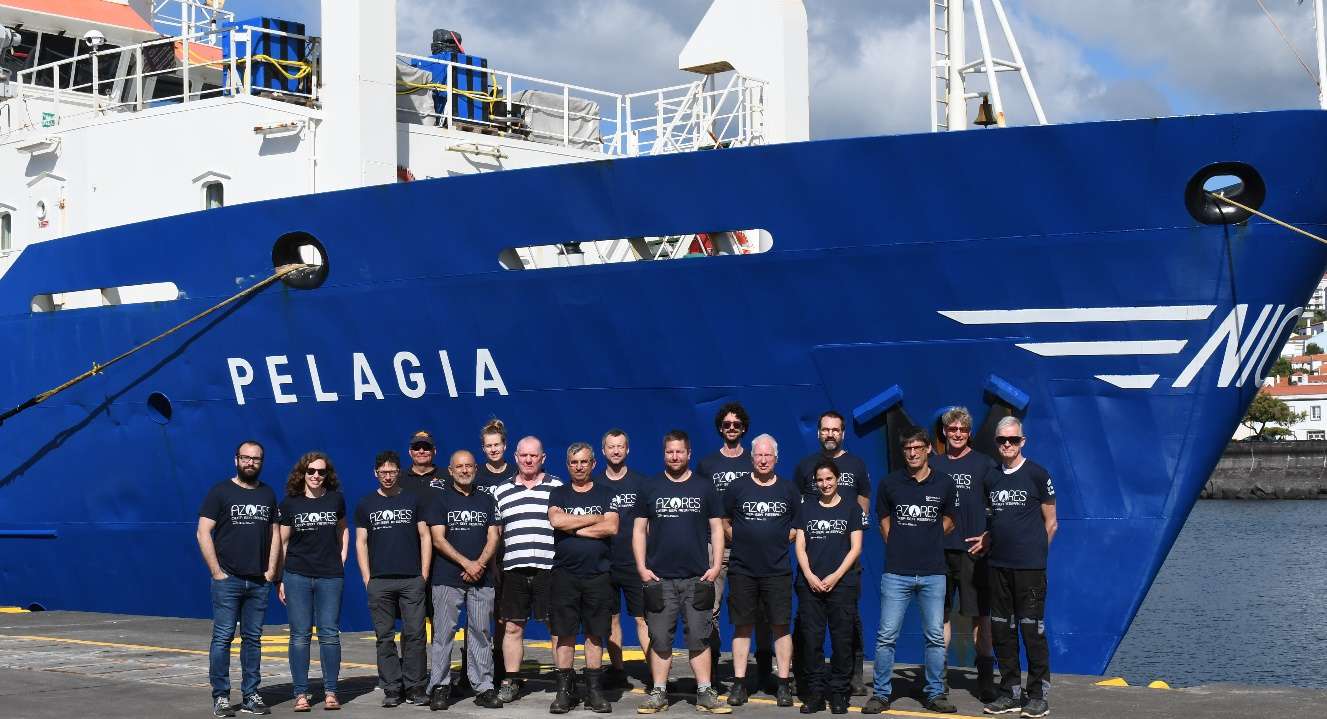
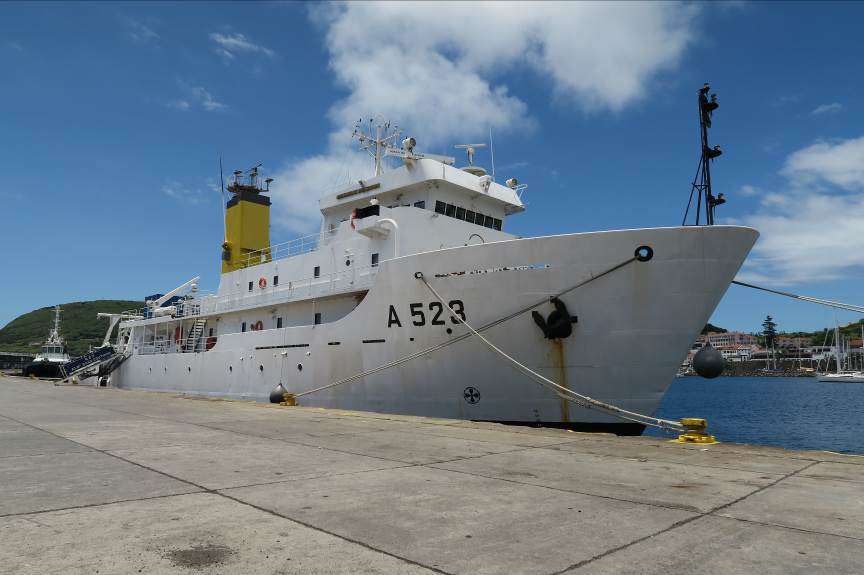
The iMAR cruise “The Integrated assessment of the distribution of Vulnerable Marine Ecosystem along the Mid-Atlantic Ridge (MAR) in the Azores region” took place aboard the Research Vessel Pelagia of the Royal Netherlands Institute for Sea Research (NIOZ) between May 19th and June 2nd 2021. This expedition was funded by the SEA OCEANS program of Eurofleets+ and the H2020 European project iAtlantic, and was led by the University of the Azores (Portugal) in collaboration with the Hydrographic Institute and University of Porto (Portugal), the University of Aarhus (Denmark), the National Oceanography Center (United Kingdom), GEOMAR (Germany), the University Museum of Bergen (Norway), the PP Shirshov Institute of Oceanology (Russia), and the University of Vale do Itajaí (Brazil). During the iMAR cruise we performed 28 stations for multibeam surveys, summing 171:30 hours of surveys, 5,500 km2 of mapped seabed (mainly in the North portion of the MAR in the Exclusive Economic Zone around the Azores), in 8 main areas and during many of the 2,500 km of transits All multibeam data processing was treated by Leonor Neves de Sousa (Instituto Hidrográfico) with the software “CARIS HIPS & SIPS”.These are the .all files of multibeam row data about 28 stations, between 18 May and 2 June, with information about seamounts, ridges and depressions of the Mid-Atlantic Ridge in the Azores.
Nutrient data collected during the iMAR 2021/Eurofleets+ research cruise in Mid Atlantic Ridge (Azores EEZ)
SEANOE
|
Jan, 2022
5 team members are authors
OA DOI 10.17882/86115
Authors 10.17882/86115
Abstract
This dataset was produced during the iMAR cruise “The Integrated assessment of the distribution of Vulnerable Marine Ecosystem along the Mid-Atlantic Ridge (MAR) in the Azores region”, that took place aboard the Research Vessel Pelagia of the Royal Netherlands Institute for Sea Research between May 18th and June 2nd 2021. The iMAR cruise aimed to evaluate the role of the MAR in shaping latitudinal and trans-Atlantic patterns in deep-sea biogeography, connectivity and assemblages of deep-sea megafauna. This expedition was funded by the SEA OCEANS program of Eurofleets+ and the H2020 European project iAtlantic, and was led by the University of the Azores (Portugal) in collaboration with the Hydrographic Institute and University of Porto (Portugal), the University of Aarhus (Denmark), the National Oceanography Center (United Kingdom), GEOMAR (Germany), the University Museum of Bergen (Norway), the PP Shirshov Institute of Oceanology (Russia), and the University of Vale do Itajaí (Brazil). Nutrient analysis was performed according to Grasshoff et al, adopted for a 5 channel continues flow analyzer (Skalar San Plus, Skalar Analytical B. V., Breda, The Netherlands). Nitrite and nitrate+nitrite was measured using an ammonia buffer and sulfanilamide/alpha-Naphthylethylene diamine dihydrochloride colour reagent in phosphoric acid, with reduction of nitrate to nitrite by cadmium column of at least 80% measured reduction capacity (90-100% achieved), followed by quantification with spectrophotometric determination of the nitrite-azo dye at 540 nm. Nitrate was determined as the difference between nitrate+nitrite and nitrite measurements. Ammonia was measured using a citrate/tartrate buffer and phenol color reagent, catalyzed by hypochlorite and nitroprusside , followed by quantification with spectrophotometric determination of the phenol-ammonia complex at 630 nm. Phosphate samples reacted with antimo nytartrate and ammonium molybdate solution in sulfuric acidified solution, the resulting complex wasreduced by ascorbic acid to a deep blue dye, followed by quantification with spectrophotometric determination of the reduced antimony-phospho-molybdate complex at 880 nm. Silicate samples was acidified with sulfuric acid and reacted with ammonium molybdate solution, reduced by ascorbic acid to a blue dye with oxalic acid to remove phosphate interference , followed by quantification with spectrophotometric determination of the reduced molybdo-silicate complex at 810 nm. Methods used are accredited with expected detection limit of 0,04 µM for nitrite, 0,1 µM for nitrate, 0,3 µM for ammonia, 0,06 µM for Phosphate and 0,2 µM for silicate, with expected RSD between 4 and 7%for the individual nutrients. Certified reference materials (VKI type QC RW1 for ammonia, phosphate and nitrate) and internal reference materials for Nitrite and silicate was spiked at two levels to natural low nutrient seawater sample for quality assurance, recovering 91-109% of the spike for nitrite, nitrate, phosphate and silicate at with RSD% of 1 to 5%, and recovery of 84-91% for ammonia, with RSDs up to 15%. No corrections was performed on data the recoveries. Except for ammonia, all results was within the acceptance limits for accredited analysis. Analysis was performed over two runs, one with triplicates and then a fourth spare sample was included to investigate the ammonia instability, but it could not be determined if this was due to storage/transport or instrument The “.CSV” files of fully processed data contain data collected mainly in the North portion of the MAR in the Exclusive Economic Zone around the Azores.
ADCP data collected during the iMAR 2021/Eurofleets+ research cruise in Mid Atlantic Ridge (Azores EEZ)
SEANOE
|
Jan, 2022
5 team members are authors
OA DOI 10.17882/86019
Authors 10.17882/86019
Abstract
This dataset was produced during the iMAR cruise “The Integrated assessment of the distribution of Vulnerable Marine Ecosystem along the Mid-Atlantic Ridge (MAR) in the Azores region”, that took place aboard the Research Vessel Pelagia of the Royal Netherlands Institute for Sea Research between May 19th and June 2nd 2021. The iMAR cruise aimed to evaluate the role of the MAR in shaping latitudinal and trans-Atlantic patterns in deep-sea biogeography, connectivity and assemblages of deep-sea megafauna. This expedition was funded by the SEA OCEANS program of Eurofleets+ and the H2020 European project iAtlantic, and was led by the University of the Azores (Portugal) in collaboration with the Hydrographic Institute and University of Porto (Portugal), the University of Aarhus (Denmark), the National Oceanography Center (United Kingdom), GEOMAR (Germany), the University Museum of Bergen (Norway), the PP Shirshov Institute of Oceanology (Russia), and the University of Vale do Itajaí (Brazil). ADCP data was collected at 34 stations during the iMAR cruise, mainly in the North portion of the MAR in the EEZ around the Azores (Table 1). This dataset contain the “.ENR” and another 9 file types with the same name structure but different extensions (.ENS; .ENX; .TXT; .LTA; .N1R; .N2R; .NMS; .STA; .VMO). VmDas Quick Start Guide: “.ENR” raw ADCP data file; “.ENS” ADCP data after having been screened for RSSI and correlation by VmDas; “.ENX” ADCP single-ping data (plus NAV) after having been bin-mapped, transformed to Earth coordinates, and screened for error velocity, vertical velocity, and false targets. “.LTA” ADCP (plus NAV) data that has been averaged using the long time period; “.N1R” and “.N2R” Raw NMEA data files; includes ADCP time stamps; “.N1R” extension is used for single-port NMEA data collection, or for GPS position data (Nav) in dual-port collection mode. The “.N2R” extension is used for Roll/Pitch/Heading (RPH) data collection when using two serial ports for NMEA data collection. “.NMS” Binary format NAV data file after having been screened and pre-averaged. “.STA” ADCP (plus NAV) data that has been averaged using the short time period; “.VMO” the option settings used for collecting the data (text file).
List of stations with data collected during the iMAR 2021/Eurofleets+ research cruise in Mid Atlantic Ridge (Azores EEZ)
SEANOE
|
Jan, 2022
5 team members are authors
OA DOI 10.17882/86103
Abstract
This dataset contain the metadata for all stations conducted during the iMAR cruise “The Integrated assessment of the distribution of Vulnerable Marine Ecosystem along the Mid-Atlantic Ridge (MAR) in the Azores region”, that took place aboard the Research Vessel Pelagia of the Royal Netherlands Institute for Sea Research between May 19th and June 2nd 2021. This expedition was funded by the SEA OCEANS program of Eurofleets+ and the H2020 European project iAtlantic, and was led by the University of the Azores (Portugal) in collaboration with the Hydrographic Institute and University of Porto (Portugal), the University of Aarhus (Denmark), the National Oceanography Center (United Kingdom), GEOMAR (Germany), the University Museum of Bergen (Norway), the PP Shirshov Institute of Oceanology (Russia), and the University of Vale do Itajaí (Brazil). Statistics: Cruise duration was 17 days, 2,500 km of transits, 6 areas visited, 5,500 km2 of mapped seabed (mainly in the North portion of the MAR in the EEZ around the Azores), 19 dives with the NIOZ video system that resulted in 54 hours of deep-sea images over 48 km of the seabed, 13 stations for the analysis of water mass properties and to collect sediments, which resulted in 380 samples for environmental DNA, 280 samples for nutrient analyses, 27 sediment samples for geological analyses, 24 for microplastic analyses, 10 samples for bacteriological, and 10 samples meiofauna analyses.
SVP data collected during the iMAR 2021/Eurofleets+ research cruise in Mid Atlantic Ridge (Azores EEZ)
SEANOE
|
Jan, 2022
5 team members are authors
OA DOI 10.17882/86107
Authors 10.17882/86107
Abstract
This dataset was produced during the iMAR cruise “The Integrated assessment of the distribution of Vulnerable Marine Ecosystem along the Mid-Atlantic Ridge (MAR) in the Azores region”, that took place aboard the Research Vessel Pelagia of the Royal Netherlands Institute for Sea Research between May 19th and June 2nd 2021. The iMAR cruise aimed to evaluate the role of the MAR in shaping latitudinal and trans-Atlantic patterns in deep-sea biogeography, connectivity and assemblages of deep-sea megafauna. This expedition was funded by the SEA OCEANS program of Eurofleets+ and the H2020 European project iAtlantic, and was led by the University of the Azores (Portugal) in collaboration with the Hydrographic Institute and University of Porto (Portugal), the University of Aarhus (Denmark), the National Oceanography Center (United Kingdom), GEOMAR (Germany), the University Museum of Bergen (Norway), the PP Shirshov Institute of Oceanology (Russia), and the University of Vale do Itajaí (Brazil). Vertical CTD Seabird SBE 32 /Rosette profiles were conducted at 19 stations to generate Sound Velocity Profiles (Table 1), mainly in the North portion of the MAR in the Exclusive Economic Zone around the Azores. The “.cnv” files contain the sound velocity data binned to 1 m depth intervals using the “bin average”.
CTD data collected during the iMAR 2021/Eurofleets+ research cruise in Mid Atlantic Ridge (Azores EEZ)
SEANOE
|
Jan, 2022
5 team members are authors
OA DOI 10.17882/86106
Authors 10.17882/86106
Abstract
This dataset was produced during the iMAR cruise “The Integrated assessment of the distribution of Vulnerable Marine Ecosystem along the Mid-Atlantic Ridge (MAR) in the Azores region”, that took place aboard the Research Vessel Pelagia of the Royal Netherlands Institute for Sea Research between May 18th and June 2nd 2021. The iMAR cruise aimed to evaluate the role of the MAR in shaping latitudinal and trans-Atlantic patterns in deep-sea biogeography, connectivity and assemblages of deep-sea megafauna. This expedition was funded by the SEA OCEANS program of Eurofleets+ and the H2020 European project iAtlantic, and was led by the University of the Azores (Portugal) in collaboration with the Hydrographic Institute and University of Porto (Portugal), the University of Aarhus (Denmark), the National Oceanography Center (United Kingdom), GEOMAR (Germany), the University Museum of Bergen (Norway), the PP Shirshov Institute of Oceanology (Russia), and the University of Vale do Itajaí (Brazil). Vertical CTD/Rosette profiles were conducted with the CTD Seabird SBE 32 at 19 stations to measure physical and chemical seawater properties that characterize the dominant water masses described for the North MAR region of the Azores (Table 1). The “.CNV” files of fully processed data contain data of twenty-two parameters interpolated at 1-meter bins, (Table 2), mainly in the North portion of the MAR in the Exclusive Economic Zone around the Azores.
Outputs of predictive distribution models of deep-sea elasmobranchs in the Azores EEZ (down to 2,000m depth) using Generalized Additive Models
PANGAEA
|
Jan, 2022
3 team members are authors
OA DOI 10.1594/pangaea.940808
Authors 10.1594/pangaea.940808
González-Irusta, José Manuel
Fauconnet, Laurence
Das, Diya Catarino, Diana Afonso, Pedro Viegas, Cláudia Neto
Rodrigues, Luís
Menezes, Gui M Rosa, Alexandra Pinho, Mário Rui Rilhó Silva, Hélder Marques Da Giacomello, Eva
Morato, Telmo
Abstract
Description: We developed predictive distribution models of deep-sea elasmobranchs for up to 2000 m depth in the Azores EEZ and neighboring seamounts, from approximately 33°N to 43°N and 20°W to 36°W. Georeferenced presence, absence, and abundance data were obtained from scientific surveys and commercial operations reporting at least one deep-sea elasmobranch capture. A 20-year 'survey dataset' (1996-2017) was compiled from annual scientific demersal surveys using two types of bottom longlines (types LLA and LLB), and an 'observer dataset' (2004-2018) from observer programs covering commercial fisheries operations using bottom longline (similar to type LLA) and vertical handline ('gorazeira'). We used the most ecologically relevant candidate environmental predictors for explaining the spatial distribution of deep-sea elasmobranch in the Azores: depth, slope, northness, eastness, Bathymetric Position Index (BPI), nitrates, and near bottom currents. We merged existing multibeam data for the Azores EEZ with bathymetry data extracted from EMODNET (EMODnet Bathymetry Consortium 2018) to calculate depth values (down to 2000m). All variables were projected with the Albers equal-area conical projection centered in the middle of the study area and were rescaled using bilinear interpolation to a final grid cell resolution of 1.12 x1.12 km (i.e., 0.012°). Slope, northness, and eastness were computed from the depth raster using the function terrain in the R package raster. BPI was derived from the rescaled depth with an inner radius of 3 and an outer radius of 25 grid cells using the Benthic Terrain Model 3.0 tool in ArcGIS 10.1. Nitrates were extracted from Amorim et al. (2017). Near-bottom current speed (m·s-1) average values were based on a MOHID hydrodynamic model application (Viegas et al., 2018) with an original resolution of 0.054°. Besides the environmental variables, we also included three operational predictors in the analysis: year, fishing effort (number of hooks) and gear type (longline LLA and LLB, and gorazeira).
List of deep-sea benthic video stations collected during the iMAR 2021/Eurofleets+ research cruise in Mid Atlantic Ridge (Azores EEZ)
SEANOE
|
Jan, 2022
5 team members are authors
OA DOI 10.17882/86110
Abstract
This dataset was collected during the iMAR cruise “The Integrated assessment of the distribution of Vulnerable Marine Ecosystem along the Mid-Atlantic Ridge (MAR) in the Azores region”, that took place aboard the Research Vessel Pelagia of the Royal Netherlands Institute for Sea Research (NIOZ) between May 19th and June 2nd 2021. The iMAR cruise aimed to evaluate the role of the MAR in shaping latitudinal and trans-Atlantic patterns in deep-sea biogeography, connectivity and assemblages of deep-sea megafauna. This expedition was funded by the SEA OCEANS program of Eurofleets+ and the H2020 European project iAtlantic, and was led by the University of the Azores (Portugal) in collaboration with the Hydrographic Institute and University of Porto (Portugal), the University of Aarhus (Denmark), the National Oceanography Center (United Kingdom), GEOMAR (Germany), the University Museum of Bergen (Norway), the PP Shirshov Institute of Oceanology (Russia), and the University of Vale do Itajaí (Brazil). The deep-sea benthic communities were mapped using the NIOZ towed camera system. The Hopper system generated a series of high-definition video transects in each area explored, starting from the deepest point (set at 1,200 m approx.) and moving upwards towards the seamount or ridge summit (700 m to 300 m depth). During the iMAR cruise, 22 stations for Hopper video transects were performed (Table 1), mainly in the North portion of the MAR inside the Exclusive Economic Zone around the Azores, which produced approximately 54 hours of bottom time, along 48 km of seafloor.
Dataset year 2021
Blue Azores Program Expedition 2018, Station 57, Dive 15: annotation of Paragorgia johnsoni Gray, 1862
Zenodo
|
Apr, 2021
6 team members are authors
OA Citations 1 DOI 10.5281/zenodo.4727164
Abstract
Annotation of Paragorgia johnsoni Gray, 1862 colonies from underwater video footage recorded during the Blue Azores 2018 Expedition with the ROV Luso onboard the NRP Almirante Gago Coutinho, Station 57, Dive 15 (June 23rd, 2018). The images correspond to the octocoral garden discovered between 545 and 595 m depth on the slopes of a small ridge-like structure located on the Mid-Atlantic Ridge, in the Azores region.
Blue Azores Program Expedition 2018, Station 57, Dive 15: annotation of Paragorgia johnsoni Gray, 1862
Zenodo
|
Apr, 2021
6 team members are authors
OA Citations 1 DOI 10.5281/zenodo.4727164
Abstract
Annotation of Paragorgia johnsoni Gray, 1862 colonies from underwater video footage recorded during the Blue Azores 2018 Expedition with the ROV Luso onboard the NRP Almirante Gago Coutinho, Station 57, Dive 15 (June 23rd, 2018). The images correspond to the octocoral garden discovered between 545 and 595 m depth on the slopes of a small ridge-like structure located on the Mid-Atlantic Ridge, in the Azores region.
Dataset year 2020
Set of terrain (static in time) and environmental (dynamic in time) variables used as candidate predictors of present-day (1951-2000) and future (2081-2100) suitable habitat of cold-water corals and deep-sea fishes in the North Atlantic
PANGAEA
|
Jan, 2020
2 team members are authors
OA Citations 6 DOI 10.1594/pangaea.911117
Authors 10.1594/pangaea.911117
Chih‐Lin Wei José Manuel González‐Irusta
Carlos Dominguez‐Carrió
Telmo Morato
Abstract
We used environmental niche modelling along with the best available species occurrence data and environmental parameters to model habitat suitability for key cold-water coral and commercially important deep-sea fish species under present-day (1951-2000) environmental conditions and to forecast changes under severe, high emissions future (2081-2100) climate projections (RCP8.5 scenario) for the North Atlantic Ocean (from 18°N to 76°N and 36°E to 98°W). This dataset contains a set of terrain (static in time) and environmental (dynamic in time) variables were used as candidate predictors of present-day (1951-2000) distribution and to forecast future (2081-2100) changes. All predictor variables were projected with the Albers equal-area conical projection centred in the middle of the study area. The terrain variable depth was extracted from a bathymetry grid built from two data sources: the EMODnet Digital Terrain Model (EMODnet, 2018) and the General Bathymetric Chart of the Oceans (GEBCO 2014; Weatherall et al., 2015). Slope (in degrees) was derived from the final bathymetry grid using the Raster package in R (Hijmans, 2016) and the Bathymetric Position Index (BPI) was computed using the Benthic Terrain Model 3.0 tool in ArcGIS 10.1 with an inner radius of 3 and an outer radius of 25 grid cells. In order to avoid extreme values, BPI was standardized using the scale function from the Raster package. Environmental variables of present-day and future conditions, including particulate organic carbon (POC) flux at 100-m depth (epc100, mg C m-2 d-1), bottom water dissolved oxygen concentration (µmol kg-1), pH, and potential temperature (°K) were downloaded from the Earth System Grid Federation (ESGF) Peer-to-Peer (P2P) enterprise system. The epc100 was converted to export POC flux at the seafloor using the Martin curve (Martin, Knauer, Karl, & Broenkow, 1987) following the equation: epc = epc100*(water depth/export depth)-0.858, and setting the export depth to 100 m. Near seafloor aragonite (Ωar) and calcite (Ωcal) saturation were also used as candidate predictors for habitat suitability of cold-water coral species. These saturation states were computed by dividing the bottom water carbonate ion concentration (mol m-3) by the bottom water carbonate ion concentration (mol m-3) for seawater in equilibrium with pure aragonite and calcite. Yearly means of these parameters were calculated for the periods 1951-2000 (historical simulation) and 2081-2100 (RCP8.5 or business-as-usual scenario) using the average values obtained from the Geophysical Fluid Dynamics Laboratory's ESM 2G model (GFDL-ESM-2G; Dunne et al., 2012), the Institut Pierre Simon Laplace's CM6-MR model (IPSL-CM5A-MR; Dufresne et al., 2013) and Max Planck Institute's ESM-MR model (MPI-ESM-MR; Giorgetta et al., 2013) within the Coupled Models Intercomparison Project Phase 5 (CMIP5) for each grid cell of the present study area.
Compilation of records of vulnerable marine ecosystem indicator taxa in the North Atlantic
PANGAEA
|
Jan, 2020
3 team members are authors
OA DOI 10.1594/pangaea.920658
Authors 10.1594/pangaea.920658
Ramiro-Sánchez, Berta Henry, Lea-Anne
Morato, Telmo
Taranto, Gerald
Cleland, Jason
Carreiro-Silva, Marina
Sampaio, Íris Domínguez-Carrió, Carlos Messing, Charles G Kenchington, Ellen L Murton, Bramley Roberts, J Murray
Abstract
Obtaining a comprehensive knowledge of the spatial variation of deep-sea benthic ecosystems is essential for conservation and management purposes. Here we assembled publicly available information on the positions of vulnerable marine ecosystem indicator species from public databases (OBIS, NOAA and ICES), the published literature and from focused efforts from the Logachev Mounds (NE Atlantic), Tropic Seamount (NE tropical Atlantic) and Bermuda for depths below 200 m. Taxa included hexacorals, octocorals, hydroids, sponges, hydrothermal vents associated species (bivalves, decapods), crinoids and xenophyophores.
ATLAS work on Good Environmental Status across 9 study areas in the northeast Atlantic
PANGAEA
|
Jan, 2020
2 team members are authors
OA DOI 10.1594/pangaea.911409
Authors 10.1594/pangaea.911409
Kazanidis, Georgios Orejas, Covadonga Borja, Angel Kenchington, Ellen L Henry, Lea-Anne Callery, Oisín
Carreiro-Silva, Marina
Egilsdottir, Hronn Giacomello, Eva Grehan, Anthony J Menot, Lenaick
Morato, Telmo
Ragnarsson, Stefan Aki Rueda, José Luis Stirling, David Stratmann, Tanja Van Oevelen, Dick Palialexis, Andreas Johnson, David Roberts, J Murray
Abstract
This data is showing the outcomes of the analysis done by ATLAS researchers on the environmental status of nine deep-sea areas in the northeast Atlantic. These results are part of the ATLAS work facilitating the implementation of the European Commission's Marine Strategy Framework Directive in the deep waters of the North Atlantic. The nine study areas that were examined are: 1) LoVe Ocean Observatory, 2) Faroe-Shetland Channel, 3) Reykjanes Ridge, 4) Rockall Bank, 5) Mingulay Reef Complex, 6) Porcupine Seabight, 7) Bay of Biscay, 8) Azores, 9) Gulf of Cádiz. The analyses were carried out using the Nested Environmental status Assessment Tool (NEAT). The environmental status outcomes are shown for the total study area, the designated spatial assessment units (SAUs), the ecosystem components ("Benthic invertebrates", "Fish", "Benthos") and the habitats ("Aggregations of L. pertusa & M. oculata on soft sediments", "Aggregations of sea pens & alcyonaceans on soft sediments", "Aggregations of L. pertusa & M. oculata on hard substrates", "Aggregations of Antipatharians and alcyonaceans on hard substrates", "Benthic", "Rocky", "Sedimentary").
North Atlantic basin-scale multi-criteria assessment database to inform management recommendations to protect Vulnerable Marine Ecosystems
Zenodo
|
Nov, 2020
7 team members are authors
OA DOI 10.5281/zenodo.4279776
Authors 10.5281/zenodo.4279776
Telmo Morato
Christopher K. Pham
Laurence Fauconnet
Gerald H. Taranto
Giovanni Chimienti Erik E. Cordes
Carlos Dominguez‐Carrió
P. Durán-Muñoz Hrönn Egilsdóttir José Manuel González‐Irusta Anthony Grehan Dierk Hebbeln Lea‐Anne Henry Georgios Kazanidis Ellen Kenchington Lénàïck Menot Tina N. Molodtsova Covadonga Orejas Berta Ramiro‐Sánchez
Manuela Ramos
Luís Rodrigues
Steve W. Ross José L. Rueda M.m. Sacau-Cuadrado David Stirling
Marina Carreiro‐Silva
Abstract
We applied the International Council for the Exploration of the Sea (ICES) multi criteria assessment (MCA) method for identifying VMEs in the North-East Atlantic (ICES, 2016a,b; Morato et al., 2018) from ATLAS VME database to provide the first North Atlantic Ocean basin-scale VME assessment. This MCA is a taxa-dependent spatial method that incorporates the fact that not all VME indicators have the same vulnerability to human impacts, and thus should not be weighted equally. By including a measure of the confidence associated with each VME record, this methodology also considers some of the uncertainties associated with the sampling methodologies, the reported taxonomy, and data quality issues. Equally important, this dataset highlights areas in the North Atlantic that have been poorly sampled and that require further attention. Finally, this methodology also allows for the evaluation and comparison of the VME likelihood with spatial fisheries data that may directly generate significant adverse impacts on VMEs. In the data report, we made the “North Atlantic basin-scale VME index dataset” publicly, thus allowing its consultation and use by scientists, managers, or other relevant stakeholders.
Dataset year 2019
Climate-induced changes in the suitable habitat of cold-water corals and commercially important deep-sea fishes in the North Atlantic
PANGAEA
|
Jan, 2019
3 team members are authors
OA Citations 2 DOI 10.1594/pangaea.910319
Authors 10.1594/pangaea.910319
Morato, Telmo
González-Irusta, José Manuel Domínguez-Carrió, Carlos Wei, C Davies, A Sweetman, Andrew K
Taranto, A H
Beazley, Lindsay García-Alegre, A Grehan, Anthony J Laffargue, P Javier Murillo, F Sacau, M Vaz, S Kenchington, Ellen L Arnaud-Haond, Sophie Callery, Oisín Chimienti, G Cordes, E Egilsdottir, Hronn Freiwald, André Gasbarro, R Gutierrez-Zárate, C Gianni, M Gilkinson, Kent Wareham Hayes, V E Hebbeln, Dierk Hedges, K Henry, Lea Anne Johnson, Devin S Koen-Alonso, M Lirette, C Mastrototaro, F Menot, Lenaick Molodtsova, Tina Durán Muñoz, P Orejas, Covadonga Pennino, Maria Grazia Puerta, P Ragnarsson, Stefan Aki Ramiro-Sánchez, Berta Rice, J Rivera, Jaime Roberts, J Murray Ross, Steve W Rueda, José Luis Sampaio, Íris Snelgrove, Paul V R Stirling, David Treble, M A Urra, Javier Vad, Johanne Van Oevelen, Dick Watling, L Walkusz, Wojciech Wienberg, Claudia Woillez, M Levin, L A
Carreiro-Silva, Marina
Abstract
We used environmental niche modelling along with the best available species occurrence data and environmental parameters to model habitat suitability for key cold-water coral and commercially important deep-sea fish species under present-day (1951-2000) environmental conditions and to forecast changes under severe, high emissions future (2081-2100) climate projections (RCP8.5 scenario) for the North Atlantic Ocean (from 18°N to 76°N and 36°E to 98°W). The VME indicator taxa included Lophelia pertusa , Madrepora oculata, Desmophyllum dianthus, Acanela arbuscula, Acanthogorgia armata, and Paragorgia arborea. The six deep-sea fish species selected were: Coryphaenoides rupestris, Gadus morhua, blackbelly Helicolenus dactylopterus, Hippoglossoides platessoides, Reinhardtius hippoglossoides, and Sebastes mentella. We used an ensemble modelling approach employing three widely-used modelling methods: the Maxent maximum entropy model, Generalized Additive Models, and Random Forest. This dataset contains: 1) Predicted habitat suitability index under present-day (1951-2000) and future (2081-2100; RCP8.5) environmental conditions for twelve deep-sea species in the North Atlantic Ocean, using an ensemble modelling approach. 2) Climate-induced changes in the suitable habitat of twelve deep-sea species in the North Atlantic Ocean, as determined by binary maps built with an ensemble modelling approach and the 10-percentile training presence logistic (10th percentile) threshold. 3) Forecasted present-day suitable habitat loss (value=-1), gain (value=1), and acting as climate refugia (value=2) areas under future (2081-2100; RCP8.5) environmental conditions for twelve deep-sea species in the North Atlantic Ocean. Areas were identified from binary maps built with an ensemble modelling approach and two thresholds: 10-percentile training presence logistic threshold (10th percentile) and maximum sensitivity and specificity (MSS). Refugia areas are those areas predicted as suitable both under present-day and future conditions. All predictions were projected with the Albers equal-area conical projection centred in the middle of the study area. The grid cell resolution is of 3x3 km.
Dataset year 2017
Ocean climatology in the Azores region (North Atlantic) and seabed characteristics, links to GIS layers in ArcGIS format
PANGAEA
|
Jan, 2017
1 team member is author
OA DOI 10.1594/pangaea.872601
Authors 10.1594/pangaea.872601
Patrícia Amorim António D. Perán Christopher K. Pham Manuela Juliano Frederico Cardigos Fernando Tempera
Telmo Morato
Abstract
Obtaining a comprehensive knowledge of the spatial and temporal variations of the environmental factors characterizing the Azores region is essential for conservation and management purposes. Although many studies are available for the region, there is a need for a general overview of the best available information. Here, we assembled a comprehensive collection of environmental data for this region. Data sources used in this study included remote sensing oceanographic data for 2003?2013 (sea surface temperature, chlorophyll-a concentration, particulate inorganic carbon (PIC), and particulate organic carbon (POC)), derived oceanographic data (primary productivity and North Atlantic oscillation index) for 2003?2013, and in situ data (temperature, salinity, oxygen, phosphate, nitrate and silicate) obtained from the World Ocean Atlas 2013.
Dataset year 2016
GIS layers of seafloor characteristics in the Azores region (North Atlantic), links to files in ArcGIS format
PANGAEA
|
Jan, 2016
1 team member is author
OA Citations 1 DOI 10.1594/pangaea.862152
Authors 10.1594/pangaea.862152
Antonio David Perán Miñarro Christopher K. Pham Patrícia Amorim Frederico Cardigos Fernando Tempera
Telmo Morato
Abstract
Current European legislation such as the Marine Strategy Framework Directive (MSFD; 2008/56/EC) has highlighted the need for accurate maps on the geomorphology of Europe's maritime territory. Such information is notably essential for the production of habitat maps and cumulative impact assessments of human activities (Halpern et al., 2008) necessary for marine spatial planning initiatives (Gilliland and Laffoley, 2008) and assessments of the representativity/sufficiency of marine protected areas networks like Natura 2000. Broadscale satellite bathymetry presently allows the identification of all prominent geomorphic structures present on the seafloor with a high grade of accuracy. However, these datasets and maps still need to be more widely disseminated in the scientific community.In this contribution, we provide an inventory of some important datasets related to the physical characteristics of the seafloor surrounding the Azores Archipelago. The objective is to ensure that our compilation is readily available for any researchers interested in developing species distribution models, or for the management and conservation of natural resources in the region.

Follow us on social media to stay updated

Location

Institute of Marine Sciences — Okeanos, University of the Azores

Departamento de Oceanografia e Pescas — Universidade dos Açores

Rua Prof. Doutor Frederico Machado, No. 4
9901-862 Horta, Portugal

Contact

FOLLOW US
ADSR

AZORES DEEP-SEA RESEARCH © 2020-2026 — RELEASE 2.1

Developed by Valter Medeiros VALTER MEDEIROS