Loading…

Cruise report - Dives with LULA1000 in Baixo de São Mateus, Azores

Loading DOI record...

Cruise report - Dives with LULA1000 in Baixo de São Mateus, Azores

DOI: 10.5281/zenodo.6593184

Type: Cruise Report

Year: 2019

Citations: 0

AZORES DEEP-SEA RESEARCH
Cruise Report Open access August 2019

Cruise report - Dives with LULA1000 in Baixo de São Mateus, Azores

Total authors
7
Involved team members
4
Citations
0
References
0

Related to this work

Abstract

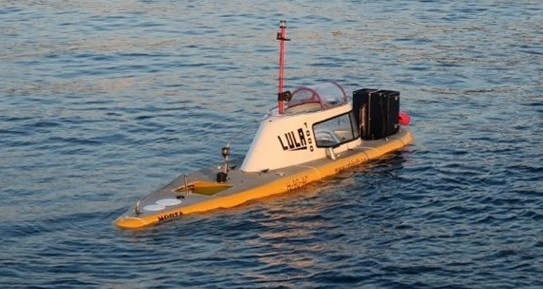
Background: Baixo de São Mateus is known for its historical importance as a fishing ground south of Pico Island. Fisheries bycatch information suggests that this seamount may host important deep-sea benthic communities. However, Baixo São Mateus has never been explored with video surveying techniques. By taking advantage of the collaboration with the Fundação Rebikoff-Niggeler (FRN) and the use of their submersible LULA1000, based in the harbour of Horta (Faial), we aimed to explore the never surveyed seamount ridge Baixo de São Mateus. The main objective of this survey was to evaluate if this area may fit the FAO criteria that define what constitutes a Vulnerable Marine Ecosystem. Namely, we aimed to: characterize the diversity and spatial distribution patterns of benthic communities and commercial fishes in this important fishing ground; document potential fishing impacts on the main structuring species that conform to the different benthic communities. Deep-sea benthic communities in Baixo de São Mateus: Overall, approximately 3.7 linear kilometers of seafloor were covered during the two exploratory dives carried out on the southern flank of Baixo de São Mateus. A total of seven benthic communities were identified, showing a clear bathymetric zonation. Remnants of longline fishing gears (e.g. ropes and monofilament lines) were recorded during the two dives, with several broken or damaged colonies of corals and sponges observed. Management recommendations: Based on the assessment described in the report, the seamount ridge Baixo de São Mateus does not fit the FAO criteria to be considered a VME and thus there is no sufficient scientific information to support this area as high priority for conservation in the Azores. Despite the presence of some long-lived species, there was an overall low number of species and communities and in low densities, when compared to other geomorphological features of the Azores region. Baixo São Mateus is an important fishing ground in the Azores. The low natural diversity of the benthic communities observed may suggest that existing fishing pressures in Baixo São Mateus will likely not have produced significant adverse impacts in the existing benthic living communities. However, it should be noticed that the present assessment is based only on two video transects, which covered a limited area of the seamount ridge. It is thus possible that we may have missed some important communities or areas with higher species diversity or other large structuring species. Therefore, continued scientific research is necessary to better understand the distribution of species, as well as the structural and functional role of such deep-sea benthic communities to better define adaptive management and conservation strategies.

Authors

4 involved team members
J
Joachim, Jakobsen

Fundação Rebikoff-Niggeler

K
Kirsten, Jakobsen

Fundação Rebikoff-Niggeler

B
Blasco-Ferre, Jordi

IMAR Instituto do Mar, University of the Azores, 9901-862 Horta, Portugal
Record details

Type
report
Language
EN

Keywords

Seamount Benthic zone Fishing Demersal zone Fishery Oceanography Geography Ridge Bathymetry Bycatch Geology Cruise Megafauna Pelagic zone Seafloor spreading Whaling Fish <Actinopterygii> Whale Environmental science Marine habitats Natural (archaeology) Commercial fishing

Follow us on social media to stay updated

Location

Institute of Marine Sciences — Okeanos, University of the Azores

Departamento de Oceanografia e Pescas — Universidade dos Açores

Rua Prof. Doutor Frederico Machado, No. 4
9901-862 Horta, Portugal

Contact

FOLLOW US
ADSR

AZORES DEEP-SEA RESEARCH © 2020-2026 — RELEASE 2.1

Developed by Valter Medeiros VALTER MEDEIROS