iMAR

Integrated assessment of the distribution of Vulnerable Marine Ecosystem along the Mid-Atlantic Ridge in the Azores region

Logo

iMAR

Loading project…

Integrated assessment of the distribution of Vulnerable Marine Ecosystem along the Mid-Atlantic Ridge in the Azores region

Reference: 824077 (EUROFLEETS+)

Period: 01 Jan 2021 to 31 Dec 2022

Funding: European Union’s Horizon 2020

AZORES DEEP-SEA RESEARCH
Project reference

824077 (EUROFLEETS+)


Time period

01 Jan 2021 to 31 Dec 2022


Funding agencies

European Union’s Horizon 2020


Summary

Integrated assessment of the distribution of Vulnerable Marine Ecosystem along the Mid-Atlantic Ridge in the Azores region

The Mid-Atlantic Ridge (MAR) is the most prominent ocean seafloor feature in the Atlantic Ocean, dividing it into eastern and western deep basins. The unique setting of the Azores, at the triple junction of the European, American and African plates and in close proximity to the ridge, offers an exceptional opportunity to survey the role of the MAR in shaping the distribution of deep-sea megabenthic communities, mostly those considered Vulnerable Marine Ecosystems (VME). The diverse geomorphology and complex oceanography patterns surrounding the Azores has generated an extraordinary diversity of benthic organisms, making this area a hotspot for cold-water corals in the North Atlantic. Latitudinal gradients and dissimilarities between the deep-water coral fauna on both sides of the MAR were noted at local and wider scale studies, raising the question on whether the MAR can represent a boundary for the biological dispersion between the East and West Atlantic. However, there has been considerably few explorations on seamounts, ridges and other topographic features along the MAR. The iMAR cruise proposed to last for 17 days and visit 11 different areas along the MAR. Survey sites have been selected along a latitude gradient of the MAR section within the Portuguese EEZ around the Azores, between 42° and 36° N. On each sampling area, we collected multibeam data for seabed mapping, together with tow camera transects to identify deep-sea benthic communities, water samples for biodiversity analyses through eDNA methods, and sediment samples for biodiversity analyses through faunal studies and eDNA methods, microplastics and analyses of granulometry and physical-chemical studies. Water mass properties were also characterized by sampling seawater and measuring physical-chemical parameters. The results of this exploration contribute to the aims of the H2020 iAtlantic project to understand the factors that control the distribution, stability and vulnerability of deep-sea ecosystems and better inform sustainable management throughout the Atlantic in an era of unprecedented global change. The iMAR cruise also aimed to enhance the predictive capabilities for VMEs, and to inform Good Environmental Status (GES), Marine Spatial Planning (MSP) and provide new insights on how to sustainably manage deep-sea ecosystems in the Mid-Atlantic Ridge. Finally, this cruise contribute to the SEAMAP 2030 (Mapping the Portuguese Sea) program of the Portuguese Hydrographic Institute and to the international Seabed 2030 initiative and the United Nations Decade of Ocean Science for Sustainable Development (2021-2030).

The RV Pelagia Cruise No. 64PE487 / Eurofleets+ iMAR aimed to evaluate the role of the Mid-Atlantic Ridge in shaping the latitudinal and trans-Atlantic patterns in deep-sea biogeography, connectivity and spatial distribution patterns of deep-sea megafauna. Additionally, the cruise aimed to (i) map and characterize deep-sea coral and sponge communities inhabiting unexplored seamounts and ridges in the MAR, around the Azores Region; (ii) identify new areas that fit the FAO’s VME definition; (iii) add to the existing knowledge on the environmental drivers that determine the spatial distribution of deep-sea benthic biodiversity in the MAR and finally (iv) determine the condition of benthic communities by looking at evidence of fishing damage to fauna, presence of lost fishing gear and marine litter.

Show less ↑
Show more ↓

Main results

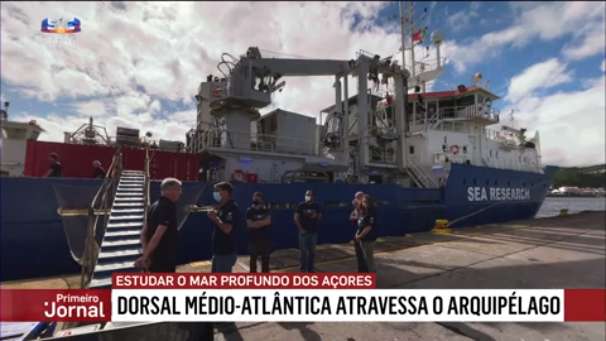
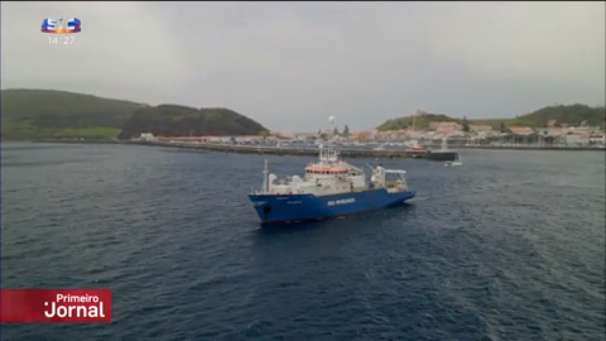
The iMAR cruise #1 took place aboard the RV Pelagia of the Royal Netherlands Institute for Sea Research between May 17th and June 2nd 2021. This expedition, funded by the SEA OCEANS program of Eurofleets+ and the H2020 European project Atlantic, was led by the Azores Deep-Sea Research Group at the University of the Azores (Portugal). We explored under-visited portions of the northern MAR in the Azores region and associated ridges and seamounts between 300 and 1,200 m depth: (1) South Chaucer, (2) unnamed seamount coded as D12, (3) the Kurchatov fracture zone area, including Isolado and D10 seamounts and ridges complex, (4) unnamed seamount West of Oscar seamount coded as D5, (5) the Gigante seamount and ridges complex, and (6) Cavala seamount.

  1. The iMAR expedition identified new areas that fit the definition of Vulnerable Marine Ecosystems, and compiled valuable scientific information to inform the development of policies that promote the preservation of the natural heritage, ensuring the sustainable use of the deep sea, minimizing negative impacts on these vulnerable ecosystems.
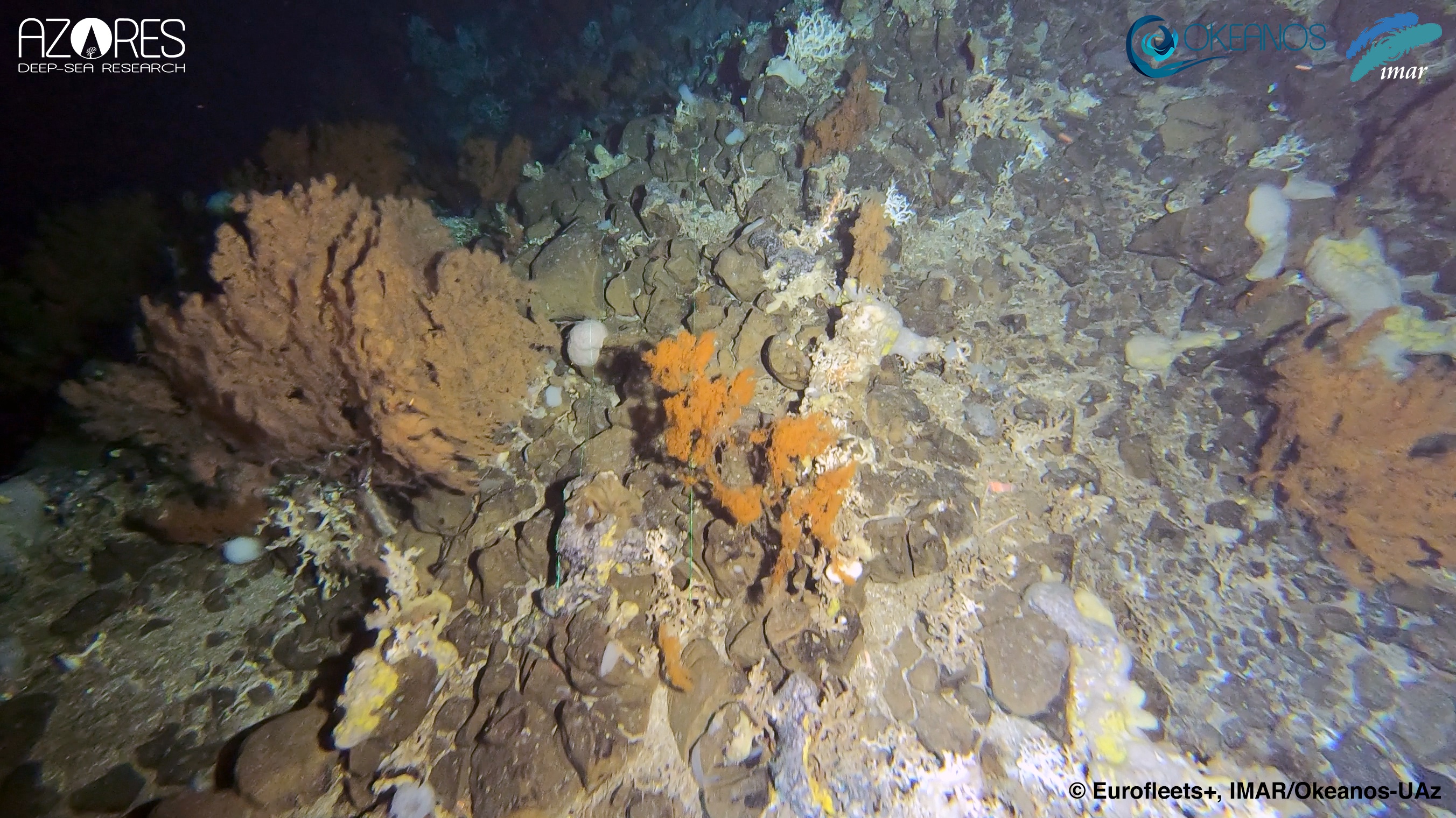
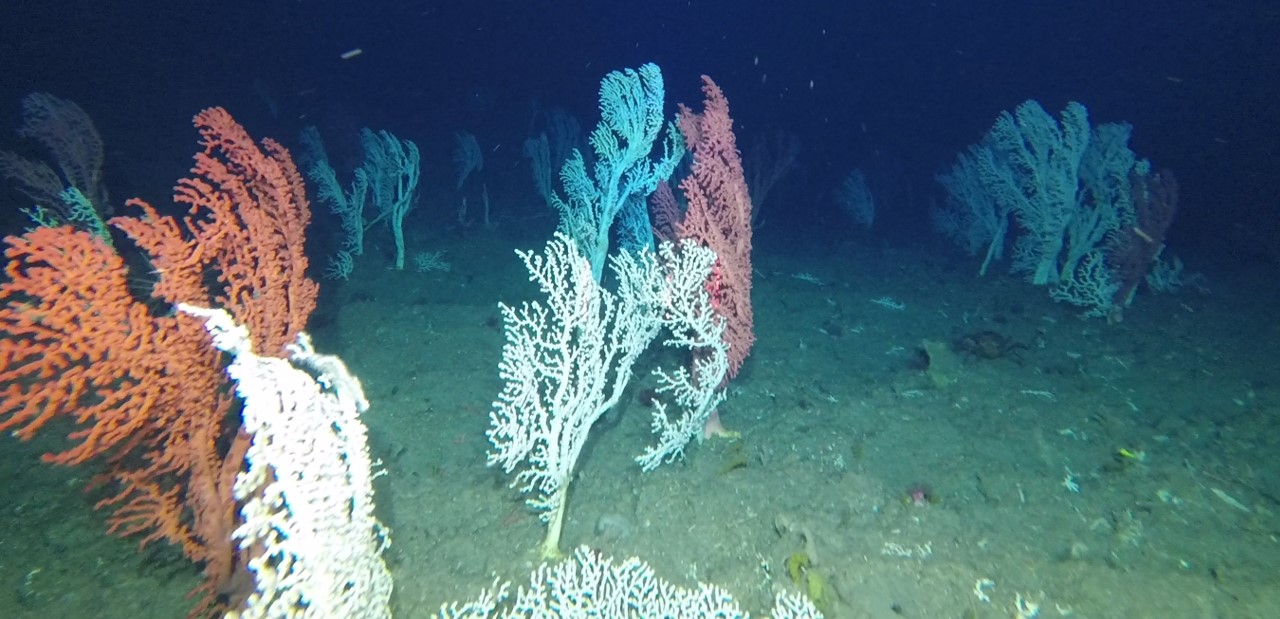
  2. The video work that aimed to characterize the benthic communities revealed the largest aggregation of black corals (or black coral gardens) ever seen in the Azores and perhaps across the Atlantic. These corals grow very slowly and can live for several thousands of years, therefore, these black coral gardens can be considered the equivalent of the redwood forests (oldest trees on the planet) that still persist, for example, in the United States of America.
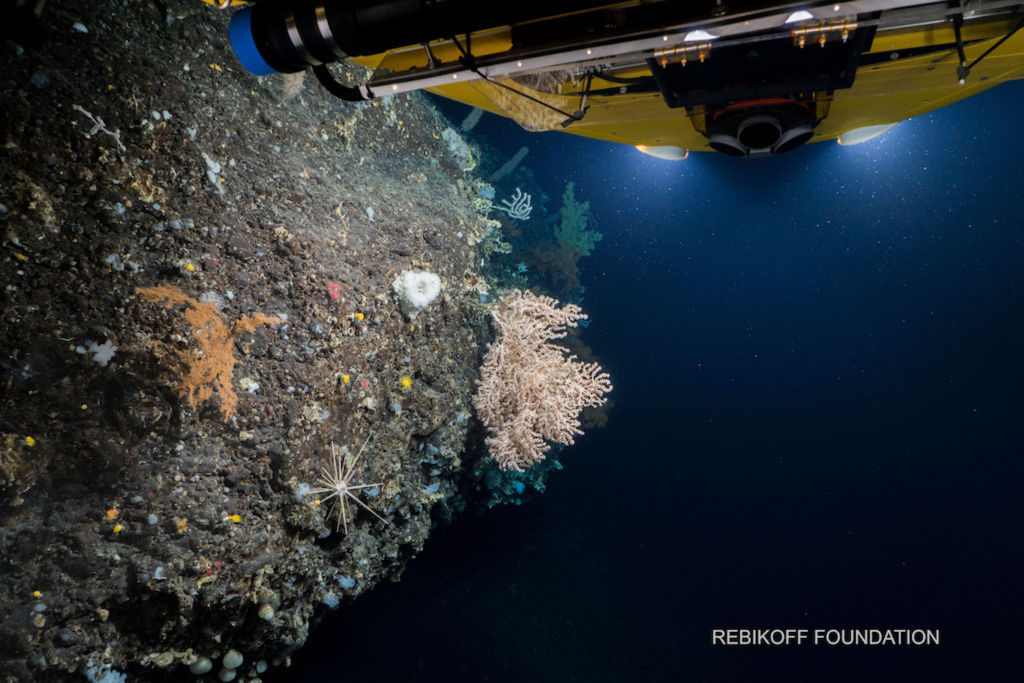
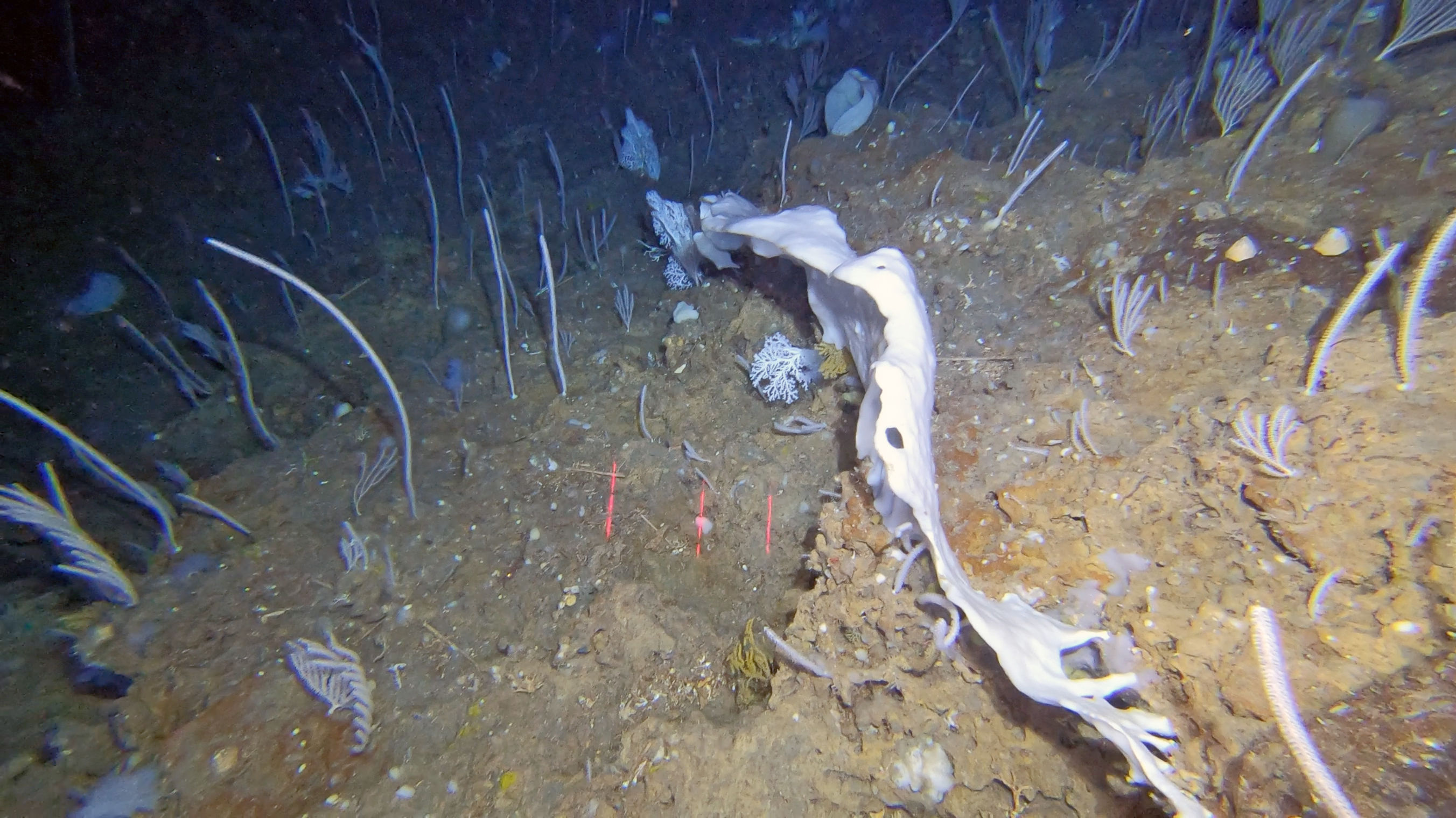
  3. We discovered several areas with formations of deep-sea coral thickets that have an important role as carbon reservoirs and in mitigating climate change. Some of these corals, but also sponges, are habitat structuring species, functioning as refuge areas for several other species including commercially important deep-sea fish, thus enhancing the total biodiversity associated with these habitats.
  4. We found aggregations of orange roughy and cardinalfish, which in a way confirm that the trawl ban within the Azores EEZ, declared in 2005, has had positive effects on these species and the habitats they are associated with.
  5. The multibeam bathymetric surveys revealed several locations in the northern part of the Azores EEZ that are much shallower than previously thought. One of these areas reaches depths susceptible to be fished (less than 600 meters), but since it has remained unknown it can be considered intact. These areas are fundamental for understanding what ecosystems looked like before they were impacted by fishing activities and may be considered reference sites and priority areas for conservation.
  6. These new discoveries will contribute with scientific information to the development of policies that promote the preservation of the natural heritage, ensuring the sustainable use of the deep sea, minimizing the negative impacts on these very vulnerable ecosystems. The expedition contributed significantly to the Instituto Hidrográfico (IH) program (Mapping the Portuguese Sea) and to the international initiative and the United Nations Decade of Ocean Science for Sustainable Development (2021-2030).
Show less ↑
Show more ↓
Nothing to show yet... Try again later.
List of deep-sea benthic video stations collected during the iMAR 2021/Eurofleets+ research cruise in Mid Atlantic Ridge (Azores EEZ)
Jan, 2022
5 team members are authors
OA DOI 10.17882/86110
Abstract
This dataset was collected during the iMAR cruise “The Integrated assessment of the distribution of Vulnerable Marine Ecosystem along the Mid-Atlantic Ridge (MAR) in the Azores region”, that took place aboard the Research Vessel Pelagia of the Royal Netherlands Institute for Sea Research (NIOZ) between May 19th and June 2nd 2021. The iMAR cruise aimed to evaluate the role of the MAR in shaping latitudinal and trans-Atlantic patterns in deep-sea biogeography, connectivity and assemblages of deep-sea megafauna. This expedition was funded by the SEA OCEANS program of Eurofleets+ and the H2020 European project iAtlantic, and was led by the University of the Azores (Portugal) in collaboration with the Hydrographic Institute and University of Porto (Portugal), the University of Aarhus (Denmark), the National Oceanography Center (United Kingdom), GEOMAR (Germany), the University Museum of Bergen (Norway), the PP Shirshov Institute of Oceanology (Russia), and the University of Vale do Itajaí (Brazil). The deep-sea benthic communities were mapped using the NIOZ towed camera system. The Hopper system generated a series of high-definition video transects in each area explored, starting from the deepest point (set at 1,200 m approx.) and moving upwards towards the seamount or ridge summit (700 m to 300 m depth). During the iMAR cruise, 22 stations for Hopper video transects were performed (Table 1), mainly in the North portion of the MAR inside the Exclusive Economic Zone around the Azores, which produced approximately 54 hours of bottom time, along 48 km of seafloor.
CTD data collected during the iMAR 2021/Eurofleets+ research cruise in Mid Atlantic Ridge (Azores EEZ)
Jan, 2022
5 team members are authors
OA DOI 10.17882/86106
Authors 10.17882/86106
Abstract
This dataset was produced during the iMAR cruise “The Integrated assessment of the distribution of Vulnerable Marine Ecosystem along the Mid-Atlantic Ridge (MAR) in the Azores region”, that took place aboard the Research Vessel Pelagia of the Royal Netherlands Institute for Sea Research between May 18th and June 2nd 2021. The iMAR cruise aimed to evaluate the role of the MAR in shaping latitudinal and trans-Atlantic patterns in deep-sea biogeography, connectivity and assemblages of deep-sea megafauna. This expedition was funded by the SEA OCEANS program of Eurofleets+ and the H2020 European project iAtlantic, and was led by the University of the Azores (Portugal) in collaboration with the Hydrographic Institute and University of Porto (Portugal), the University of Aarhus (Denmark), the National Oceanography Center (United Kingdom), GEOMAR (Germany), the University Museum of Bergen (Norway), the PP Shirshov Institute of Oceanology (Russia), and the University of Vale do Itajaí (Brazil). Vertical CTD/Rosette profiles were conducted with the CTD Seabird SBE 32 at 19 stations to measure physical and chemical seawater properties that characterize the dominant water masses described for the North MAR region of the Azores (Table 1). The “.CNV” files of fully processed data contain data of twenty-two parameters interpolated at 1-meter bins, (Table 2), mainly in the North portion of the MAR in the Exclusive Economic Zone around the Azores.
SVP data collected during the iMAR 2021/Eurofleets+ research cruise in Mid Atlantic Ridge (Azores EEZ)
Jan, 2022
5 team members are authors
OA DOI 10.17882/86107
Authors 10.17882/86107
Abstract
This dataset was produced during the iMAR cruise “The Integrated assessment of the distribution of Vulnerable Marine Ecosystem along the Mid-Atlantic Ridge (MAR) in the Azores region”, that took place aboard the Research Vessel Pelagia of the Royal Netherlands Institute for Sea Research between May 19th and June 2nd 2021. The iMAR cruise aimed to evaluate the role of the MAR in shaping latitudinal and trans-Atlantic patterns in deep-sea biogeography, connectivity and assemblages of deep-sea megafauna. This expedition was funded by the SEA OCEANS program of Eurofleets+ and the H2020 European project iAtlantic, and was led by the University of the Azores (Portugal) in collaboration with the Hydrographic Institute and University of Porto (Portugal), the University of Aarhus (Denmark), the National Oceanography Center (United Kingdom), GEOMAR (Germany), the University Museum of Bergen (Norway), the PP Shirshov Institute of Oceanology (Russia), and the University of Vale do Itajaí (Brazil). Vertical CTD Seabird SBE 32 /Rosette profiles were conducted at 19 stations to generate Sound Velocity Profiles (Table 1), mainly in the North portion of the MAR in the Exclusive Economic Zone around the Azores. The “.cnv” files contain the sound velocity data binned to 1 m depth intervals using the “bin average”.
List of stations with data collected during the iMAR 2021/Eurofleets+ research cruise in Mid Atlantic Ridge (Azores EEZ)
Jan, 2022
5 team members are authors
OA DOI 10.17882/86103
Abstract
This dataset contain the metadata for all stations conducted during the iMAR cruise “The Integrated assessment of the distribution of Vulnerable Marine Ecosystem along the Mid-Atlantic Ridge (MAR) in the Azores region”, that took place aboard the Research Vessel Pelagia of the Royal Netherlands Institute for Sea Research between May 19th and June 2nd 2021. This expedition was funded by the SEA OCEANS program of Eurofleets+ and the H2020 European project iAtlantic, and was led by the University of the Azores (Portugal) in collaboration with the Hydrographic Institute and University of Porto (Portugal), the University of Aarhus (Denmark), the National Oceanography Center (United Kingdom), GEOMAR (Germany), the University Museum of Bergen (Norway), the PP Shirshov Institute of Oceanology (Russia), and the University of Vale do Itajaí (Brazil). Statistics: Cruise duration was 17 days, 2,500 km of transits, 6 areas visited, 5,500 km2 of mapped seabed (mainly in the North portion of the MAR in the EEZ around the Azores), 19 dives with the NIOZ video system that resulted in 54 hours of deep-sea images over 48 km of the seabed, 13 stations for the analysis of water mass properties and to collect sediments, which resulted in 380 samples for environmental DNA, 280 samples for nutrient analyses, 27 sediment samples for geological analyses, 24 for microplastic analyses, 10 samples for bacteriological, and 10 samples meiofauna analyses.
ADCP data collected during the iMAR 2021/Eurofleets+ research cruise in Mid Atlantic Ridge (Azores EEZ)
Jan, 2022
5 team members are authors
OA DOI 10.17882/86019
Authors 10.17882/86019
Abstract
This dataset was produced during the iMAR cruise “The Integrated assessment of the distribution of Vulnerable Marine Ecosystem along the Mid-Atlantic Ridge (MAR) in the Azores region”, that took place aboard the Research Vessel Pelagia of the Royal Netherlands Institute for Sea Research between May 19th and June 2nd 2021. The iMAR cruise aimed to evaluate the role of the MAR in shaping latitudinal and trans-Atlantic patterns in deep-sea biogeography, connectivity and assemblages of deep-sea megafauna. This expedition was funded by the SEA OCEANS program of Eurofleets+ and the H2020 European project iAtlantic, and was led by the University of the Azores (Portugal) in collaboration with the Hydrographic Institute and University of Porto (Portugal), the University of Aarhus (Denmark), the National Oceanography Center (United Kingdom), GEOMAR (Germany), the University Museum of Bergen (Norway), the PP Shirshov Institute of Oceanology (Russia), and the University of Vale do Itajaí (Brazil). ADCP data was collected at 34 stations during the iMAR cruise, mainly in the North portion of the MAR in the EEZ around the Azores (Table 1). This dataset contain the “.ENR” and another 9 file types with the same name structure but different extensions (.ENS; .ENX; .TXT; .LTA; .N1R; .N2R; .NMS; .STA; .VMO). VmDas Quick Start Guide: “.ENR” raw ADCP data file; “.ENS” ADCP data after having been screened for RSSI and correlation by VmDas; “.ENX” ADCP single-ping data (plus NAV) after having been bin-mapped, transformed to Earth coordinates, and screened for error velocity, vertical velocity, and false targets. “.LTA” ADCP (plus NAV) data that has been averaged using the long time period; “.N1R” and “.N2R” Raw NMEA data files; includes ADCP time stamps; “.N1R” extension is used for single-port NMEA data collection, or for GPS position data (Nav) in dual-port collection mode. The “.N2R” extension is used for Roll/Pitch/Heading (RPH) data collection when using two serial ports for NMEA data collection. “.NMS” Binary format NAV data file after having been screened and pre-averaged. “.STA” ADCP (plus NAV) data that has been averaged using the short time period; “.VMO” the option settings used for collecting the data (text file).
Nutrient data collected during the iMAR 2021/Eurofleets+ research cruise in Mid Atlantic Ridge (Azores EEZ)
Jan, 2022
5 team members are authors
OA DOI 10.17882/86115
Authors 10.17882/86115
Abstract
This dataset was produced during the iMAR cruise “The Integrated assessment of the distribution of Vulnerable Marine Ecosystem along the Mid-Atlantic Ridge (MAR) in the Azores region”, that took place aboard the Research Vessel Pelagia of the Royal Netherlands Institute for Sea Research between May 18th and June 2nd 2021. The iMAR cruise aimed to evaluate the role of the MAR in shaping latitudinal and trans-Atlantic patterns in deep-sea biogeography, connectivity and assemblages of deep-sea megafauna. This expedition was funded by the SEA OCEANS program of Eurofleets+ and the H2020 European project iAtlantic, and was led by the University of the Azores (Portugal) in collaboration with the Hydrographic Institute and University of Porto (Portugal), the University of Aarhus (Denmark), the National Oceanography Center (United Kingdom), GEOMAR (Germany), the University Museum of Bergen (Norway), the PP Shirshov Institute of Oceanology (Russia), and the University of Vale do Itajaí (Brazil). Nutrient analysis was performed according to Grasshoff et al, adopted for a 5 channel continues flow analyzer (Skalar San Plus, Skalar Analytical B. V., Breda, The Netherlands). Nitrite and nitrate+nitrite was measured using an ammonia buffer and sulfanilamide/alpha-Naphthylethylene diamine dihydrochloride colour reagent in phosphoric acid, with reduction of nitrate to nitrite by cadmium column of at least 80% measured reduction capacity (90-100% achieved), followed by quantification with spectrophotometric determination of the nitrite-azo dye at 540 nm. Nitrate was determined as the difference between nitrate+nitrite and nitrite measurements. Ammonia was measured using a citrate/tartrate buffer and phenol color reagent, catalyzed by hypochlorite and nitroprusside , followed by quantification with spectrophotometric determination of the phenol-ammonia complex at 630 nm. Phosphate samples reacted with antimo nytartrate and ammonium molybdate solution in sulfuric acidified solution, the resulting complex wasreduced by ascorbic acid to a deep blue dye, followed by quantification with spectrophotometric determination of the reduced antimony-phospho-molybdate complex at 880 nm. Silicate samples was acidified with sulfuric acid and reacted with ammonium molybdate solution, reduced by ascorbic acid to a blue dye with oxalic acid to remove phosphate interference , followed by quantification with spectrophotometric determination of the reduced molybdo-silicate complex at 810 nm. Methods used are accredited with expected detection limit of 0,04 µM for nitrite, 0,1 µM for nitrate, 0,3 µM for ammonia, 0,06 µM for Phosphate and 0,2 µM for silicate, with expected RSD between 4 and 7%for the individual nutrients. Certified reference materials (VKI type QC RW1 for ammonia, phosphate and nitrate) and internal reference materials for Nitrite and silicate was spiked at two levels to natural low nutrient seawater sample for quality assurance, recovering 91-109% of the spike for nitrite, nitrate, phosphate and silicate at with RSD% of 1 to 5%, and recovery of 84-91% for ammonia, with RSDs up to 15%. No corrections was performed on data the recoveries. Except for ammonia, all results was within the acceptance limits for accredited analysis. Analysis was performed over two runs, one with triplicates and then a fourth spare sample was included to investigate the ammonia instability, but it could not be determined if this was due to storage/transport or instrument The “.CSV” files of fully processed data contain data collected mainly in the North portion of the MAR in the Exclusive Economic Zone around the Azores.
Multibeam Raw Data collected during the iMAR 2021/Eurofleets+ research cruise in Mid Atlantic Ridge (Azores EEZ)
Jan, 2022
5 team members are authors
OA DOI 10.17882/85926
Authors 10.17882/85926
Abstract
The iMAR cruise “The Integrated assessment of the distribution of Vulnerable Marine Ecosystem along the Mid-Atlantic Ridge (MAR) in the Azores region” took place aboard the Research Vessel Pelagia of the Royal Netherlands Institute for Sea Research (NIOZ) between May 19th and June 2nd 2021. This expedition was funded by the SEA OCEANS program of Eurofleets+ and the H2020 European project iAtlantic, and was led by the University of the Azores (Portugal) in collaboration with the Hydrographic Institute and University of Porto (Portugal), the University of Aarhus (Denmark), the National Oceanography Center (United Kingdom), GEOMAR (Germany), the University Museum of Bergen (Norway), the PP Shirshov Institute of Oceanology (Russia), and the University of Vale do Itajaí (Brazil). During the iMAR cruise we performed 28 stations for multibeam surveys, summing 171:30 hours of surveys, 5,500 km2 of mapped seabed (mainly in the North portion of the MAR in the Exclusive Economic Zone around the Azores), in 8 main areas and during many of the 2,500 km of transits All multibeam data processing was treated by Leonor Neves de Sousa (Instituto Hidrográfico) with the software “CARIS HIPS & SIPS”.These are the .all files of multibeam row data about 28 stations, between 18 May and 2 June, with information about seamounts, ridges and depressions of the Mid-Atlantic Ridge in the Azores.
Democratizing deep-sea research for biodiversity conservation
Trends in Ecology & Evolution
|
Oct, 2025
11 team members are authors
Seabed stability inferred from the 2019–2020 earthquake swarm under a volcanic cone field and slopes of Condor Seamount, Azores
Journal of Volcanology and Geothermal Research
|
Jan, 2025
1 team member is author
Authors 10.1016/j.jvolgeores.2025.108279
Neil C. Mitchell Fernando Tempera Thomas Morrow Joaquim Luís Christian Hübscher
Telmo Morato
Abstract
Knowledge of the strength of submarine volcaniclastic deposits is important for assessing the stability of slopes of such materials and their geohazards but is dif cult to measure. An opportunity for an alternative evaluation has been presented by an earthquake swarm under a volcanic seamount in the Azores. Attenuation relationships applied to earthquake data suggest that a cone eld and anks of the seamount experienced horizontal accel- erations of >0.3 g during the swarm. However, multibeam sonar data collected before and after the swarm suggest that no slope failures occurred. Furthermore, in backscatter data collected after the swarm, low in- tensities below slopes suggest that muddy aprons were undisturbed by landslide debris. The swarm overlies cones with slopes near typical repose angles of non-cohesive particles. During earthquake shaking, the direction of maximum acceleration deviates from that due to gravity alone. We show that cone slopes effectively experienced much steeper gradients than their repose angles during the swarm. As they survived the shaking without failing, they were effectively stronger than non-cohesive sediment. We use a pseudo-static analysis to investigate the implied sediment strength, nding a ratio of undrained shear strength to vertical stress of >0.4–0.5. This implies shear strength of >24–30 kPa at 10 m depth below seabed. We speculate that carbonate cements and/or compaction may be responsible. If shallow areas are more widely strengthened, slope failure may then be less likely during moderate (ML ~ 4.0 or less) seismic shaking and hence be less hazardous than if the slopes comprised wholly non-cohesive materials.

iMAR Gallery

Follow us on social media to stay updated

Location

Institute of Marine Sciences — Okeanos, University of the Azores

Departamento de Oceanografia e Pescas — Universidade dos Açores

Rua Prof. Doutor Frederico Machado, No. 4
9901-862 Horta, Portugal

Contact

FOLLOW US
ADSR

AZORES DEEP-SEA RESEARCH © 2020-2026 — RELEASE 2.1

Developed by Valter Medeiros VALTER MEDEIROS