
Loading…

iMAR: Integrated assessment of the distribution of Vulnerable Marine Ecosystem along the Mid-Atlantic Ridge in the Azores region

Loading DOI record...

iMAR: Integrated assessment of the distribution of Vulnerable Marine Ecosystem along the Mid-Atlantic Ridge in the Azores region

DOI: 10.5281/zenodo.6556837

Type: Cruise Report

Year: 2021

Citations: 1

AZORES DEEP-SEA RESEARCH
Cruise Report Open access August 2021

iMAR: Integrated assessment of the distribution of Vulnerable Marine Ecosystem along the Mid-Atlantic Ridge in the Azores region

Total authors
7
Involved team members
4
Citations
1
References
0

Citations by year

1 years
2023
1

Related to this work

Abstract

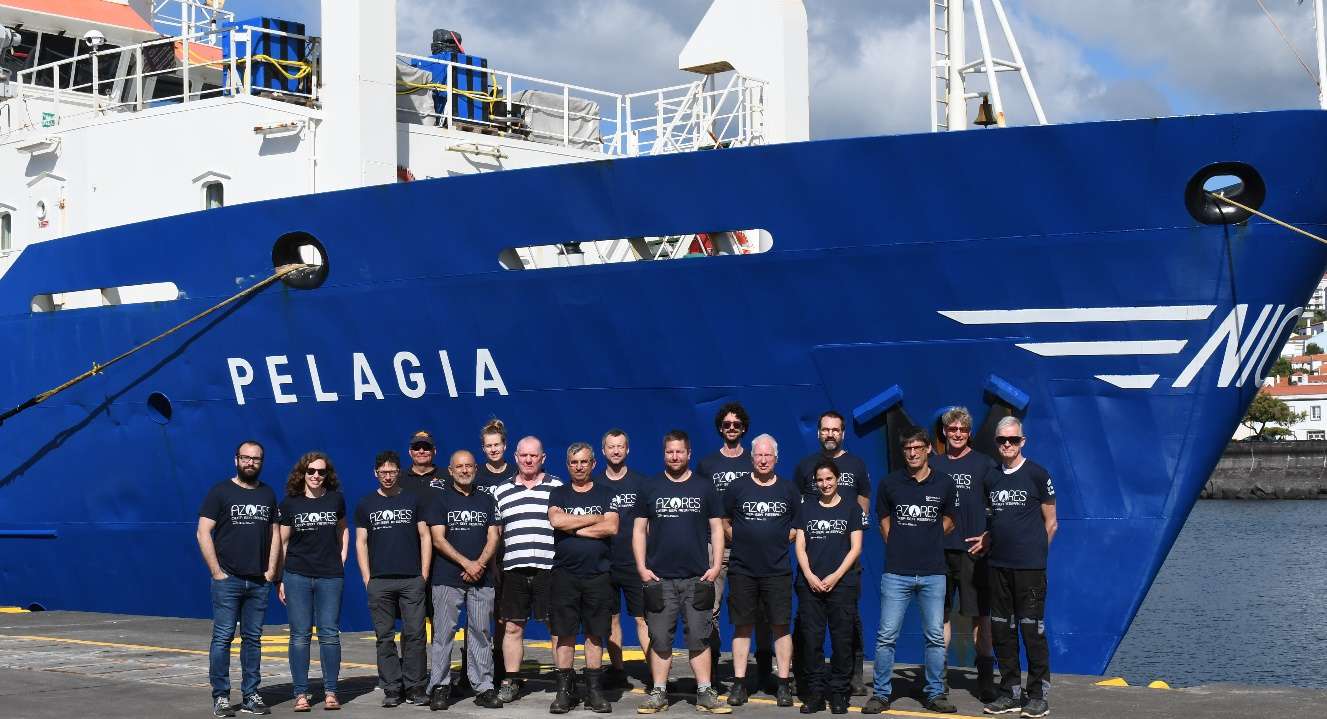
The iMAR cruise “The Integrated assessment of the distribution of Vulnerable Marine Ecosystem along the Mid-Atlantic Ridge (MAR) in the Azores region” took place aboard the Research Vessel Pelagia of the Royal Netherlands Institute for Sea Research between May 17th and June 2nd 2021. This expedition was funded by the SEA OCEANS program of Eurofleets+ and the H2020 European project iAtlantic, and was led by the University of the Azores (Portugal) in collaboration with the Hydrographic Institute and University of Porto (Portugal), the University of Aarhus (Denmark), the National Oceanography Center (United Kingdom), GEOMAR (Germany), the University Museum of Bergen (Norway), the PP Shirshov Institute of Oceanology (Russia), and the University of Vale do Itajaí (Brazil). We explored under-visited portions of the northern MAR in the Azores region and associated ridges and seamounts between 300 and 1,200 m depth: (1) South Chaucher, (2) unnamed seamount coded as D12, (3) the Kurchatov fracture zone area, including Isolado and D10 seamounts and ridges complex, (4) unnamed seamount West of Oscar seamount coded as D5, (5) the Gigante seamount and ridges complex, and (6) Cavala seamount. On most sampling locations, we collected multibeam data, CTD measurements, water and sediment samples, and tow camera transects to survey deep-sea coral and sponge communities. Water samples will be used for biodiversity analyses through eDNA methods and the characterization of water masses properties (nutrients and physical-chemical parameters). Sediment samples (collected at 1,000 m depth) will be used for biodiversity analyses through faunal studies and eDNA methods, microplastics, granulometry analyses, and physical-chemical studies.

Authors

4 involved team members
N
Neves De Sousa, Laura

Instituto Hidrográfico, Portugal

M
Mohn, Christian
0000-0002-4331-1365

Aarhus University, Department of Ecoscience - Applied Marine Ecology and Modelling, Denmark

Record details

Type
report
Language
EN

Keywords

Ridge Mid-Atlantic Ridge Geography Oceanography Distribution (mathematics) Ecosystem Environmental science Geology Physical geography Ecology Cartography Biology Mathematical analysis Mathematics

Follow us on social media to stay updated

Location

Institute of Marine Sciences — Okeanos, University of the Azores

Departamento de Oceanografia e Pescas — Universidade dos Açores

Rua Prof. Doutor Frederico Machado, No. 4
9901-862 Horta, Portugal

Contact

FOLLOW US
ADSR

AZORES DEEP-SEA RESEARCH © 2020-2026 — RELEASE 2.1

Developed by Valter Medeiros VALTER MEDEIROS