

Loading…

"LUSO" Hydrothermal vent field Expedition; 4th August 2018 (RV L'Atalante - IFREMER)

Loading DOI record...

"LUSO" Hydrothermal vent field Expedition; 4th August 2018 (RV L'Atalante - IFREMER)

DOI: 10.5281/zenodo.6557934

Type: Cruise Report

Year: 2019

Citations: 0

AZORES DEEP-SEA RESEARCH
Cruise Report Open access January 2019

"LUSO" Hydrothermal vent field Expedition; 4th August 2018 (RV L'Atalante - IFREMER)

Total authors
4
Involved team members
3
Citations
0
References
0

Related to this work

Abstract

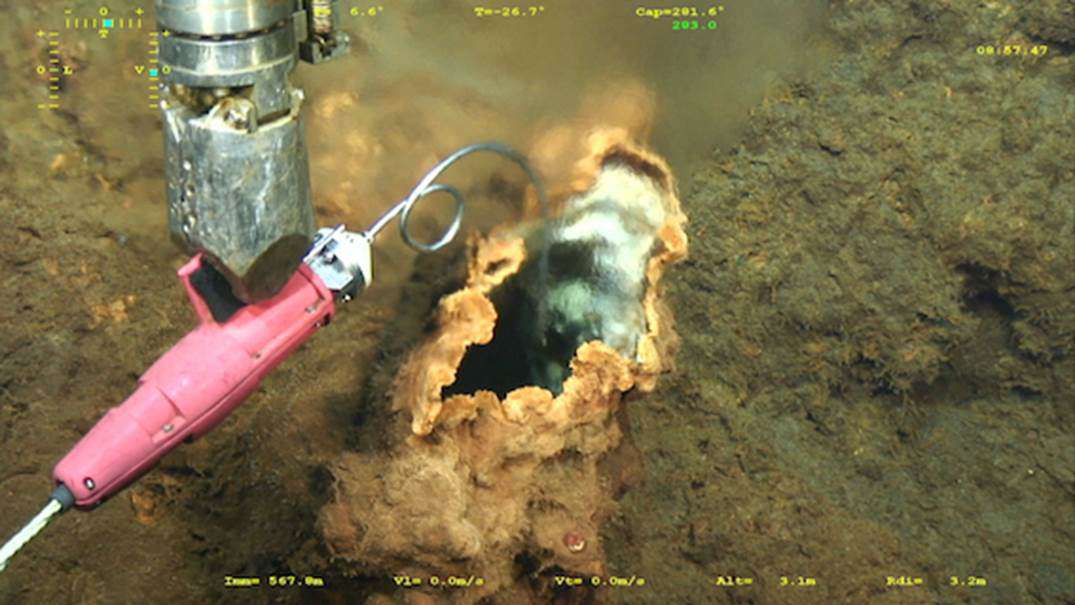
Following the discovery of the new hydrothermal field “Luso” in the Azores during the scientific expedition “Oceano Azul” that took place in May and June, a follow up day scientific sampling mission as part of the TRANSECT scientific campaign onboard the ship RV L’Atalante took place on August 4th. The mission was coordinated by Telmo Morato, chief scientist of the deep water exploration of the Oceano Azul expedition, in close collaboration with Nadine Le Bris, chief scientist of TRANSECT scientific campaign. The Portuguese team participating in the mission was composed of 4 scientists with different expertise in research areas of hydrothermal vents (e.g. geology, chemistry, ecology, microbiology) and the chief pilot of the Portuguese ROV Luso from EMEPC. The expedition's main objective was to collect sufficient information and samples for a proper description of the “LUSO” hydrothermal vent field area. Specifically, the mission aimed to collect information i) on the geological and geochemical (including chimneys and deposits/sediments) description of the area; ii) on the chemical composition of the vent fluids and gases, and on the environmental parameters that can help to describe the area of influence of the vent; iii) on the biology and microbiology of the vent field; iv) the background fauna, mostly cold-water corals and sponges and v) to produce a photo-mosaic of the vent field. For this purpose, a detailed dive plan based on the video footage collected during the first scientific mission in June identified three priority areas to be visited: (1) the main venting area with the largest identified vent chimney; (2) a secondary venting area composed of smaller active vent chimneys ; (3) an inactive vent field area.

Authors

3 involved team members
Carreiro-Silva, Ma

Okeanos Research Centre & IMAR Instituto do Mar, University of the Azores, 9901-862 Horta, Portugal
Record details

Type
report
Language
EN

Keywords

Hydrothermal vent Geology Hydrothermal circulation Seismology

Follow us on social media to stay updated

Location

Institute of Marine Sciences — Okeanos, University of the Azores

Departamento de Oceanografia e Pescas — Universidade dos Açores

Rua Prof. Doutor Frederico Machado, No. 4
9901-862 Horta, Portugal

Contact

FOLLOW US —
ADSR

AZORES DEEP-SEA RESEARCH © 2020-2026 — RELEASE 2.1

Developed by Valter Medeiros VALTER MEDEIROS