Loading…

RV Pelagia cruise 64PE454: Rainbow hydrothermal vent and southern MAR 2019 - Hopper tow-cam video footage -

Loading DOI record...

RV Pelagia cruise 64PE454: Rainbow hydrothermal vent and southern MAR 2019 - Hopper tow-cam video footage -

DOI: 10.5281/zenodo.6593981

Type: Cruise Report

Year: 2019

Citations: 2

AZORES DEEP-SEA RESEARCH
Cruise Report Open access October 2019

RV Pelagia cruise 64PE454: Rainbow hydrothermal vent and southern MAR 2019 - Hopper tow-cam video footage -

Total authors
3
Involved team members
2
Citations
2
References
0

Citations by year

1 years
2023
2

Related to this work

Abstract

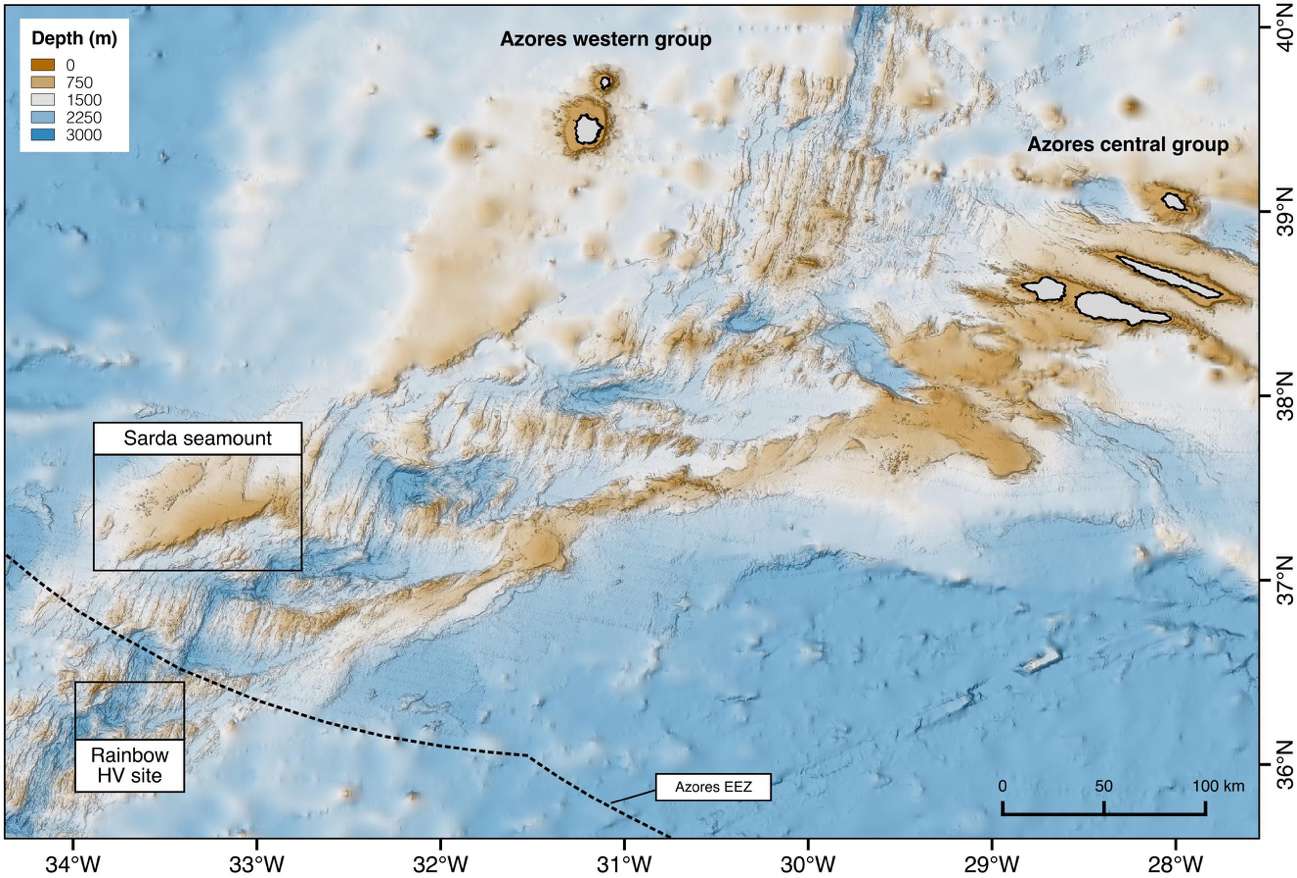
Objectives: to improve the understanding on the sphere of influence of hydrothermal vents on the distribution of deep-sea megafauna around vent sites and the exploration of Sarda seamount to improve our knowledge on the distribution and abundance of large VME indicator species and deep-sea commercial fishes in the large Azores region. Vessel: R/V Pelagia Chief scientist: Sabine Gollner (NIOZ) Scientific team: Carlos Dominguez-Carrió (IMAR), Sabine Gollner (NIOZ) Main achievements: Improvement of our understanding on the effects of hydrothermal vent plumes on the distribution of benthic megafauna Identification of new VME areas in Sarda seamount, including glass sponge aggregations and dense cold-water coral assemblages Cruise summary: The Rainbow 2019 cruise on board of R/V Pelagia allocated 2 days of work to explore 2 different deep-sea areas of the Azores region using the Hopper tow-cam system: the Rainbow hydrothermal vent site and Sarda seamount. Overall, 6 successful video transects were carried out, generating more than 18 hours of seafloor images. These dives provided information along 17.8 km of seabed, at depths that ranged between 430 and 2,500 meters. Two high-definition video transects of 1.5 km long were performed at the hydrothermal vent site, starting and ending at a distance larger than 500 m off the main active chimneys. Spatial changes in the structure of the benthic community will be visually evaluated to understand the potential effect of vent plumes on deep-sea megafauna. The total amount of bottom time recorded at Rainbow site was above 3 hours and 20 minutes, with all footage considered valid for annotation purposes. Another main objective of the Rainbow 2019 cruise was to explore Sarda seamount, located on the western side of the MAR. This geological structure stretches for more than 120 kilometres in length, and its summit can reach depths as shallow as 300 m. The 4 Hopper dives carried out at Sarda seamount aimed to obtain video footage from a wide bathymetric range, starting down to 1000 m depth all the way up to the summit. The 4 dives covered 14.8 km of seabed, generating over 15 hours of bottom time.

Authors

2 involved team members
G
Gollner, Sabine
0000-0001-9322-9258

NIOZ Royal Netherlands Institute for Sea Research, Texel, The Netherlands

Record details

Type
report
Language
EN

Keywords

Cruise Rainbow Hydrothermal vent Hydrothermal circulation Geology Geography Oceanography Paleontology Physics Quantum mechanics

Follow us on social media to stay updated

Location

Institute of Marine Sciences — Okeanos, University of the Azores

Departamento de Oceanografia e Pescas — Universidade dos Açores

Rua Prof. Doutor Frederico Machado, No. 4
9901-862 Horta, Portugal

Contact

FOLLOW US
ADSR

AZORES DEEP-SEA RESEARCH © 2020-2026 — RELEASE 2.1

Developed by Valter Medeiros VALTER MEDEIROS